
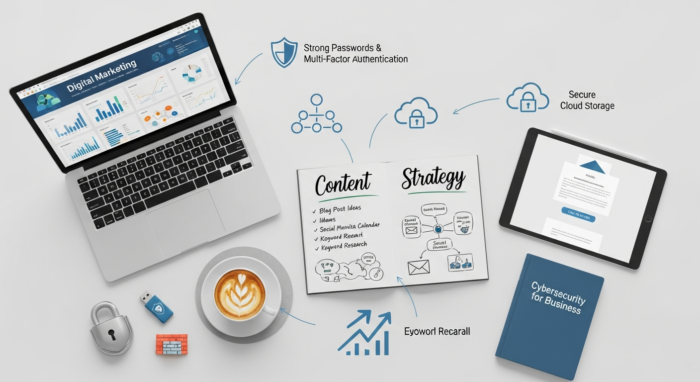
Fortifying Your Digital Fortress: 5 Essential Cybersecurity Tips for Business Data Protection in 2026
The digital economy thrives on data, making its protection an absolute imperative. From customer records to intellectual property, financial transactions to strategic plans, virtually every piece of information that drives modern business exists in a digital format. The consequences of a data breach extend far beyond immediate financial losses, impacting brand reputation, customer loyalty, regulatory compliance, and market valuation. In 2026, with artificial intelligence enhancing both defensive and offensive capabilities, the need for robust cybersecurity has never been more critical for businesses striving for sustainable growth. This isn’t merely about preventing downtime; it’s about preserving trust, ensuring operational resilience, and maintaining your competitive edge.
1. Implement Robust Access Controls and Multi-Factor Authentication (MFA) Everywhere
The perimeter defense of yesteryear is largely obsolete. In an era of remote work, cloud services, and mobile access, the focus has shifted to identity and access management. Your first and most critical line of defense against unauthorized access to sensitive business data is strong access control, coupled with the ubiquitous implementation of Multi-Factor Authentication (MFA). Weak or compromised credentials remain one of the easiest entry points for cybercriminals. By enforcing stringent access policies, you significantly reduce the attack surface.
- Principle of Least Privilege: Grant employees access only to the data and systems absolutely necessary for their job functions. Regularly review and update these permissions, especially when roles change or employees leave. This minimizes the potential damage if an account is compromised.
- Strong Password Policies: Mandate complex passwords that combine uppercase and lowercase letters, numbers, and special characters. Implement regular password rotation, though modern security best practices also advocate for longer passphrases and MFA as a superior alternative to frequent changes.
- Mandatory Multi-Factor Authentication (MFA): This is non-negotiable for every system, application, and service that holds critical business data or provides access to your network. MFA adds an extra layer of security by requiring users to provide two or more verification factors to gain access, such as a password (something you know) and a code from a mobile app or a biometric scan (something you have or are). Even if a password is stolen, the attacker cannot gain access without the second factor. This is a foundational element among the services every secure business needs in 2026.
- Identity and Access Management (IAM) Solutions: For larger organizations, consider investing in an IAM solution. These platforms centralize user identities, manage access policies, and provide auditing capabilities, streamlining security management and compliance.
- Regular Access Reviews: Periodically audit user accounts and their associated permissions to ensure they are still appropriate and necessary. Deactivate accounts promptly when employees depart.
By making MFA a mandatory prerequisite for all access points, from email to CRM systems, cloud storage to internal databases, businesses can drastically reduce the risk of credential-stuffing attacks and unauthorized data access. This foundational security measure is a cornerstone for protecting your business data and maintaining operational integrity.
2. Prioritize Comprehensive Employee Cybersecurity Training and Awareness Programs
Technology alone cannot fully protect your business; people are often the weakest link in the security chain, but they can also be your strongest defense. Human error, whether through succumbing to phishing attacks, using weak passwords, or mishandling sensitive information, accounts for a significant percentage of data breaches. Therefore, investing in ongoing, engaging, and relevant cybersecurity training for all employees is not an option but a critical necessity for every business looking to protect its data in 2026.
- Regular and Mandatory Training: Conduct mandatory cybersecurity awareness training at least annually, with refresher courses or micro-training modules throughout the year. New hires should receive comprehensive training during onboarding.
- Phishing Simulation Exercises: Regularly test employees with simulated phishing emails. These exercises help employees recognize and report suspicious communications without fear of repercussion, improving their vigilance and response time. Provide immediate feedback and additional training for those who fall for the simulations.
- Education on Common Threats: Train employees on the latest threat vectors, including ransomware, social engineering tactics, business email compromise (BEC), and malvertising. Explain the real-world consequences of these attacks for the business and for individuals.
- Data Handling Best Practices: Educate staff on proper data classification, storage protocols, secure data transfer methods, and the appropriate use of company devices and networks. Emphasize the importance of not sharing sensitive information over unsecured channels.
- Remote Work Security: With hybrid and remote work models prevalent, ensure employees understand how to secure their home networks, use company-approved VPNs, and protect company data when working outside the office environment.
- Reporting Procedures: Establish clear, easy-to-understand procedures for reporting suspicious activities, potential security incidents, or lost/stolen devices. Empower employees to be proactive defenders.
A well-informed workforce acts as an intelligent firewall, capable of identifying and mitigating threats before they escalate into full-blown data breaches. This human element is as crucial as any technological safeguard, making employee training one of the most cost-effective cybersecurity investments your business can make.
3. Implement Robust Data Backup, Recovery, and Disaster Preparedness Strategies
Even with the most advanced cybersecurity measures, no system is entirely impervious to attack or unforeseen events. Data loss can occur due to cyberattacks (like ransomware), hardware failures, natural disasters, or human error. A comprehensive data backup and disaster recovery (DR) plan is therefore a non-negotiable safeguard for business continuity and data integrity. This strategy ensures that even if your primary systems are compromised or destroyed, your critical business data can be restored quickly, minimizing downtime and financial impact.
- 3-2-1 Backup Rule: Adhere to the industry-standard 3-2-1 rule:
- Maintain at least 3 copies of your data (the original and two backups).
- Store backups on at least 2 different types of media (e.g., local server and cloud, or external drive and tape).
- Keep at least 1 copy offsite (e.g., in a cloud backup service or a remote data center). This protects against site-specific disasters.
- Automated and Regular Backups: Implement automated backup solutions to ensure data is consistently backed up according to a defined schedule. The frequency should align with your Recovery Point Objective (RPO) – how much data you can afford to lose.
- Encrypted Backups: All backups, especially those stored offsite or in the cloud, must be encrypted both in transit and at rest to prevent unauthorized access if the backup media is compromised.
- Offline/Immutable Backups: Consider having an “air-gapped” or immutable backup copy that is not continuously connected to your network. This is crucial for protecting against sophisticated ransomware attacks that can encrypt or delete online backups.
- Tested Recovery Plan: A backup is only as good as its ability to be restored. Regularly test your data recovery process to ensure it works as expected and meets your Recovery Time Objective (RTO) – how quickly you need systems back online. Document the recovery steps thoroughly.
- Disaster Recovery Plan (DRP): Develop a comprehensive DRP that outlines procedures for responding to various disaster scenarios, including cyberattacks, natural disasters, and power outages. The plan should detail roles, responsibilities, communication strategies, and the sequence of recovery operations.
For businesses, particularly those in sectors like manufacturing where operational uptime is critical, having a robust DR plan is one of the 3 services you need for your manufacturing business to ensure continuous production and supply chain integrity. It’s not just about data, but the operational systems that rely on that data. This foresight allows businesses to recover from even the most devastating incidents, protecting revenue, customer trust, and long-term viability.
4. Secure Your Network Infrastructure and Implement Advanced Endpoint Protection
Your network is the highway for your business data, and endpoints (laptops, desktops, servers, mobile devices) are the vehicles. Both must be rigorously secured to prevent intrusions and data exfiltration. A holistic approach combines robust network defenses with sophisticated endpoint protection to create a resilient security posture against a wide array of cyber threats in 2026.
Network Infrastructure Security:
- Firewalls and Intrusion Prevention Systems (IPS): Deploy next-generation firewalls (NGFW) and IPS to monitor network traffic, block malicious activity, and enforce security policies. Regularly update firewall rules to adapt to new threats.
- Virtual Private Networks (VPNs): Mandate the use of VPNs for all remote access to your business network. VPNs encrypt data in transit, creating a secure tunnel between the user and the corporate network, even over unsecured public Wi-Fi.
- Network Segmentation: Divide your network into smaller, isolated segments. This limits lateral movement for attackers, meaning if one segment is compromised, the attacker cannot easily access other critical parts of your network. For instance, guest Wi-Fi should be completely separate from your internal business network.
- Wireless Network Security: Secure all Wi-Fi networks with strong encryption (WPA3 where possible) and strong, unique passwords. Avoid using default router credentials.
- Regular Vulnerability Assessments and Penetration Testing: Proactively identify weaknesses in your network infrastructure before attackers do. Regular vulnerability scans and annual penetration tests by certified ethical hackers are crucial.
Advanced Endpoint Protection:
- Endpoint Detection and Response (EDR) / Extended Detection and Response (XDR): Go beyond traditional antivirus software. EDR solutions continuously monitor endpoint activity, detect suspicious behavior, and provide automated responses. XDR extends this to integrate security data from across your entire IT environment, offering a more unified and comprehensive view of threats.
- Patch Management: Keep all operating systems, applications, and firmware on all endpoints up-to-date with the latest security patches. Unpatched vulnerabilities are a common vector for exploitation. Automate this process where possible.
- Device Encryption: Encrypt hard drives on all company laptops, desktops, and mobile devices. This protects data in case a device is lost or stolen.
- Mobile Device Management (MDM): Implement MDM solutions to secure, monitor, manage, and support mobile devices deployed across your business. This helps enforce security policies, wipe lost devices, and manage app access.
- Application Whitelisting: Consider allowing only approved applications to run on company devices. This significantly reduces the risk from malicious software.
Securing your network and endpoints is a continuous process that requires vigilance and constant adaptation. It’s a fundamental part of the services every secure business needs to maintain operational integrity and protect its invaluable data assets.
5. Establish Proactive Threat Intelligence and a Robust Incident Response Plan
In the dynamic landscape of 2026, security is not just about prevention; it’s also about detection and rapid response. Proactive threat intelligence allows your business to understand the evolving adversary tactics, techniques, and procedures (TTPs), enabling you to anticipate and prepare. A well-defined incident response (IR) plan ensures that should a breach occur, your team can act swiftly and effectively to minimize damage, restore services, and learn from the incident.
Proactive Threat Intelligence:
- Stay Informed: Subscribe to industry threat intelligence feeds, cybersecurity news, and participate in information-sharing groups. Understand the specific threats targeting your industry sector.
- Security Information and Event Management (SIEM) / Security Orchestration, Automation, and Response (SOAR): Invest in SIEM solutions to aggregate and analyze security logs from across your entire IT infrastructure. SOAR platforms take this a step further by automating security tasks and incident response workflows, helping to identify and respond to threats faster.
- Dark Web Monitoring: Monitor the dark web for mentions of your company’s credentials, intellectual property, or other sensitive data that may have already been compromised and is being sold or discussed.
- Continuous Monitoring: Implement 24/7 security monitoring, either in-house or through a Managed Security Service Provider (MSSP), to detect anomalous activities and potential threats in real-time.
Robust Incident Response Plan:
- Develop a Formal Plan: Create a detailed, written IR plan that outlines roles, responsibilities, communication protocols, and steps for handling various types of security incidents (e.g., malware infection, data breach, denial-of-service attack).
- Designate an IR Team: Identify key personnel from IT, legal, communications, and executive leadership who will form the core IR team. Define their specific roles and responsibilities during an incident.
- Containment, Eradication, and Recovery: The IR plan should clearly define steps for containing the incident to prevent further damage, eradicating the threat, and recovering affected systems and data. This ties directly into your data backup and recovery strategies.
- Post-Incident Analysis: After an incident, conduct a thorough post-mortem analysis to understand the root cause, identify lessons learned, and implement measures to prevent similar incidents in the future.
- Regular Testing and Drills: Just like fire drills, regularly test your IR plan through tabletop exercises and simulated scenarios. This helps identify gaps, refine procedures, and ensure the team is prepared to act under pressure.
- Legal and Regulatory Compliance: Ensure your IR plan includes procedures for notifying affected parties and regulatory bodies in compliance with data protection laws (e.g., GDPR, CCPA) within specified timeframes.
A proactive stance, coupled with a well-rehearsed incident response, transforms potential catastrophe into a manageable challenge. This strategic foresight is invaluable for any business aiming for sustained growth and resilience in a volatile digital world. Leveraging specialized firms that offer advanced threat detection and response capabilities can provide services every secure business needs to stay ahead of sophisticated adversaries.
Leveraging External Expertise for Enhanced Security in 2026
While implementing these five tips internally is crucial, many businesses, especially SMBs, may lack the in-house resources or specialized expertise to manage a comprehensive cybersecurity program effectively. This is where external partners become invaluable. Engaging with cybersecurity consultants, Managed Security Service Providers (MSSPs), or data platform specialists can significantly bolster your defenses.
For instance, an MSSP can provide 24/7 monitoring, threat intelligence, incident response, and vulnerability management, effectively becoming an extension of your security team. This frees up your internal IT staff to focus on core business operations while ensuring your data remains protected by experts. These are among the critical services every secure business needs to navigate the complex threat landscape of 2026.
Furthermore, businesses dealing with vast amounts of data, or those looking to leverage data for advanced analytics, can benefit immensely from partners specializing in data platforms and governance. Firms like phData, for example, are experts in building secure, scalable data platforms, modernizing data infrastructure, and ensuring data quality and governance. Here are 3 ways phData can benefit your business in the context of data protection:
- Secure Data Platform Development: phData can help design and implement robust, secure data architectures that inherently protect your business data from the ground up, ensuring proper access controls, encryption, and compliance are built into your data ecosystem. This foundational security is crucial for preventing data breaches originating from architectural vulnerabilities.
- Data Governance and Compliance: By establishing comprehensive data governance frameworks, phData ensures your data is managed securely, ethically, and in compliance with relevant regulations. This includes data classification, retention policies, and auditing capabilities, all of which are vital for reducing risk and demonstrating accountability.
- Operationalizing Security Analytics: Leveraging data engineering expertise, phData can help businesses operationalize security analytics by integrating data from various security tools (SIEM, EDR, firewalls) into a unified data platform. This enables more sophisticated threat detection, faster incident response, and predictive security insights, turning raw security logs into actionable intelligence.
For industries like manufacturing, where data integrity and operational technology (OT) security are paramount, specialized security services are non-negotiable. Beyond general IT security, 3 services you need for your manufacturing business often include industrial control system (ICS) security assessments, OT network segmentation, and endpoint protection for specialized manufacturing equipment. These bespoke solutions ensure that not only IT data but also critical operational processes are safeguarded against cyber threats, preventing costly downtime and production disruptions.
Partnering with such specialized firms allows businesses to access cutting-edge tools and expertise, ensuring their data protection strategies are not just reactive but truly proactive and aligned with the latest industry standards and evolving threat intelligence. It’s an investment in resilience, compliance, and sustained business growth.
Conclusion: Cybersecurity as a Growth Enabler

For marketers and business growth professionals, understanding and advocating for strong cybersecurity is essential. A secure business instills confidence in customers, partners, and investors, fostering loyalty and opening new market opportunities. Conversely, a data breach can erode years of brand building, incur significant financial penalties, and severely impact customer acquisition and retention efforts. By embracing these cybersecurity best practices, and by strategically leveraging external expertise where needed, businesses can not only mitigate risks but also build a resilient foundation for innovation and expansion in the digital age. Your data is your future; protect it wisely.
Frequently Asked Questions
Recommended Resources
You might also enjoy How To Build Confidence As A Leader from AssetBar.
Learn more about this topic in How To Create An Online Course For Income at Trading Costs.