
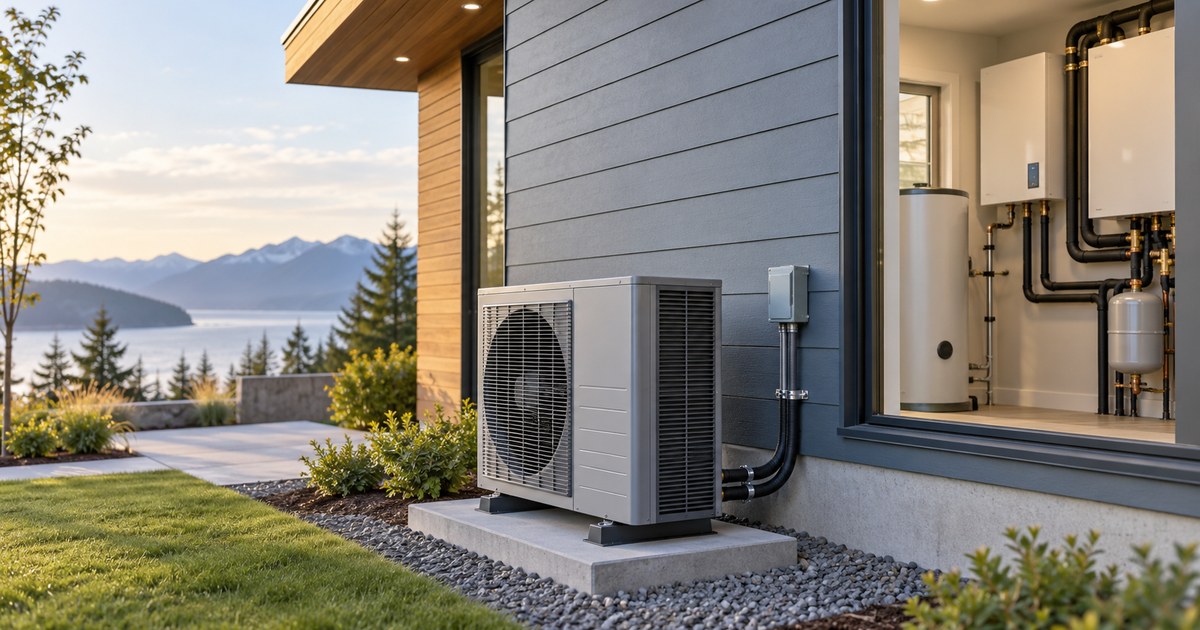
A heat pump can run efficiently for fifteen years or struggle from the first season, and the difference is usually decided during installation rather than by the equipment itself. The unit is only as good as the sizing, the airflow and the refrigerant charge it was given. Here is what Energy-Efficient Heat Pump Installation done properly looks like, and the mistakes that quietly shorten a system's life.
Why Installation Decides Efficiency
A heat pump moves heat rather than generating it, so its efficiency depends entirely on the conditions it operates under. Give it the airflow and the refrigerant charge it was designed for and it delivers the rated performance. Restrict the airflow or mischarge it and the compressor works harder, the bills rise, and the component that costs the most to replace wears out years early.
This is measurable. The same model installed carefully and installed carelessly can differ by a large margin in both energy use and service life. Spending the money on the equipment and economizing on the installation inverts the priority.
Getting the Size Right
Bigger is not better. An oversized unit reaches the set temperature quickly and shuts off, then restarts, over and over. That short cycling wastes energy, controls humidity poorly, and stresses the compressor. An undersized unit runs constantly and never quite catches up on the coldest or hottest days.
Correct sizing comes from a room-by-room load calculation that accounts for insulation, windows, orientation and ductwork, not from a rule of thumb based on square footage. Ask the installer to show you that calculation. A contractor who quotes a size without measuring the house is guessing, and you will live with the guess for the life of the system.
Airflow, Charge and Placement
Three details separate a good installation from a mediocre one.
- Airflow. The blower, the filter and the ductwork have to move the volume of air the unit expects. Undersized or leaky ducts are the most common reason a new system disappoints, and fixing them is part of the job.
- Refrigerant charge. The charge should be weighed in to match the line length, not guessed. Too much or too little both reduce capacity and overheat the compressor.
- Placement. The outdoor unit needs clear space around it for airflow, a level pad, and a location away from bedroom windows and dryer vents. Boxed in against a wall, it recirculates its own exhaust air and loses efficiency.
Duct sealing deserves its own mention. Leaky ducts dump conditioned air into the attic and pull dusty air back in, so a meaningful share of what you pay to heat and cool never reaches a room. Sealing and insulating ducts during the install is far cheaper than doing it later.
Mistakes That Shorten the System's Life
Most early failures trace back to a short list. Skipping the load calculation. Reusing old, undersized line sets or ductwork that the new unit cannot work with. Leaving the condensate drain poorly pitched so water backs up and damages the air handler. Forgetting to commission the system, meaning nobody verified the pressures, temperatures and airflow against the manufacturer's specifications once it was running.
Commissioning is the step worth insisting on. A system that was started up but never measured might run for years while slowly damaging itself, and the first symptom is a failed compressor that the warranty may not fully cover if the installation was out of spec.
What to Ask Before You Hire
Get more than one quote and compare the scope, not the bottom line. A lower bid that reuses questionable ductwork is not cheaper once you add the comfort and the repairs.
- License and insurance, confirmed rather than asserted, plus manufacturer certification for the brand being installed.
- The load calculation included in the proposal, with the resulting size explained.
- What is new and what is reused, spelled out for ductwork, line sets, thermostat and electrical.
- Commissioning in writing, with the measured values left behind for your records.
- Warranty terms, including whether the labor warranty depends on documented maintenance.
Keeping It Efficient Afterward
Installation sets the ceiling and maintenance decides whether you stay near it. Change or clean the filter on schedule, because a clogged filter is the fastest way to undo good airflow. Keep the outdoor unit clear of leaves, snow and vegetation. Have a technician check the charge, the electrical connections and the condensate drain once a year, ideally before the season you rely on it most.
Use a sensible thermostat schedule rather than large setbacks, since a heat pump is most efficient holding a steady temperature and expensive when asked to recover from a big swing. If the system is the variable-speed type, let it run long and low instead of forcing it to behave like the old furnace.
The Payoff
Done in this order, the economics are straightforward. Right-sizing and duct sealing cut the energy the system needs. A correct charge and clean airflow keep the compressor within its design conditions, which is what gets you the full service life. Annual maintenance catches the small faults before they become a no-heat call in January.
Spread over fifteen years, the extra care at installation costs less than a single premature compressor replacement, and you get lower bills the entire time. That is the return that matters, and it comes from the workmanship rather than from the brochure.
Rebates and Running Cost
Many utilities offer rebates on high-efficiency heat pumps, and some require the installer to hold a specific certification or the equipment to meet a stated rating. Ask before you sign, because a qualifying system and installer can return a meaningful share of the upfront cost, and the paperwork is much easier to complete at installation than months later.
Estimate the running cost honestly. A heat pump's bill depends on your electricity rate and your climate, and in colder regions a cold-climate model earns its premium by keeping its output when temperatures drop. Compare the realistic annual cost against your current system rather than against the best-case figure on the sales sheet.
Signs Something Is Wrong
Even a good installation needs watching. Short bursts of running followed by long pauses, ice building up on the outdoor unit outside of defrost cycles, weak airflow from the vents, or bills that climb for no change in weather all point to a problem worth a service call. Catching these early usually means a minor repair instead of a failed compressor.
Keep the commissioning report and the maintenance records together. They help a technician diagnose faster, and they are what you need if a warranty claim ever depends on showing the system was installed and maintained to specification.
Treat the system as something you check, not something you forget. A filter on schedule, an annual service visit and a phone call when the sound or the bills change are all it asks for. In return it heats and cools the house at the cost it was designed for, year after year, which is the entire point of choosing a heat pump in the first place.
A heat pump's efficiency and lifespan are decided by the load calculation, the ductwork, the refrigerant charge and the commissioning, all of it verifiable and all of it worth putting in the contract. Choose the installer who will show you those numbers, maintain the system once a year, and it will do quietly what it was rated to do for as long as it was meant to.