
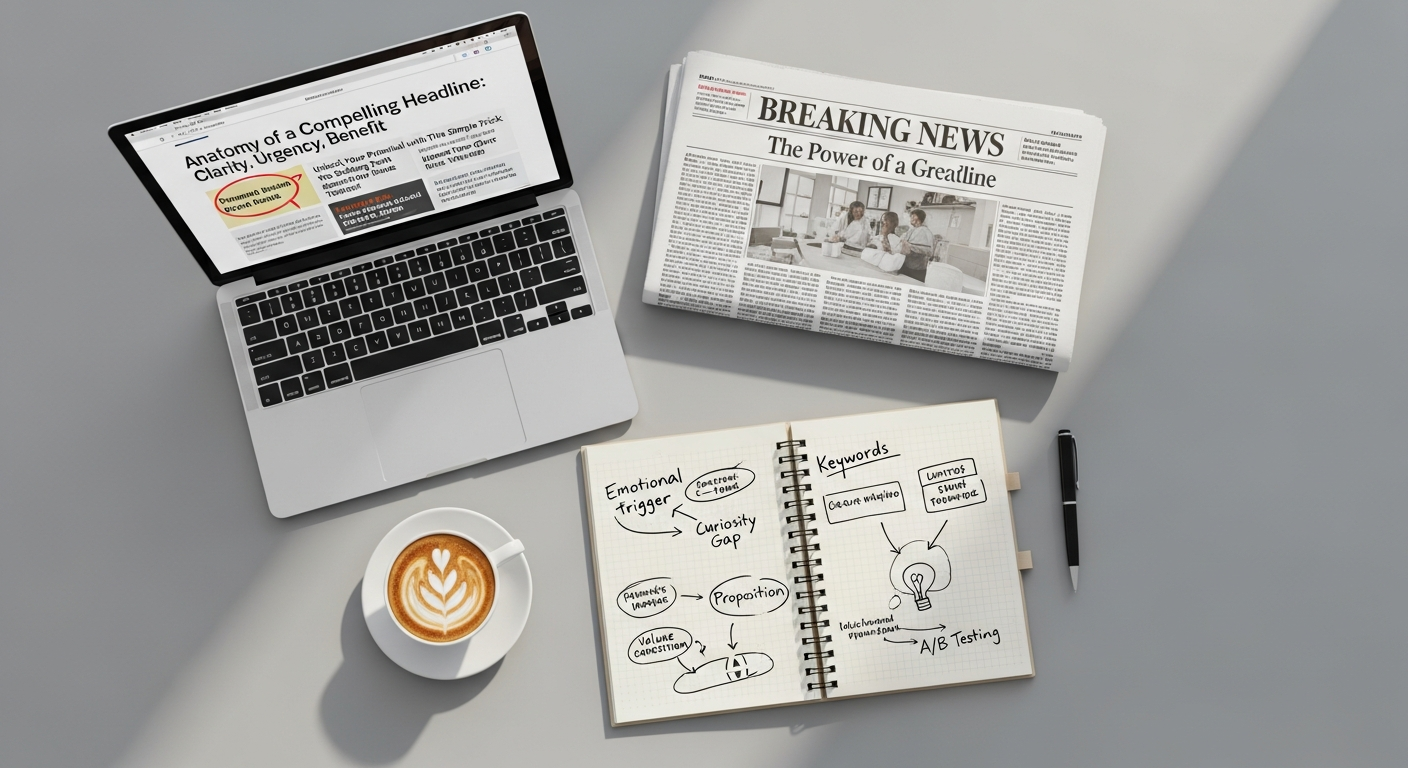
The Undeniable Power of a Compelling Headline
In the vast ocean of digital information, a headline serves as both a lighthouse and a fishing hook. It’s the very first point of contact between your content and your audience, a critical juncture that determines the fate of your carefully curated articles, blog posts, emails, and advertisements. Without an effective headline, even the most groundbreaking research or insightful analysis risks remaining unread, its potential impact unrealized. Think of the modern digital consumer: constantly scrolling, bombarded by notifications, and making split-second decisions about what to engage with. In this environment, your headline has mere seconds to prove its worth.
A compelling headline achieves several vital objectives simultaneously. Firstly, it captures attention, cutting through the noise to make your content visible. Secondly, it communicates value, giving the reader a clear reason why they should invest their precious time in your piece. Thirdly, it sets the correct expectation, ensuring that the content delivers on the promise made by the headline, thereby building trust and credibility. Finally, and perhaps most importantly, it incites curiosity, creating an irresistible urge to click and discover more. This isn’t just about clickbait; it’s about crafting a genuine invitation to a valuable experience.
Consider the competitive landscape of digital publishing and marketing. Every brand, every individual, is vying for the same limited resource: audience attention. Whether you’re a burgeoning small business looking to solidify your Digital Marketing Strategy Small Business 2026 or an established enterprise aiming to maintain market leadership, your headlines are frontline soldiers in this battle. They dictate your open rates for emails, your click-through rates for ads, and your engagement rates for social media posts. A weak headline can render even the most sophisticated marketing automation campaigns ineffective, as the initial barrier to entry – the click – is never overcome. Conversely, a strong headline can amplify your reach, drive traffic, and significantly improve your content’s overall performance metrics, directly contributing to your bottom line.
The psychology behind headline effectiveness is deeply rooted in human cognitive biases. People are drawn to novelty, fear of missing out (FOMO), solutions to problems, and content that promises personal gain or transformation. A masterful headline taps into these innate desires and anxieties, creating an emotional connection that transcends mere information dissemination. It transforms a passive scroller into an active participant, eager to uncover the insights that lie beneath the surface. Therefore, dedicating time and strategic thought to headline creation is not an optional extra; it is a fundamental pillar of any successful digital content strategy.
Understanding Your Audience: The Foundation of Irresistible Headlines
Before a single word of your headline is written, the most critical step is to deeply understand the people you are trying to reach. Crafting compelling headlines is not a generic exercise; it’s a highly targeted act of communication that resonates only when it speaks directly to the needs, desires, and pain points of your specific audience. Without this foundational understanding, even the cleverest headline risks falling flat, unable to connect with the intended reader.
Develop Detailed Buyer Personas
The journey begins with creating robust buyer personas. These are semi-fictional representations of your ideal customers, based on market research and real data about your existing customers. Go beyond basic demographics. Delve into their:
- Demographics: Age, gender, income, location, occupation.
- Psychographics: Interests, hobbies, values, attitudes, lifestyle.
- Goals & Aspirations: What do they want to achieve? What success looks like to them?
- Challenges & Pain Points: What problems are they trying to solve? What keeps them up at night? What frustrations do they experience in their professional or personal lives?
- Information Sources: Where do they get their news? What social media platforms do they use? Which blogs or influencers do they follow?
When you know these intimate details, you can tailor your headline language, tone, and proposed solutions to directly address their specific context. For instance, a small business owner struggling with customer retention might respond to a headline promising “7 Proven Strategies to Halve Your Customer Churn by 2026,” while a new parent might be drawn to “The Ultimate Guide to Baby Sleep: Get Your Nights Back Now.”
Speak Their Language
Your audience has a unique vocabulary, industry jargon, and specific ways of articulating their problems and desires. Effective headlines mirror this language. Avoid overly academic or corporate jargon if your audience is everyday consumers. Conversely, don’t oversimplify if you’re targeting industry experts. Use keywords and phrases they would naturally search for or use in conversation. This not only makes your headline more relatable but also significantly improves its SEO potential, helping your content rank higher for relevant queries.
Identify Their Emotional Triggers
Humans are inherently emotional beings, and decisions are often driven by feelings rather than pure logic. What emotions does your audience experience related to the topic of your content? Are they frustrated, anxious, curious, hopeful, ambitious, or looking for validation? A headline that taps into these emotions—whether it’s promising relief from pain, the excitement of discovery, or the satisfaction of achievement—will always be more compelling. For example, “Stop Wasting Money: The Hidden Costs of Inefficient Marketing Automation” appeals to frustration and the desire for financial prudence.
Consider Their Stage in the Buyer’s Journey
Are you targeting someone just becoming aware of a problem, someone actively researching solutions, or someone ready to make a purchase? Your headline should reflect this stage. An awareness-stage headline might be more question-based or problem-centric (“Are You Struggling to Generate Leads?”), while a consideration-stage headline might offer comparisons or deeper dives (“HubSpot vs. Marketo: Which Marketing Automation Tool is Right for You?”). Understanding your audience’s journey ensures your headline is relevant and timely, guiding them naturally towards the next step.
By investing time in truly understanding your audience, you move beyond guesswork and into strategic, empathetic communication. This foundation is what transforms generic titles into irresistible invitations, making your content not just seen, but actively sought out.
Core Principles of Crafting Compelling Headlines
1. Clarity and Specificity
Ambiguity is the enemy of engagement. Your headline must clearly communicate what the reader will gain by clicking. Avoid vague language. Be specific about the topic, the benefit, or the problem you’re addressing.
- Weak: “Marketing Tips”
- Strong: “10 Actionable Digital Marketing Strategies for Small Businesses in 2026”
- Weak: “How to Improve Productivity”
- Strong: “Boost Your Team’s Productivity by 30% with These 5 Time-Saving Marketing Automation Tools 2026”
Specificity builds trust and immediately tells the reader if the content is relevant to their needs.
2. Highlight the Benefit
People are inherently self-interested. They want to know “What’s in it for me?” Your headline should clearly articulate the primary benefit or solution your content offers. Focus on the outcome, not just the topic.
- Instead of: “Article on SEO”
- Try: “Rank Higher on Google: A Beginner’s Guide to SEO for Small Businesses”
- Instead of: “Learn About Content Marketing”
- Try: “Double Your Organic Traffic: The Ultimate Guide to Content Marketing Strategy”
The benefit can be a solution to a problem, a promise of gain, or the avoidance of pain.
3. Spark Curiosity
While clarity is crucial, a touch of intrigue can be incredibly powerful. A headline that opens a “knowledge gap” – hinting at valuable information without fully revealing it – compels readers to click to satisfy their curiosity.
- Example: “The #1 Mistake Small Businesses Make in Their 2026 Digital Marketing Strategy (And How to Avoid It)”
- Example: “What If Everything You Knew About Social Media Engagement Was Wrong?”
Use words like “secret,” “hidden,” “unveiled,” “revealed,” or pose a provocative question.
4. Incorporate Numbers and Lists
Numerals stand out in a sea of text and imply structure, digestibility, and completeness. Listicle headlines are consistently among the most clicked.
- Example: “7 Essential Marketing Automation Tools 2026 for Every Small Business”
- Example: “12 Proven Ways to Write Headlines That Convert”
Odd numbers often perform slightly better than even numbers, and larger numbers can sometimes imply more comprehensive content, though balance is key.
5. Use Strong Action Verbs and Power Words
Action verbs create a sense of movement and urgency, while power words evoke strong emotions and capture attention.
- Action Verbs: Discover, Master, Unlock, Boost, Transform, Conquer, Dominate, Achieve, Skyrocket.
- Power Words: Secret, Ultimate, Essential, Proven, Guaranteed, Free, New, Amazing, Shocking, Critical, Exclusive, Effortless.
Combine them for maximum impact: “Unlock the Secret to Effortless Lead Generation with These New Marketing Automation Techniques.”
6. Address a Problem or Pain Point
People often search for solutions to problems. A headline that directly acknowledges a common pain point immediately resonates with those experiencing it.
- Example: “Tired of Low Engagement? How to Revitalize Your Social Media Strategy”
- Example: “Is Your Small Business Struggling with Digital Marketing? Here’s Your 2026 Blueprint.”
Identify the specific struggle and offer your content as the antidote.
7. Inject Urgency or Scarcity (Use Sparingly)
While not suitable for all content, headlines that create a sense of urgency or scarcity can drive immediate action. Use this judiciously to avoid appearing overly aggressive or deceitful.
- Example (for a limited offer): “Don’t Miss Out: Get Your Marketing Automation Audit Before Friday!”
- Example (for time-sensitive advice): “The Clock is Ticking: 3 Critical Digital Marketing Changes for 2026 You Need to Implement Now.”
These principles, when applied thoughtfully and strategically, form the bedrock of compelling headline creation. Practice combining them, testing different variations, and observing what resonates most with your audience.
Advanced Techniques and Psychological Triggers
Beyond the core principles, truly compelling headlines often leverage deeper psychological insights and advanced linguistic techniques to create an even stronger pull. These methods tap into inherent human biases and motivations, making your headlines virtually irresistible.
1. The “How To” vs. The “Why”
“How To” headlines are perennial favorites because they promise direct instruction and a solution to a problem. They appeal to our desire for practical knowledge.
- Example: “How to Implement Marketing Automation Tools 2026 for Maximum ROI”
- Example: “How to Write SEO-Friendly Headlines That Rank Higher”
However, “Why” headlines can be equally powerful by appealing to curiosity and a desire for understanding, especially for thought leadership or analytical content.
- Example: “Why Your 2026 Digital Marketing Strategy Needs a Stronger Focus on Video Content”
- Example: “Why Most Small Business Websites Fail to Convert Visitors”
Sometimes, combining them can be even more effective: “Why Your Headlines Aren’t Working (And How To Fix Them).”
2. Embrace Controversy (Carefully)
A headline that challenges conventional wisdom or presents a contrarian viewpoint can generate significant engagement, sparking discussion and drawing attention. However, this must be done tastefully and genuinely, not merely for shock value. The controversy should be backed by substantive content.
- Example: “Stop Using Social Media for Marketing – Here’s What to Do Instead”
- Example: “Everything You’ve Been Taught About SEO is Obsolete for 2026”
Used poorly, this can alienate your audience, so proceed with caution and ensure your content delivers on the provocative promise.
3. Use Emotional Language and Empathy
Headlines that evoke strong emotions—joy, fear, anger, hope, surprise—tend to perform exceptionally well. Words that express empathy or understanding of the reader’s plight can forge an immediate connection.
- Fear/Anxiety: “Are You Making These Costly Digital Marketing Mistakes in 2026?”
- Hope/Aspiration: “Achieve Financial Freedom: A Small Business Guide to Explosive Growth”
- Empathy: “We Know Your Struggle: Overcoming the Challenges of Content Creation”
The key is to use emotions authentically to serve your audience, not manipulate them.
4. The “Secret” or “Hidden” Angle
People are naturally drawn to exclusivity and the idea of uncovering privileged information. Headlines that promise to reveal a “secret,” “hidden truth,” or “little-known fact” tap into this desire.
- Example: “The Hidden SEO Tactic Google Doesn’t Want You To Know About”
- Example: “Unveiled: The Secret Sauce Behind High-Converting Landing Pages”
This technique works because it creates an immediate knowledge gap and implies that the reader will gain an advantage by clicking.
5. Leverage Authority and Credibility
If your content is backed by research, experts, or proven methodologies, highlight this in your headline. This builds trust and encourages clicks from those seeking reliable information.
- Example: “Backed by Data: The Top 5 Digital Marketing Trends for Small Businesses in 2026”
- Example: “Expert Insights: How Leading Brands Use Marketing Automation Tools 2026”
Phrases like “Studies Show,” “Expert Reveals,” “Research Confirms” can lend significant weight.
6. Use Parentheses or Brackets for Added Context
Adding a small piece of extra information in parentheses or brackets can clarify, add intrigue, or provide a secondary benefit, making the headline more appealing.
- Example: “How to Write Viral Headlines (Even If You’re Not a Copywriter)”
- Example: “The Complete Guide to Content Strategy [Includes Free Template]”
- Example: “Boost Your Engagement by 50% (A Case Study for Small Businesses)”
This technique allows for additional detail without making the core headline too long or cluttered.
By thoughtfully integrating these advanced techniques and understanding the psychological triggers they activate, you can elevate your headlines from merely good to truly exceptional, driving significantly higher engagement and better content performance.
Leveraging Tools and A/B Testing for Headline Optimization
Crafting compelling headlines isn’t just an art; it’s also a science that benefits immensely from data-driven optimization. In the dynamic world of digital marketing, relying solely on intuition is a recipe for missed opportunities. Modern marketers have access to an array of tools and methodologies, most notably A/B testing, to refine and perfect their headline strategy.
The Indispensable Role of A/B Testing
A/B testing, also known as split testing, is a method of comparing two versions of a webpage, email, or advertisement to see which one performs better. For headlines, this means presenting different headline variations to segments of your audience and measuring key metrics like click-through rates (CTR), open rates, and engagement. It’s the most reliable way to understand what truly resonates with your audience, moving beyond assumptions to concrete data.
When conducting A/B tests for headlines:
- Test One Variable at a Time: To accurately attribute performance changes, only alter one element per test. For headlines, this means changing the power word, the number, the emotional appeal, or the question format, while keeping the core topic similar.
- Ensure Statistical Significance: Don’t jump to conclusions prematurely. Run tests long enough and with a large enough audience segment to achieve statistically significant results.
- Focus on Relevant Metrics: For blog posts, CTR is paramount. For emails, it’s open rates. For ads, it might be conversions. Always align your testing goals with your content objectives.
- Document Your Findings: Keep a record of which headline variations performed best and why. This builds a valuable library of insights for future content creation.
Headline Analyzer Tools
Several online tools are designed to analyze your headlines and provide instant feedback based on established best practices and predictive algorithms. These tools often assess factors such as:
- Word Balance: Emotional, power, common, and uncommon words.
- Length: Optimal character and word count for different platforms.
- Sentiment: Positive, negative, or neutral tone.
- Clarity and Skimmability: How easy it is to understand the headline at a glance.
- SEO Potential: Whether it contains relevant keywords.
Popular examples include CoSchedule Headline Analyzer, Sharethrough Headline Analyzer, and Advanced Marketing Institute’s Emotional Marketing Value Headline Analyzer. While these tools offer valuable guidance, they should be used as a starting point, not a definitive judgment. Human creativity and audience understanding are still paramount.
Marketing Automation Tools 2026 and Headline Optimization
The evolution of Marketing Automation Tools 2026 has revolutionized the way we approach headline optimization, especially for email marketing and dynamic content delivery. Modern automation platforms are increasingly integrating advanced AI and machine learning capabilities that can:
- Automate A/B Testing: Many platforms allow you to set up automated A/B tests for email subject lines, landing page headlines, or ad copy. The system can then automatically send the winning variation to the majority of your audience, maximizing performance without manual intervention.
- Personalize Headlines: Advanced tools can dynamically insert recipient-specific data (like their name, company, or recent activity) into headlines, making them incredibly personal and relevant. This significantly boosts engagement.
- Predict Performance: Some AI-powered tools can analyze past headline performance data and even suggest optimal headlines for new content, based on predicted engagement and conversion rates.
- Optimize for Different Segments: Automation can deliver different headline variations to different audience segments based on their preferences, demographics, or behavior, ensuring maximum resonance across your entire subscriber base.
Incorporating these tools into your Digital Marketing Strategy Small Business 2026 is not just about efficiency; it’s about gaining a competitive edge by systematically optimizing every touchpoint with your audience. By embracing data-driven decision-making and leveraging the power of automation, you can move beyond guesswork and consistently craft headlines that perform.
Headlines for Different Content Formats: Long Form vs. Short Form Content
The art of headline writing is not one-size-fits-all. The context, platform, and length of your content significantly influence the optimal headline strategy. Whether you’re creating in-depth articles or bite-sized social media posts, understanding these nuances is crucial for maximizing engagement. This section will explore the distinct approaches required for Long Form Vs Short Form Content.
Headlines for Long Form Content (Blog Posts, Articles, Whitepapers, Guides)
Long-form content, typically over 1,000 words, aims to provide comprehensive value, establish authority, and often drives organic search traffic. Its headlines need to signal depth, thoroughness, and sustained value.
- Focus on SEO Keywords: Long-form content often targets specific, often longer-tail, keywords. Your headline should incorporate these naturally to improve search engine visibility. For instance, “Comprehensive Guide to Digital Marketing Strategy Small Business 2026.”
- Promise Deep Value: Use words like “Guide,” “Ultimate,” “Complete,” “Comprehensive,” “In-Depth,” “Masterclass.” These signal that the content will provide extensive information.
- Appeal to Problem-Solving: Long-form content is often sought out by individuals looking for detailed solutions. Headlines should reflect this, e.g., “The Ultimate Blueprint to Solving Your Lead Generation Crisis.”
- Highlight Specificity and Numbers: While applicable to all content, for long-form, numbers can indicate extensive research or a multi-step process. “25 Advanced SEO Techniques to Dominate Google in 2026.”
- Emphasize Transformation: Long-form content can promise significant change or mastery. “Transform Your Content Marketing: An Exhaustive Guide to Strategy and Execution.”
For long-form content, the headline’s primary goal is to convince the reader that the time investment required to read the piece will be amply rewarded with valuable, detailed insights.
Headlines for Short Form Content (Social Media Posts, Email Subject Lines, Ads, Microblogs)
Short-form content is designed for quick consumption, immediate impact, and driving rapid engagement or action. Its headlines must be concise, punchy, and instantly captivating.
- Brevity is King: Especially for social media and email subject lines, shorter headlines perform better. They are less likely to be truncated and demand less cognitive effort. Aim for 5-9 words for email subject lines and under 15 words for social media.
- Create Urgency/FOMO: Short-form content often aims for immediate action. Use words like “Now,” “Limited Time,” “Don’t Miss Out,” “Act Fast.”
- Pose Questions: Questions are highly effective on social media as they invite interaction and thought. “Struggling with Email Open Rates? 🤔”
- Use Emojis (Contextually): For social media and some email campaigns, relevant emojis can add visual appeal and convey emotion quickly, helping your headline stand out.
- Leverage Personalization: For email subject lines, dynamically inserting the recipient’s name or company can dramatically increase open rates. Marketing Automation Tools 2026 excel at this.
- Focus on a Single, Strong Benefit: Unlike long-form which can promise comprehensive value, short-form needs to hit one compelling benefit hard and fast. “Get 50% Off Today!” or “Free Webinar: Boost Your Sales.”
- A/B Test Constantly: Due to the rapid feedback cycle and high volume of short-form content, continuous A/B testing is even more critical here to optimize performance.
Bridging the Gap: Long Form Vs Short Form Content
While distinct, the headline strategies for Long Form Vs Short Form Content often work in tandem within a broader Digital Marketing Strategy Small Business 2026. A compelling short-form headline on social media might entice a click to a long-form article. The long-form article’s headline then reinforces the initial promise and encourages deeper engagement. Understanding this symbiotic relationship allows for a more cohesive and effective content ecosystem.
Ultimately, the best headline for any content format is one that clearly, concisely, and compellingly communicates value to its target audience, driving them to take the desired next action.
Future-Proofing Your Headline Strategy for 2026 and Beyond
The digital landscape is in a constant state of flux, with evolving algorithms, changing user behaviors, and emerging technologies. To ensure your headlines remain compelling and effective in the coming years, it’s crucial to adopt a forward-thinking, adaptable strategy. Future-proofing your headline approach means anticipating these changes and building resilience into your content creation process. This is especially vital for any Digital Marketing Strategy Small Business 2026 aiming for sustainable growth.
Embrace AI and Machine Learning for Insights
Artificial intelligence is no longer a futuristic concept; it’s a powerful tool available today, and its capabilities will only expand by 2026. AI-powered analytics can process vast amounts of data, identifying patterns in headline performance that human analysis might miss. Look for Marketing Automation Tools 2026 that integrate AI to:
- Predict Headline Performance: AI can analyze your historical data and industry benchmarks to predict which headline variations are most likely to succeed.
- Generate Headline Ideas: Some AI writing assistants can suggest headlines based on your content, keywords, and target audience, offering a creative starting point.
- Personalize at Scale: AI will enable even more sophisticated, real-time personalization of headlines for individual users, tailoring messages based on their unique preferences and past interactions.
While AI can be a powerful assistant, remember it’s a tool to augment human creativity and strategic thinking, not replace it.
Focus on Ethical and Transparent Practices
As digital literacy increases and concerns about data privacy and misinformation grow, audiences are becoming more discerning. Headlines that rely on misleading clickbait or hyperbole will increasingly erode trust and damage brand reputation. Future-proof headlines will prioritize:
- Honesty and Accuracy: Your headline must genuinely represent the content. Overpromising and under-delivering leads to high bounce rates and negative sentiment.
- Value Proposition: Focus on clearly stating the genuine value or solution your content offers, rather than relying on sensationalism.
- User Experience: Consider how your headline contributes to a positive overall user experience, guiding them to relevant and helpful information.
Building trust through transparent and ethical headline practices will be a cornerstone of any successful Digital Marketing Strategy Small Business 2026.
Adapt to New Platforms and Content Formats
The evolution of content delivery is relentless. New social media platforms emerge, existing ones evolve, and formats like short-form video (e.g., TikTok, Reels) continue to dominate. Your headline strategy must be agile enough to adapt:
- Platform-Specific Optimization: A headline for a YouTube video thumbnail is different from a LinkedIn article title or an Instagram caption. Understand the character limits, visual context, and audience expectations of each platform.
- Visual Integration: For formats like video and image-based content, the headline often works in tandem with compelling visuals. Consider how your text headline complements the visual element to create a cohesive message.
- Voice Search Optimization: With the rise of voice assistants, people are searching using natural language questions. Crafting headlines that naturally answer these questions can improve visibility in voice search results.
The distinction between Long Form Vs Short Form Content will continue to be important, but the platforms hosting them will diversify.
Continuously Learn and Iterate
The most crucial aspect of future-proofing is a commitment to continuous learning and iteration. The best practices of today may become outdated tomorrow. Stay informed about:
- Algorithm Updates: Google, social media platforms, and email providers constantly refine their algorithms. Understand how these changes might impact headline visibility and performance.
- Audience Behavior Shifts: Monitor your audience’s preferences, language, and consumption habits. What resonated last year might not resonate next year.
- Competitor Analysis: Observe what headlines your successful competitors are using. Analyze their strategies and identify opportunities for differentiation.
By treating headline writing as an ongoing process of experimentation, measurement, and adaptation, you can ensure your content consistently captures attention and drives results, making it a powerful asset in your Digital Marketing Strategy Small Business 2026 and beyond.
Frequently Asked Questions About Writing Compelling Headlines
What is the ideal length for a compelling headline?
The ideal length for a compelling headline varies significantly depending on the platform and content type. For blog posts and articles, a headline between 6-12 words (around 40-70 characters) often performs well for SEO and readability. For email subject lines, aim for 5-9 words to prevent truncation on mobile devices. Social media headlines can be slightly more flexible but should generally be concise and impactful, often under 15 words. The key is to convey your message clearly and concisely without being cut off, while also optimizing for search engines and user experience on specific platforms.
Should I always include a number in my headlines?
While headlines with numbers (especially odd numbers) often perform exceptionally well due to their promise of structured, digestible content, it’s not a universal rule that every compelling headline must include one. Numbers are fantastic for listicles or step-by-step guides. However, if your content is a deep dive, a thought leadership piece, or a narrative, a headline that sparks curiosity, highlights a strong benefit, or poses a compelling question might be more appropriate. The decision should always align with the content’s nature and your audience’s expectations, not just a formula.
How do I make my headlines SEO-friendly without sacrificing compelling language?
Making headlines SEO-friendly involves strategically incorporating your target keywords, but not at the expense of readability or compelling language. Start by identifying your primary keyword. Then, weave it naturally into a headline that also offers a clear benefit or sparks curiosity. For example, instead of just “SEO Tips,” try
Recommended Resources
For more on how to write, see How To Write Product Descriptions That Sell on E-ComProfits.
Related reading: How To Get Out Of Credit Card Debt (Trading Costs).