
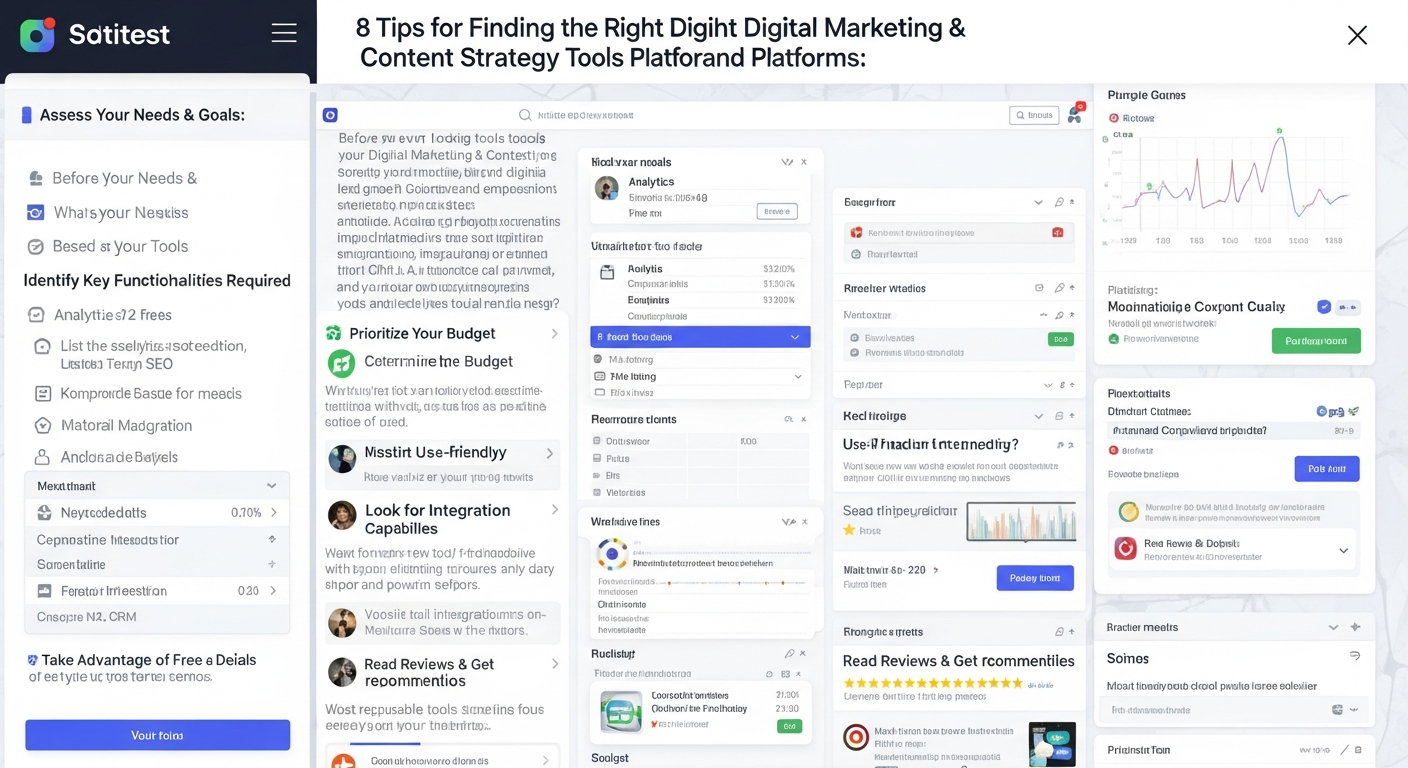
The Strategic Imperative: Aligning Tools and Talent for Sustainable Growth
In today’s hyper-competitive environment, the pursuit of sustainable growth demands more than just a good product or service. It necessitates a meticulously planned ecosystem where cutting-edge tools empower skilled individuals, and talented people intelligently leverage technology to achieve strategic objectives. This symbiotic relationship is the bedrock of operational excellence and competitive advantage. Without the right tools, even the most brilliant team can be bogged down by inefficiency and manual processes. Conversely, sophisticated tools are wasted investments if the people operating them lack the expertise, training, or strategic vision to utilize them to their full potential. For businesses aiming to scale, innovate, and maintain market relevance, the strategic alignment of tools and talent is not merely an option, but a fundamental imperative.
Consider the complexity of modern digital marketing. An effective strategy relies on a sophisticated tech stack—CRM systems, marketing automation platforms, analytics dashboards, content management systems, and SEO tools. But these tools are only as powerful as the specialists who configure them, interpret their data, and execute campaigns. Similarly, in other sectors, such as manufacturing, the integration of advanced robotics or IoT sensors requires not only significant capital investment but also a workforce capable of managing, maintaining, and optimizing these systems. The challenge lies in creating a cohesive strategy that addresses both fronts simultaneously, ensuring that investments in one area amplify the returns in the other.
Tip 1: Define Your Business Needs and Goals with Precision
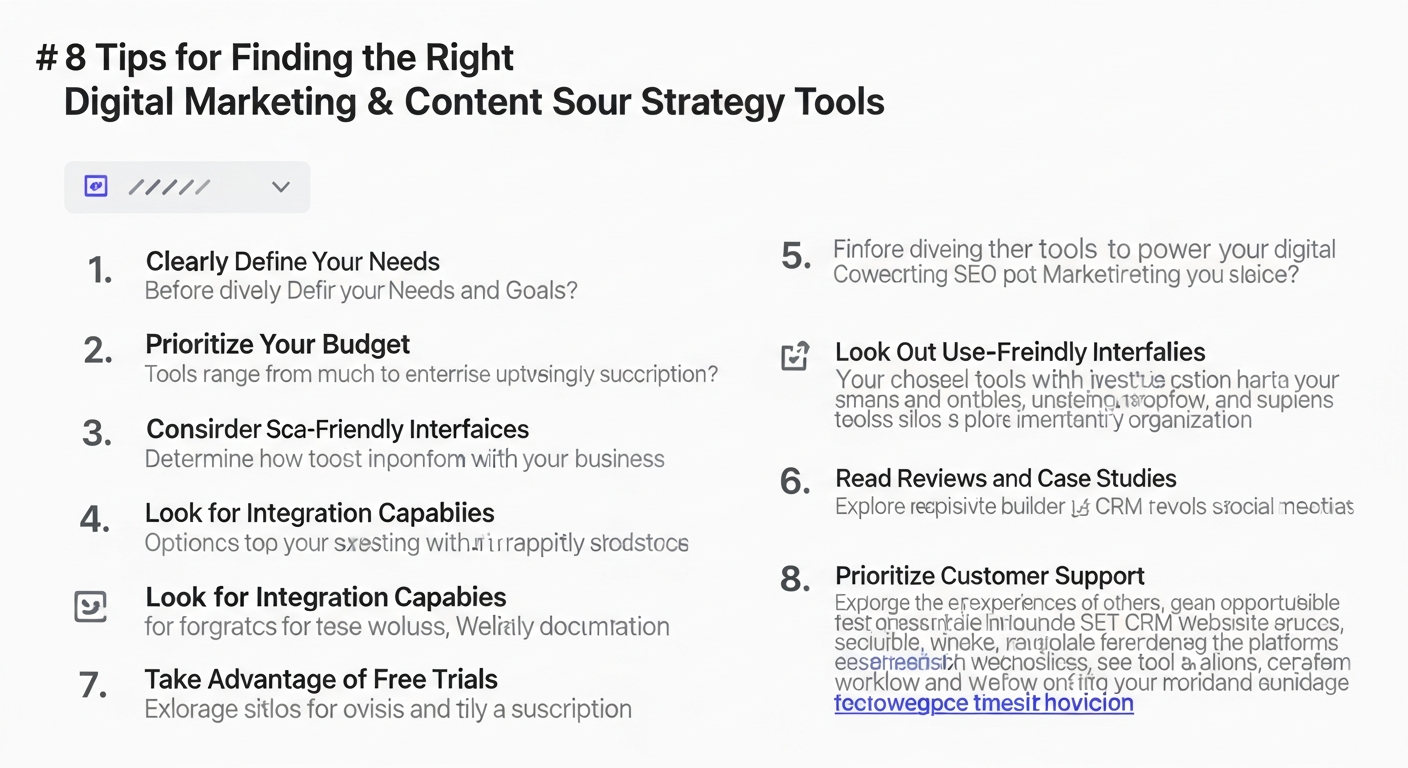
Before embarking on the quest for the perfect tool or the ideal candidate, the foundational step is to gain absolute clarity on your business’s specific needs, challenges, and overarching strategic goals. This isn’t a superficial exercise; it requires a deep dive into your current operations, identifying bottlenecks, inefficiencies, and areas ripe for improvement. Without this precise definition, any subsequent search will be akin to shooting in the dark, leading to costly misinvestments and wasted resources.
- Conduct a Thorough Needs Assessment: Begin by auditing your existing processes, workflows, and technologies. What are your current pain points? Where are time, money, or effort being wasted? Are there manual tasks that could be automated? What data insights are you currently missing? This assessment should span all departments, from marketing and sales to operations and customer service. For instance, a manufacturing business might identify a need for better inventory management, production scheduling, or quality control. Understanding these specific gaps will guide your search for solutions, whether they involve implementing new software or hiring specialized personnel.
- Define Clear Objectives & KPIs for Tools: For every identified need, establish clear, measurable objectives. What specific problems will a new tool or hire solve? How will its success be measured? For a marketing team, an objective might be “reduce customer acquisition cost by 15% within 12 months,” or “increase lead conversion rate by 10%.” For an operational tool, it could be “reduce production downtime by 20%.” These quantifiable goals provide a framework for evaluating potential solutions and ensure that your investments are directly tied to tangible business outcomes. Without precise KPIs, it’s impossible to gauge ROI effectively.
- Project Future Growth and Scalability: Look beyond immediate needs. How will your business evolve in 2026 and beyond? Will your chosen solutions be able to scale with your projected growth? Consider future product lines, market expansions, or increased customer volume. Tools and talent acquired today should ideally have the capacity to adapt and grow alongside your business, preventing the need for costly replacements or re-training in the near future. This forward-thinking approach minimizes disruption and maximizes the long-term value of your investments.
Tip 2: The Right Tools for the Right Job – A Data-Driven Approach
- Research and Compare Solutions Extensively: Don’t settle for the first option you encounter. Dedicate time to thorough research. Read industry reviews, consult analyst reports, participate in product demos, and seek peer recommendations. Look for tools that have a proven track record in your industry or for businesses of your size. For example, if you’re exploring content marketing tools, compare capabilities for SEO optimization, content creation, distribution, and analytics. If your manufacturing business is seeking to optimize its supply chain, you might research robust ERP (Enterprise Resource Planning) systems or specialized SCM (Supply Chain Management) software. This deep dive helps you understand the landscape and identify top contenders.
- Prioritize Integration and Scalability for Tools: A standalone, powerful tool might seem appealing, but its true value is unlocked when it seamlessly integrates with your existing tech stack. Data silos are productivity killers. Ensure that any new software can communicate effectively with your CRM, accounting software, marketing automation platform, or other critical systems. Furthermore, evaluate its scalability. Can it handle increased data volume, more users, or additional functionalities as your business grows? Investing in a tool that quickly becomes obsolete or creates integration nightmares is a costly mistake. This is particularly crucial for complex systems like an online waiver system; it needs to integrate smoothly with your booking or client management platform to avoid friction.
- Emphasize User Experience and Adoption for Tools: The most feature-rich tool is worthless if your team finds it too complex, cumbersome, or unintuitive to use. Poor user experience leads to low adoption rates, resistance from employees, and ultimately, a wasted investment. Prioritize tools with an intuitive interface, comprehensive support, and accessible training resources. Consider running pilot programs or trials with a small group of end-users to gather feedback before a full rollout. A tool that simplifies workflows and enhances productivity will be embraced, while one that adds friction will be abandoned.
- Consider Total Cost of Ownership (TCO): Beyond the initial purchase price or subscription fee, factor in implementation costs, training expenses, ongoing maintenance, support fees, and potential customization costs. Sometimes a seemingly cheaper solution can end up being more expensive in the long run due to hidden fees or extensive customization requirements. A comprehensive TCO analysis ensures you have a realistic understanding of the financial commitment.
Tip 3: Cultivating a Talent Acquisition Strategy for High-Performance Teams

With tools in place or identified, the focus shifts to the human element. Finding the right people is arguably more challenging than finding the right tools, as it involves human dynamics, culture fit, and long-term potential. A robust talent acquisition strategy is essential for building high-performing teams that can leverage your tools effectively and drive your business forward.
- Develop a Robust Talent Profile: Go beyond a generic job description. For each role, create a detailed talent profile that outlines not just the required skills and experience, but also the desired behavioral traits, problem-solving abilities, and cultural fit. What kind of personality thrives in your environment? What soft skills are crucial for success in this role? For a digital marketing role, for example, beyond SEO and content writing skills, you might look for analytical thinking, adaptability, and strong communication. This detailed profile acts as your North Star throughout the recruitment process, helping you identify candidates who are truly aligned with your company’s values and mission.
- Leverage Diverse Recruitment Channels: Relying solely on traditional job boards can limit your talent pool. Explore a variety of channels to reach a wider and more diverse range of candidates. This includes professional networking sites (like LinkedIn), industry-specific forums, university career services, employee referral programs, and even engaging with specialized recruitment agencies. For example, if you’re looking for an SEO specialist, you might consider engaging with the best Denver SEO firm for business marketing to understand their hiring practices and potentially source top talent, or explore industry-specific SEO communities. Diversifying your channels increases your chances of connecting with passive candidates who might not be actively looking but are open to new opportunities.
- Implement a Structured Interview & Onboarding Process: A structured interview process ensures fairness, reduces bias, and allows for consistent evaluation across candidates. Develop a standardized set of questions, including behavioral and situational questions, that assess both hard skills and soft skills. Utilize scorecards to objectively compare candidates. Once hired, a comprehensive onboarding program is crucial. It’s not just about paperwork; it’s about integrating the new hire into your company culture, providing necessary training on tools and processes, and setting clear expectations. A strong onboarding experience significantly impacts retention and accelerates productivity. This is particularly important for roles that require immediate engagement with complex systems, such as managing the 3 services you need for your manufacturing business, which could include specialized software for inventory, production, and quality control.
- Prioritize Cultural Fit and Potential: While skills and experience are important, cultural fit and potential for growth are equally vital for long-term success. A candidate who aligns with your company’s values and vision is more likely to be engaged, motivated, and a positive influence on team dynamics. Look for individuals who are curious, adaptable, and eager to learn, as these qualities are invaluable in a rapidly evolving business landscape. Assess their ability to collaborate, communicate, and contribute to a positive work environment during the interview process.
Tip 4: Empowering Your Workforce Through Training, Culture, and Continuous Improvement
Acquiring the right tools and people is only half the battle. To truly maximize your investment and ensure sustained growth, you must focus on empowering your workforce, fostering a culture of continuous learning, and regularly evaluating your approach. This ongoing commitment ensures that your tools remain effective and your people remain at the forefront of their fields.
- Invest in Ongoing Training and Development: Technology evolves at a dizzying pace, and new best practices emerge constantly. Provide continuous training and development opportunities for your employees to ensure they remain proficient with your tools and up-to-date with industry trends. This could include certifications, workshops, online courses, or internal knowledge-sharing sessions. For instance, if you’ve implemented a new CRM system, regular advanced training can help your sales team leverage its full capabilities. Investing in your people’s growth not only enhances their skills but also boosts morale, engagement, and retention.
- Foster a Culture of Collaboration and Innovation: Create an environment where employees feel empowered to share ideas, experiment with new approaches, and collaborate across departments. Encourage cross-functional teams to tackle complex problems, leveraging diverse perspectives. A culture that celebrates innovation, even when experiments fail, encourages risk-taking and fosters a dynamic, forward-thinking workforce. This also means providing platforms and processes for feedback on tools and workflows, allowing employees to contribute to their optimization.
- Establish Clear Performance Metrics and Feedback Loops: To ensure both tools and people are performing optimally, establish clear, measurable performance metrics. Regularly review these metrics and provide constructive feedback. For tools, this means analyzing usage data, efficiency gains, and ROI. For people, it involves regular performance reviews, one-on-one meetings, and 360-degree feedback. Transparent feedback loops help individuals understand their strengths and areas for improvement, while also providing valuable insights into the effectiveness of your tools and processes.
- Regularly Review and Adapt Your Tool and Talent Stack: The business landscape is not static. What worked yesterday might not work tomorrow. Schedule periodic reviews—perhaps annually or bi-annually—to assess the continued relevance and effectiveness of your tools and the alignment of your talent with your strategic goals. Are there new tools on the market that could offer significant advantages? Are your employees’ skills still aligned with your business needs for 2026? Be prepared to adapt, upgrade, or even replace tools and to restructure teams or provide retraining as necessary. Agility in this area is key to long-term success.
Synthesizing Success: A Holistic Framework for 2026 and Beyond
Finding the right tools and the right people is not a one-time project; it’s an ongoing commitment to strategic alignment and continuous improvement. For businesses aiming to achieve sustainable growth and maintain a competitive edge in 2026 and beyond, a holistic framework that integrates technology and human capital is indispensable. By diligently defining your needs, making data-driven decisions on tool selection, developing robust talent acquisition strategies, and fostering an empowering culture, you lay the groundwork for an agile, resilient, and highly productive enterprise.
The synergy between cutting-edge technology and skilled individuals creates a powerful engine for innovation and efficiency. Whether it’s implementing an advanced manufacturing execution system as one of the 3 services you need for your manufacturing business, or hiring a specialized team from the best Denver SEO firm for business marketing to optimize your digital presence, the underlying principle remains the same: strategic investments in both tools and talent are the catalysts for achieving ambitious business growth objectives. Embrace this dual focus, and your business will be well-positioned to navigate future challenges and seize emerging opportunities.
Frequently Asked Questions
Recommended Resources
Explore How To Negotiate A Higher Salary for additional insights.
Related reading: Airline Miles Vs Cashback Which Is Better (Gold Points).