
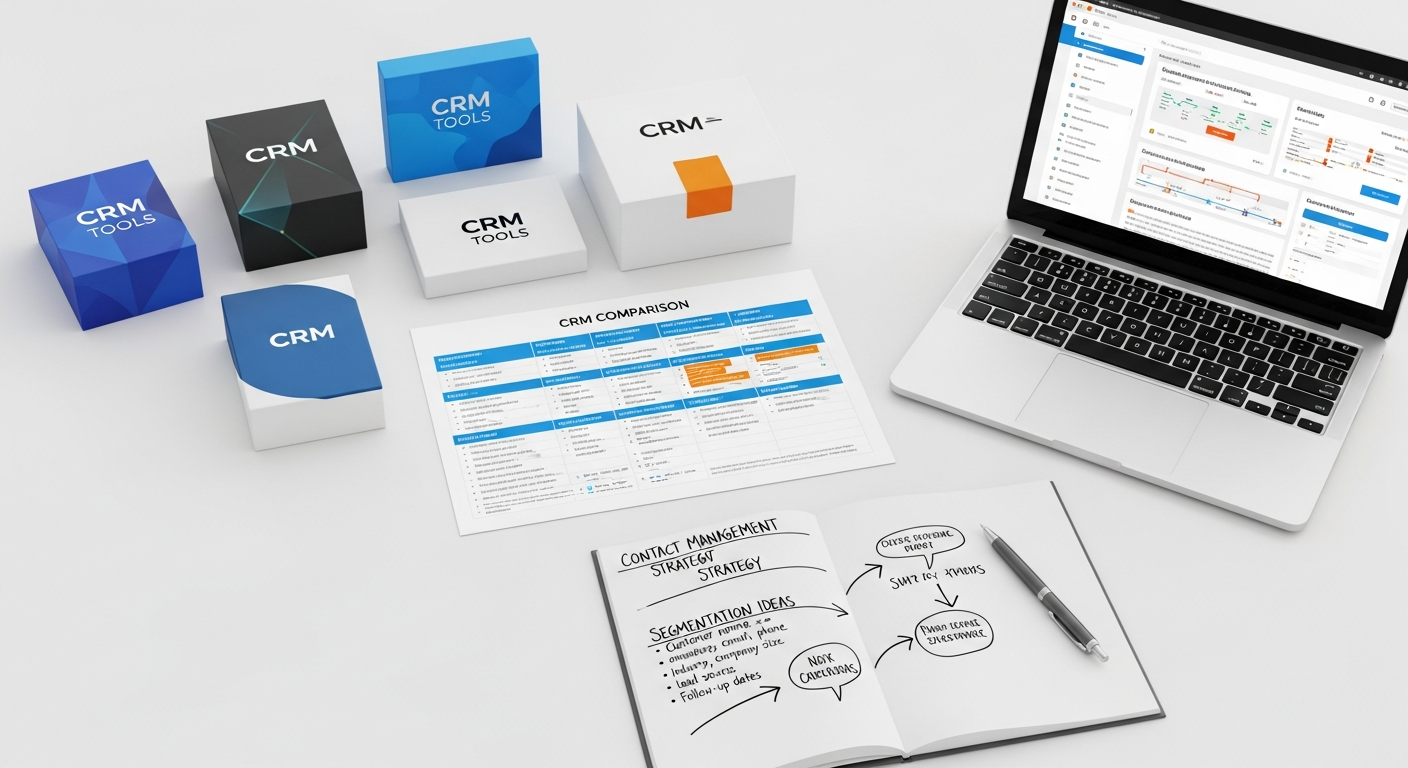
Understanding CRM in 2026 for Small Businesses: More Than Just Contact Management
For many small business owners, the term CRM (Customer Relationship Management) might still evoke images of glorified contact databases. However, by 2026, this perception will be significantly outdated. Modern CRM systems are sophisticated, integrated platforms designed to manage every facet of a customer’s journey, from initial lead generation to post-sale support and retention. For small businesses, this evolution is particularly significant. Unlike larger enterprises with vast resources, small businesses often operate with lean teams and tighter budgets, making efficiency and automation paramount. A well-chosen CRM in 2026 will serve as the central nervous system of their customer interactions, providing a unified view of every customer touchpoint across sales, marketing, and customer service departments.
The core philosophy behind CRM for small businesses in 2026 remains the same: to foster stronger, more profitable customer relationships. What has changed, however, is the breadth and depth of capabilities offered by these platforms. We’re moving beyond simple record-keeping to predictive analytics, hyper-personalization, and proactive engagement. Small businesses that embrace these advanced CRM functionalities will gain a significant competitive edge, allowing them to understand their customers better, anticipate their needs, and deliver exceptional experiences that build loyalty and drive repeat business. The ability to centralize data, automate repetitive tasks, and gain actionable insights will free up valuable time for small business teams, enabling them to focus on strategic initiatives and direct customer engagement rather than administrative overhead. This shift from merely managing contacts to orchestrating entire customer lifecycles is what defines the future of CRM for the small business sector.
Key Features Small Businesses Need in a CRM by 2026
As the technological landscape continues to advance rapidly, small businesses need to be discerning when selecting a CRM. By 2026, certain features will transition from “nice-to-have” to “must-have” for any small business aiming for efficiency and growth. The ideal CRM will not only simplify operations but also provide strategic advantages.
- Comprehensive Contact and Lead Management: Beyond basic contact details, a 2026 CRM must offer robust lead tracking, segmentation capabilities, and a detailed history of interactions. This allows small businesses to quickly understand where each customer or prospect stands in their journey.
- Sales Automation: Automating repetitive sales tasks such as lead assignment, follow-up reminders, and quote generation is crucial. This frees up sales teams to focus on selling, improving productivity and reducing manual errors. Features like pipeline visualization and deal forecasting are also indispensable for strategic planning.
- Marketing Automation Integration: This is where Marketing Automation Tools 2026 truly shine. A CRM needs to seamlessly integrate with marketing automation platforms to execute targeted campaigns, segment audiences based on CRM data, and track campaign performance. This ensures a cohesive customer experience from initial outreach to conversion. Features like email marketing, landing page creation, and social media management within or through integration with the CRM are vital.
- Customer Service & Support: Providing excellent customer service is a cornerstone of small business success. A CRM in 2026 should offer ticketing systems, knowledge base integration, and omnichannel support (email, chat, phone) to ensure timely and effective resolution of customer queries. This builds trust and fosters long-term relationships.
- Reporting and Analytics: Data-driven decisions are non-negotiable. The CRM must provide customizable dashboards and insightful reports on sales performance, marketing campaign effectiveness, customer service metrics, and overall ROI. Small businesses need to be able to identify trends, pinpoint areas for improvement, and measure the impact of their efforts.
- Mobile Accessibility: For small business owners and their teams who are often on the go, a robust mobile app is indispensable. The ability to access customer data, update records, and manage tasks from anywhere ensures continuity and responsiveness.
- Customization and Scalability: Small businesses have unique workflows and needs. The CRM should be flexible enough to be customized without extensive coding, and scalable enough to grow alongside the business without requiring a complete system overhaul.
- Integration Capabilities: A truly effective CRM will not operate in a silo. It must integrate seamlessly with other essential business tools, such as accounting software, e-commerce platforms, and communication tools, creating a unified ecosystem that streamlines operations across the entire organization.
Choosing a CRM with these features will equip small businesses to manage their customer relationships effectively, automate key processes, and gain valuable insights, positioning them for sustained success in the competitive market of 2026.
Integrating CRM with Your Digital Marketing Strategy Small Business 2026
A robust Digital Marketing Strategy Small Business 2026 will leverage CRM data to power every aspect of its outreach. Imagine segmenting your email lists not just by demographics, but by purchase history, website engagement, past support tickets, and even predicted future needs – all accessible directly from your CRM. This level of granular segmentation allows for the creation of highly targeted campaigns that feel personal and relevant, significantly increasing open rates, click-through rates, and ultimately, conversions.
Furthermore, CRM integration fuels lead nurturing sequences. When a prospect interacts with your marketing content (e.g., downloads an ebook, attends a webinar), this activity is recorded in the CRM. This data then triggers automated follow-up emails, tailored content suggestions, or alerts to the sales team, ensuring that leads are nurtured effectively through the sales funnel. This seamless handoff between marketing and sales, orchestrated by the CRM, eliminates silos and ensures that no lead falls through the cracks.
Attribution modeling also becomes significantly more accurate with integrated CRM. Small businesses can precisely track which marketing channels and campaigns are most effective in generating high-quality leads and converting them into customers. This insight is invaluable for optimizing marketing spend, allowing businesses to allocate resources to the strategies that yield the best ROI. For instance, if the CRM data reveals that leads originating from a specific social media campaign have a higher lifetime value, the digital marketing strategy can be adjusted to prioritize that channel.
The synergy between CRM and digital marketing extends to customer retention. Post-purchase, CRM data can inform re-engagement campaigns, loyalty programs, and personalized offers based on past purchases or service interactions. This proactive approach to customer retention is far more cost-effective than constantly acquiring new customers. By using CRM to understand customer behavior and preferences, small businesses can craft compelling marketing messages that foster loyalty and encourage repeat business, making their Digital Marketing Strategy Small Business 2026 a continuous cycle of engagement and growth.
Leveraging AI and Automation in Your 2026 CRM
The integration of Artificial Intelligence (AI) and advanced automation is no longer a futuristic concept for CRM; by 2026, it will be a cornerstone for small businesses seeking to optimize their customer relationships and operational efficiency. AI is transforming CRM from a reactive record-keeping system into a proactive, intelligent assistant, offering unprecedented opportunities for growth and personalization.
One of the most significant impacts of AI in CRM for small businesses is in predictive analytics. AI algorithms can analyze vast amounts of customer data—purchase history, browsing behavior, support interactions, and demographic information—to identify patterns and predict future customer behavior. This includes predicting which leads are most likely to convert, which customers are at risk of churning, and what products or services a customer might be interested in next. With these insights, small businesses can proactively tailor their sales pitches, marketing campaigns, and customer service outreach, leading to higher conversion rates and improved customer retention.
Marketing Automation Tools 2026, often powered by AI, are becoming increasingly sophisticated. AI can personalize email content, recommend optimal send times, and even dynamically adjust website content based on individual visitor behavior. This level of personalization, once reserved for large enterprises, is now accessible to small businesses through intelligent CRM platforms, allowing them to deliver highly relevant messages at the right moment, fostering deeper engagement and loyalty.
AI also plays a crucial role in enhancing customer service. AI-powered chatbots can handle routine inquiries 24/7, providing instant support and freeing up human agents to focus on more complex issues. These chatbots can access CRM data to provide personalized responses, improving customer satisfaction and reducing response times. Furthermore, AI can analyze customer service interactions to identify common pain points and suggest improvements to products, services, or internal processes.
For content creation, the rise of AI Writing Tools Content Marketing is directly impacting how small businesses engage with their customers. Integrated with CRM, these tools can generate personalized email subject lines, social media posts, or even blog outlines based on customer segments and their interests. Imagine an AI tool drafting a follow-up email that incorporates details from a recent support interaction recorded in the CRM, or suggesting content topics that align with the purchase history of a specific customer segment. This not only saves time but also ensures that marketing messages are always relevant and engaging, enhancing the overall customer experience.
Finally, AI-driven automation within CRM can streamline countless internal processes. From automatically updating contact records with the latest interaction details to scoring leads based on their engagement, AI reduces manual effort, minimizes errors, and ensures data consistency. This allows small business teams to focus on strategic thinking and direct customer engagement, rather than getting bogged down in administrative tasks. By embracing AI and automation, small businesses can elevate their CRM into a powerful engine for intelligence, efficiency, and personalized customer engagement in 2026.
Top CRM Tools for Small Business 2026: Navigating Your Options
Choosing the right CRM tool is a pivotal decision for any small business looking to thrive in 2026. The market is saturated with options, each offering a unique blend of features, pricing, and scalability. While “the best” CRM is subjective and depends entirely on a business’s specific needs, budget, and growth aspirations, several platforms consistently stand out for their suitability for small businesses. Here, we’ll discuss categories and examples of prominent CRM tools for small business 2026, focusing on their strengths.
All-in-One Powerhouses for Growth-Oriented Small Businesses
For small businesses that anticipate significant growth and require a comprehensive suite of tools for sales, marketing, and service, platforms like HubSpot CRM and Zoho CRM are excellent choices. HubSpot, particularly known for its user-friendly interface and extensive free tier, offers a robust set of tools across its “Hubs” (Marketing, Sales, Service, CMS, Operations). Its integrated approach means that as a small business grows, it can seamlessly add more advanced features without needing to switch platforms. HubSpot excels in providing strong marketing automation capabilities, making it a powerful ally for a sophisticated Digital Marketing Strategy Small Business 2026.
Zoho CRM, part of the larger Zoho ecosystem, offers a highly customizable and scalable solution. It’s often praised for its extensive feature set at a competitive price, making it accessible for small businesses looking for enterprise-level functionalities without the hefty price tag. Its ability to integrate with over 50 other Zoho applications means businesses can build a truly integrated operational stack.
Sales-Centric CRMs for Streamlined Pipelines
If a small business’s primary challenge is managing its sales pipeline and improving conversion rates, then sales-focused CRMs might be more appropriate. Pipedrive is a prime example, built around a visual sales pipeline that makes it incredibly intuitive for sales teams to track deals, manage activities, and prioritize leads. Its focus on activity-based selling ensures that sales reps always know what to do next. While it offers integrations for marketing and support, its core strength lies in sales process optimization.
Another strong contender in this category is Freshsales (part of Freshworks). It combines CRM functionalities with AI-powered lead scoring, visual sales pipelines, and built-in phone and email capabilities. Its predictive AI features can help small businesses identify hot leads and prioritize their outreach, aligning well with the need for smart automation in 2026.
Budget-Friendly and Easy-to-Use Options
For very small businesses, startups, or those with limited budgets and simpler needs, accessibility and ease of use are paramount. Tools like Insightly and the free tiers of HubSpot CRM offer a solid foundation. Insightly provides good contact management, project management features, and basic sales automation, often appealing to service-based small businesses. The free versions of popular CRMs are excellent for getting started, allowing businesses to experience the benefits of CRM without significant upfront investment, and then scale up as their needs and budget evolve.
AI-Enhanced and Future-Ready CRMs
As AI becomes more embedded, evaluating a CRM’s AI capabilities will be crucial. Platforms that offer AI-driven insights, predictive analytics, and smart automation (like those found in advanced tiers of Salesforce Essentials or Zoho CRM’s Zia AI) will give small businesses a significant edge. These features are critical for leveraging Marketing Automation Tools 2026 and even complementing AI Writing Tools Content Marketing by providing data-driven prompts for content creation.
Ultimately, the selection process should involve a thorough assessment of current pain points, future growth plans, existing tech stack, and budget. Most reputable CRM providers offer free trials, allowing small businesses to test drive the features and ensure the chosen solution aligns perfectly with their operational needs and strategic objectives for 2026 and beyond.
Implementing and Maximizing Your CRM Investment in 2026
Acquiring a powerful CRM tool is only the first step; successful implementation and ongoing optimization are what truly unlock its potential for a small business in 2026. A poorly implemented CRM can become a costly data graveyard, while a well-executed strategy can transform it into a growth engine. Maximizing your CRM investment requires a thoughtful approach, focusing on preparation, user adoption, and continuous improvement.
1. Strategic Planning and Goal Setting
Before even selecting a CRM, define clear objectives. What specific problems are you trying to solve? Are you aiming to increase sales conversion rates, improve customer retention, streamline marketing efforts, or enhance customer service efficiency? Establishing measurable goals (e.g., “increase lead conversion by 15% within 12 months using CRM-driven insights”) will guide your selection process and provide benchmarks for success. This strategic foresight ensures that the CRM aligns with your overall Digital Marketing Strategy Small Business 2026.
2. Data Migration and Cleansing
Your CRM is only as good as the data it holds. Before migrating existing customer data, invest time in cleansing it. Remove duplicates, update outdated information, and standardize formats. This critical step prevents the transfer of “dirty data,” which can undermine the CRM’s effectiveness and lead to inaccurate reports and frustrated users. Plan the migration carefully, ideally in phases, to minimize disruption.
3. Customization and Configuration
Small businesses often have unique workflows. Take advantage of the CRM’s customization options to align it with your specific sales processes, marketing funnels, and customer service protocols. Configure fields, create custom reports, and set up automated workflows that mirror your business operations. Avoid over-customization initially; start with essential configurations and add more as your team becomes familiar with the system.
4. Comprehensive Training and User Adoption
This is arguably the most crucial factor for CRM success. Even the most advanced CRM will fail if employees don’t use it consistently and correctly. Provide thorough, hands-on training tailored to each role (sales, marketing, customer service). Emphasize the “why”—how the CRM will make their jobs easier and more effective. Foster an environment where CRM usage is seen as a benefit, not a burden. Designate internal CRM champions who can support colleagues and address minor issues. Ongoing training and refreshers are also vital as features evolve or new team members join.
5. Integration with Existing Tools
To truly maximize efficiency, integrate your CRM with other essential business applications. This includes your accounting software, email marketing platform (leveraging Marketing Automation Tools 2026), e-commerce platform, and communication tools. Seamless integrations eliminate data silos, reduce manual data entry, and provide a holistic view of customer interactions across all touchpoints. For instance, linking your CRM with an email platform allows for direct use of CRM data for personalized campaigns, while integrating with AI writing tools can help generate content based on customer insights.
6. Continuous Monitoring, Analysis, and Optimization
CRM implementation is not a one-time event. Regularly monitor key performance indicators (KPIs) through the CRM’s reporting features. Analyze sales pipeline velocity, lead conversion rates, customer satisfaction scores, and marketing campaign effectiveness. Use these insights to identify bottlenecks, refine workflows, and optimize your strategies. Periodically review your CRM usage, gather feedback from your team, and make adjustments to ensure the system continues to meet your evolving business needs. Leverage AI features within the CRM to gain deeper insights and automate optimization suggestions, ensuring your CRM investment continues to deliver maximum value in 2026 and beyond.
The Future of Small Business CRM Beyond 2026
As we peer beyond 2026, the trajectory of CRM for small businesses points towards even greater intelligence, integration, and invisibility. The foundational elements of contact management and sales automation will remain, but the way they are powered and experienced will undergo significant transformation. For small businesses, this future promises an even playing field where agility and customer-centricity, rather than sheer size, dictate success.
One major trend will be the deepening integration of Ambient Intelligence. CRMs will become less about manual data entry and more about passively collecting and interpreting customer data from a multitude of sources, often without explicit user interaction. Imagine a CRM that automatically updates a customer’s record based on their social media activity, their interactions on your website, or even their engagement with your physical storefront, all analyzed by AI to provide real-time, actionable insights. This “invisible CRM” will anticipate needs before they are articulated, allowing small businesses to offer truly predictive and proactive customer service and personalized marketing.
The role of Hyper-Personalization at Scale will intensify. While Marketing Automation Tools 2026 already enable personalization, future CRMs, heavily augmented by AI, will move beyond segment-based targeting to truly individual customer journeys. Every interaction, every recommendation, and every piece of content will be uniquely tailored based on an individual’s evolving preferences, mood, and context. This will be critical for small businesses to forge deeper, more meaningful connections in an increasingly noisy digital world, differentiating themselves through unparalleled customer experiences.
Furthermore, expect CRMs to become even more embedded within broader business ecosystems. The lines between CRM, ERP (Enterprise Resource Planning), project management, and collaboration tools will blur further. For small businesses, this means a truly unified platform where customer data informs every operational decision, from inventory management to product development. This holistic view will empower small businesses to respond with greater agility to market shifts and customer demands.
The ethical implications of AI and data privacy will also continue to shape CRM development. Small businesses will need to prioritize transparency and trust, ensuring their use of advanced CRM capabilities aligns with customer expectations and regulatory requirements. CRMs will likely incorporate more robust, built-in privacy features and compliance tools to help small businesses navigate this complex landscape.
Finally, the accessibility of advanced features will continue to democratize. What are considered cutting-edge AI and automation features in 2026 will become standard offerings for small business CRMs beyond that year. This constant evolution ensures that even the smallest enterprises can leverage sophisticated technology to compete effectively, foster strong customer relationships, and drive sustainable growth in an ever-changing business environment. The future of small business CRM is one of intelligent assistance, seamless integration, and profound customer understanding.
Frequently Asked Questions
What is the most crucial feature for a small business CRM in 2026?▾
How does CRM integrate with a Digital Marketing Strategy Small Business 2026?▾
Can AI Writing Tools Content Marketing be integrated with CRM?▾
What are some common challenges small businesses face with CRM implementation?▾
Is cloud-based CRM essential for small businesses in 2026?▾
How can small businesses measure the ROI of their CRM investment?▾
Recommended Resources
You might also enjoy How To Get A Small Business Loan from AssetBar.
Learn more about this topic in Ecommerce Conversion Rate Optimization Guide at E-ComProfits.