
Optimizing for Voice Search: Your 2026 Guide to Conversational SEO
The Shifting Landscape: Why Voice Search SEO Matters More Than Ever
The proliferation of smart speakers (Amazon Echo, Google Home), intelligent assistants embedded in smartphones (Siri, Google Assistant), and in-car systems has fundamentally altered how people interact with technology. Voice commands offer unparalleled convenience, allowing users to multitask, access information hands-free, and receive instant gratification. This inherent ease of use is driving exponential growth in voice search adoption.
Consider the data: while exact figures fluctuate, industry reports consistently show that a significant percentage of internet users now employ voice search daily or weekly. For instance, projections from Statista and various research firms indicated that over half of all smartphone users were engaging with voice technology, with numbers only set to climb. Furthermore, Comscore previously projected that 50% of all searches would be voice searches by 2020 – a milestone that, while potentially delayed by nuances in tracking, underscored the immense trajectory of this technology. By 2026, voice interaction isn’t just common; it’s a default mode for countless queries, especially those of a local or immediate nature.
The impact on businesses is profound. If your content isn’t optimized to be easily discoverable by voice assistants, you’re missing out on a rapidly expanding audience segment. This isn’t merely about ranking for keywords; it’s about being the direct, concise answer provided by a trusted digital assistant. This direct answer bypasses traditional search engine results pages (SERPs) where users might scroll through multiple links. Being the chosen answer means unparalleled visibility and, often, direct user action.
Actionable Tip: Begin by auditing your existing content. Are there opportunities to rephrase headlines or introductory paragraphs to directly answer common questions? Identify pages that already perform well for informational queries and consider how they could be condensed into clear, concise answers suitable for a voice assistant. This initial assessment is crucial for laying the groundwork for your comprehensive voice search SEO strategy.
Understanding Conversational Search: Beyond Keywords to Intent
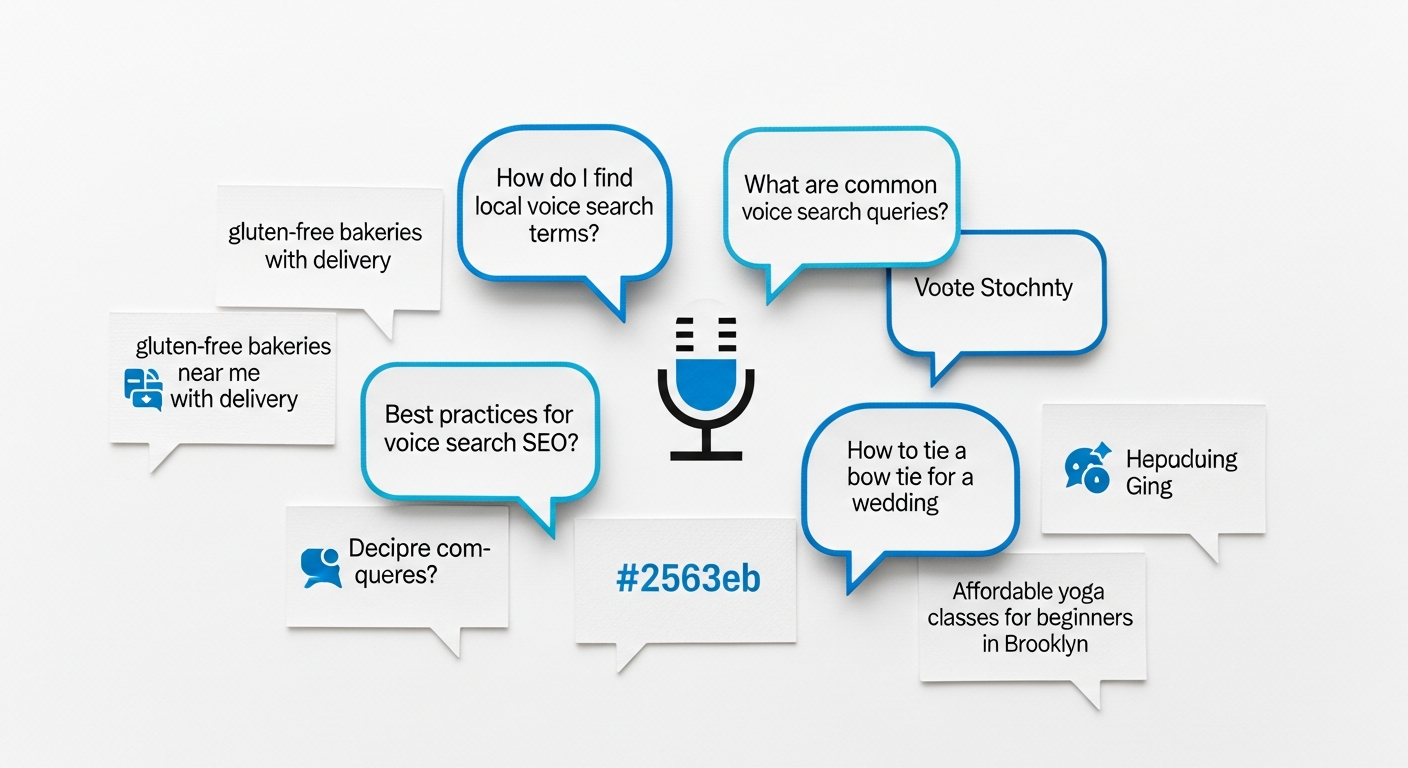
The core difference between traditional text-based search and voice search lies in natural language. When typing, users often employ short, keyword-dense phrases like “best pizza NYC” or “SEO guide 2024.” Voice search, conversely, mirrors human conversation. Queries are longer, more descriptive, and often phrased as complete questions: “Hey Google, where’s the best pizza place near me that’s open right now?” or “Siri, how do I optimize my website for voice search in 2026?”
This shift demands a deeper understanding of Natural Language Processing (NLP) and intent recognition. Search engines, powered by advanced AI, are getting increasingly adept at understanding the context, nuances, and underlying intent of a spoken query. They don’t just look for keyword matches; they decipher the user’s ultimate goal. Are they looking for information (informational intent)? A specific product (commercial intent)? A local business (local intent)? Or do they want to perform an action (transactional intent)?
For instance, a typed search for “weather” might simply yield the current forecast. A voice search asking, “Alexa, will I need an umbrella tomorrow morning in London?” requires the assistant to understand the location, the time frame, and the specific implication of the weather (rain). This sophisticated understanding allows voice assistants to provide highly relevant and personalized responses.
Actionable Tip: Develop detailed user personas that go beyond demographics. Map out their potential voice queries at each stage of their customer journey. What questions would they ask when they’re just starting to research a topic? What about when they’re ready to make a purchase? Consider the tone, complexity, and specific information they’d be seeking. This helps you anticipate and craft content that directly addresses their spoken needs.
Optimizing Content for Voice Search: From Keywords to Question-Based Content
The cornerstone of effective voice search SEO is content that is designed for natural, conversational language. This means moving beyond single keywords and embracing long-tail, question-based phrases that mirror how people speak. Your content needs to provide direct, concise answers to these questions.
Targeting Long-Tail, Question-Based Queries
Voice searches are inherently longer. Focus your keyword research on identifying “who, what, when, where, why, and how” questions related to your niche. Tools like AnswerThePublic, Google’s “People Also Ask” sections, and even autocomplete suggestions on search engines can be goldmines for uncovering these conversational queries. For example, instead of just targeting “digital marketing tips,” consider “What are the best digital marketing strategies for small businesses?” or “How can I improve my website’s SEO ranking?”
Crafting Featured Snippet-Friendly Content
Voice assistants frequently pull answers from Google’s Featured Snippets (also known as “Position 0” or “answer boxes”). To increase your chances of appearing in a featured snippet:
- Provide direct answers: Immediately follow a question (often in an
tag) with a concise, definitive answer in the first paragraph.
- Use structured data: Employ lists (ordered or unordered) for “how-to” content, tables for comparative data, and clear paragraphs for definitions.
- Keep it brief: Aim for answers that are typically 40-60 words in length, as this is the sweet spot for many featured snippets.
- Schema Markup: While discussed more deeply in the next section, utilizing appropriate schema markup helps search engines understand the nature of your Q&A content.
Example: If your business offers a service like “web design,” an article might include a section titled
What is the average cost of web design for a small business?
followed immediately by a paragraph stating: “The average cost of web design for a small business typically ranges from $2,500 to $10,000, depending on complexity, features, and the designer’s experience. Basic brochure sites may be less, while e-commerce platforms can exceed this range.”
Structuring for Readability and Clarity
Voice assistant algorithms favor content that is easy to parse and understand. This means:
- Short paragraphs: Break up text into digestible chunks.
- Bullet points and numbered lists: Excellent for conveying information quickly and clearly.
- Clear headings and subheadings: Use
and
tags to organize your content logically, guiding both users and search engine bots.

Optimizing for Voice Search: Your 2026 Guide to Conversational SEO — image 2 - Natural language throughout: Avoid jargon where possible, or explain it clearly. Write as you would speak.
Actionable Tip: For every piece of content, identify the primary question it aims to answer. Then, ensure that question is explicitly stated (e.g., in an H2 or H3) and followed by the most direct, concise answer possible within the first 50 words. Continuously review your analytics to see which questions users are asking and create dedicated content pieces to address them.
Technical SEO for Voice: Schema Markup, Page Speed, and Mobile-First
While content is king, technical SEO provides the crown. For voice search, certain technical elements are absolutely critical, dictating how easily search engines can discover, understand, and deliver your content.
Schema Markup: The Language of Understanding
Schema.org markup is structured data vocabulary that you add to your HTML to help search engines better understand the context of your content. For voice search, it’s invaluable:
FAQPage: If you have an FAQ section, marking it up with FAQPage schema explicitly tells search engines that these are questions and answers, making them prime candidates for voice search responses.HowTo: For step-by-step guides, HowTo schema can help voice assistants walk users through instructions.LocalBusiness: Essential for local searches, providing details like address, phone, hours, and services.Product,Review,Recipe,Article: All these can enhance visibility for specific query types, improving your chances of getting rich results that voice assistants can leverage.
By implementing relevant schema, you create a semantic bridge, directly communicating the meaning of your content to search engines, increasing its eligibility for featured snippets and direct voice responses.
Blazing Fast Page Speed: The Need for Speed
Voice searchers expect instant answers. They’re typically on the go, multitasking, or seeking immediate information. A slow-loading page will lead to a poor user experience and potential abandonment, even if the voice assistant initially directs them to your site. Google’s Core Web Vitals (Largest Contentful Paint, First Input Delay, Cumulative Layout Shift) are critical metrics here.
Strategies for optimizing page speed include:
- Optimizing images (compression, proper sizing, next-gen formats like WebP).
- Leveraging browser caching.
- Minifying CSS, JavaScript, and HTML.
- Reducing server response time.
- Using a Content Delivery Network (CDN).
Regularly audit your page speed using tools like Google PageSpeed Insights and address any identified bottlenecks.
Mobile-First Indexing and Responsive Design
The vast majority of voice searches originate from mobile devices (smartphones, smart speakers that connect to mobile apps). Google primarily uses the mobile version of your website for indexing and ranking. Therefore, a mobile-first approach is non-negotiable.
Ensure your website is:
- Responsive: It adapts seamlessly to any screen size.
- Fast on mobile: Optimized for mobile load times.
- User-friendly: Easy to navigate with touch, legible fonts, and appropriately spaced elements.
- Secure (HTTPS): Trust signals are paramount. HTTPS is a ranking factor and essential for data security, reassuring both users and search engines.
Actionable Tip: Prioritize implementing appropriate schema markup on your most valuable content pages, especially those targeting informational or local queries. Conduct a thorough technical SEO audit, focusing specifically on Core Web Vitals and mobile responsiveness, and commit to resolving any performance issues promptly.
The Local Angle: Dominating ‘Near Me’ Searches with Voice
Voice search and local search are intrinsically linked. A significant portion of voice queries includes geographical intent, such as “coffee shops near me,” “best plumber in [city],” or “restaurants open now.” For local businesses, optimizing for these conversational, location-based queries is paramount for driving foot traffic and generating leads.
Google My Business (GMB) Optimization
Your Google My Business profile is your digital storefront for local voice searches. It must be meticulously optimized:
- Complete and Accurate Information: Fill out every section – business name, address, phone number (NAP), website, hours of operation, services, and categories. Inaccuracies can be detrimental.
- High-Quality Photos: Showcase your business with appealing interior and exterior photos, as well as product/service images.
- Detailed Business Description: Use relevant keywords naturally within your description.
- Service Areas: Clearly define the areas you serve if you’re a service-based business without a physical storefront.
- Posts and Updates: Regularly share updates, offers, and news to keep your profile active and engaging.
Consistency Across Citations (NAP)
Encourage and Respond to Reviews
Online reviews are a powerful trust signal for both users and search engines. Actively encourage customers to leave reviews on your GMB profile and other relevant platforms. Crucially, respond to all reviews, positive and negative, demonstrating your commitment to customer service and engagement. Positive reviews often contain keywords and phrases that can aid voice search discovery.
Local Schema Markup
Utilize LocalBusiness schema markup on your website to reinforce your local information. This directly tells search engines your business’s name, address, phone number, hours, and services in a structured format, making it easier for voice assistants to extract and present this information.
Actionable Tip: Claim and thoroughly optimize your Google My Business profile today. Conduct a comprehensive audit of your online citations to ensure absolute NAP consistency across all platforms. Actively solicit customer reviews and develop a strategy for responding to them promptly and professionally.
Measuring Success and Adapting: Analytics for Conversational SEO
Optimizing for voice search isn’t a one-time task; it’s an ongoing process of monitoring, analyzing, and adapting. Measuring the success of your conversational SEO efforts can be nuanced, as direct “voice search” metrics aren’t always explicitly reported.
Monitoring Long-Tail Queries in Google Search Console
Google Search Console (GSC) is your primary tool. While GSC doesn’t segment “voice search” specifically, it provides invaluable data on the queries that lead users to your site. Look for:
- Long-tail keywords: Queries with four or more words are often indicative of voice searches.
- Question-based queries: Filter for “who,” “what,” “when,” “where,” “why,” and “how” phrases.
- Queries with “near me” or specific locations: These highlight local voice search performance.
Analyze impressions, clicks, and average position for these types of queries. A high impression count with a good average position for a question-based query suggests your content is being considered by Google for voice responses.
Tracking Featured Snippet Impressions and Clicks
Since voice assistants heavily rely on featured snippets, tracking your performance here is crucial. In GSC, under “Performance” > “Search results,” you can filter for “Search Appearance” and look for “Rich results.” While this isn’t exclusively voice, an increase in featured snippet visibility often correlates with improved voice search performance.
Analyzing User Behavior Post-Voice Search
Once a user lands on your site via a voice-initiated query, their behavior can provide insights using Google Analytics:
- Bounce Rate: A high bounce rate for specific pages might indicate that the content didn’t fully answer the user’s implicit or explicit voice query.
- Time on Page: Longer time on page for relevant content suggests users are finding value.
- Conversion Rates: For transactional or local queries, track if voice-initiated sessions are leading to conversions (e.g., calls, store visits, purchases).
Staying Updated with Algorithm Changes
Search engine algorithms are constantly evolving, particularly in areas like NLP and AI. Stay informed about updates from Google and other major players. Follow reputable SEO news sources and blogs (like Page Release!) to ensure your strategy remains current.
Actionable Tip: Dedicate specific time each month to delve into your Google Search Console data, specifically looking for performance trends related to long-tail and question-based queries. Set up custom segments in Google Analytics to monitor user behavior for specific landing pages that you’ve optimized for voice, allowing you to refine your content and technical approach over time.
The Future of Voice Search: AI, Personalization, and Multimodal Experiences (Beyond 2026)
As we look beyond 2026, the trajectory of voice search points towards even more sophisticated, personalized, and integrated experiences. The foundational principles of conversational SEO will remain, but the technology layered on top will grow exponentially in intelligence.
Advanced AI and Natural Language Understanding
AI will continue to refine its ability to understand context, subtle human emotions, sarcasm, and complex multi-turn conversations. Voice assistants will move beyond simple command-and-response to truly understand intent over extended dialogues, anticipating user needs and offering proactive suggestions. This means SEO will need to focus even more on providing comprehensive, contextually rich content that can serve as a knowledge base for these advanced AIs.
Hyper-Personalization
Voice assistants will leverage vast amounts of user data – search history, location, preferences, even calendar entries – to provide hyper-personalized responses. A query like “what should I cook tonight?” could result in a recipe tailored to your dietary restrictions, what’s in your fridge, and even the weather outside. For businesses, this means understanding niche audience segments and producing highly targeted content will become even more valuable.
Multimodal Search Experiences
The future of voice is not just audio. It’s multimodal. Imagine asking a question via voice, and the answer appearing visually on a smart display, a TV, or even through augmented reality glasses, complete with interactive elements. Voice search will become the primary input method that triggers visual outputs. Optimizing for this future means considering not just the spoken answer but also how that answer can be visually presented and interacted with.
The Rise of Contextual Intelligence
Voice assistants will become more ingrained in our environments – smart homes, smart cars, smart cities. They will understand the context of the user’s surroundings, current activity, and immediate needs. A query about “best places to eat” might be influenced by real-time traffic, event schedules, and personal preferences, all without explicit instruction from the user.
Actionable Tip: Stay curious and experimental. Begin to think about how your content could be visually enhanced or made interactive for devices with screens. Consider how a user might interact with your business if their voice assistant already knows their preferences. This forward-thinking approach will position you to lead rather than follow in the evolving landscape of conversational AI.
Conclusion: Lead the Conversation, Don’t Just Join It
The evolution of voice search is not a trend to observe; it’s a fundamental shift in user behavior that demands immediate and ongoing attention from every business with an online presence. By 2026, the landscape of search will be undeniably conversational, and your ability to thrive within it hinges on your proactive adoption of voice search SEO best practices.
From understanding the nuances of natural language and user intent to meticulously crafting question-based content, optimizing your technical SEO with schema and speed, dominating local ‘near me’ queries, and rigorously measuring your performance, each step contributes to building a resilient and visible digital footprint. The future promises even more intelligent and integrated voice experiences, making continuous adaptation the hallmark of success.
Don’t wait for 2026 to catch up. The time to optimize for voice search is now. Start implementing these strategies today to future-proof your digital presence, capture new audiences, and ensure your brand is not just present, but prominent, in the conversational era of search. Lead the conversation, and your business will undoubtedly lead the market.
Frequently Asked Questions