

Building Your 2026 MarTech Stack: Essential Tools for Digital Marketing Success
For marketing leaders, CMOs, and digital strategists, the challenge isn’t just about identifying the right tools, but understanding how they integrate to create a seamless, data-driven ecosystem. A fragmented approach leads to inefficiencies, lost data, and missed opportunities for meaningful customer engagement. Our aim is to provide an authoritative roadmap for building a robust, future-proof marketing technology stack that drives measurable business growth and positions your brand at the forefront of digital innovation.
The Evolving MarTech Landscape: Why 2026 Demands a Strategic Approach
The sheer volume of marketing technology solutions available today is staggering. Scott Brinker’s iconic MarTech 5000 landscape graphic, which started with just 150 tools in 2011, now depicts over 11,000 distinct solutions. This explosion isn’t just about quantity; it reflects a profound shift in how businesses engage with customers and manage their marketing operations. The pace of innovation, particularly in areas like Artificial Intelligence (AI), machine learning (ML), and data privacy, is accelerating, making strategic MarTech planning more critical than ever.
By 2026, several key trends will define the MarTech landscape:
- Hyper-Personalization at Scale: Generic messaging is dead. Customers expect tailored experiences based on their past interactions, preferences, and real-time behavior. This requires sophisticated data capture, analysis, and automation capabilities.
- Data Unification and Activation: Siloed data is a marketing killer. Marketers need a unified view of the customer across all channels and touchpoints to deliver consistent, relevant experiences. Customer Data Platforms (CDPs) are becoming central to achieving this unification.
- AI and Automation as Standard: AI is moving beyond a buzzword to become an embedded functionality in almost every MarTech tool. From predictive analytics and content generation to automated campaign optimization and customer service chatbots, AI will enhance efficiency and effectiveness across the board.
- Privacy-First Marketing: With increasing regulations like GDPR and CCPA, and the deprecation of third-party cookies, building privacy-compliant, first-party data strategies is paramount. MarTech stacks must be designed to respect user privacy while still enabling personalization.
- Integrated Ecosystems Over Point Solutions: The days of collecting a disparate collection of tools are fading. Businesses need an integrated ecosystem where tools communicate seamlessly, sharing data and insights to power holistic marketing strategies.
Understanding these trends is the first step in formulating a forward-thinking MarTech strategy. It’s no longer enough to react to new technologies; businesses must proactively build a stack that anticipates future demands and provides a competitive edge. A strategic approach involves auditing existing tools, identifying gaps, and prioritizing solutions that offer scalability, robust integration capabilities, and a clear path to ROI. For instance, companies that effectively integrate their MarTech tools often report a 20-30% increase in marketing efficiency and a significant boost in customer engagement metrics.
Actionable Tip: Before adding any new tool, conduct a thorough audit of your current MarTech stack. Identify redundancies, integration gaps, and areas where existing tools are underutilized. Prioritize solutions that offer API access and native integrations with your core systems to prevent data silos.
The Core Pillars of a Robust Marketing Technology Stack
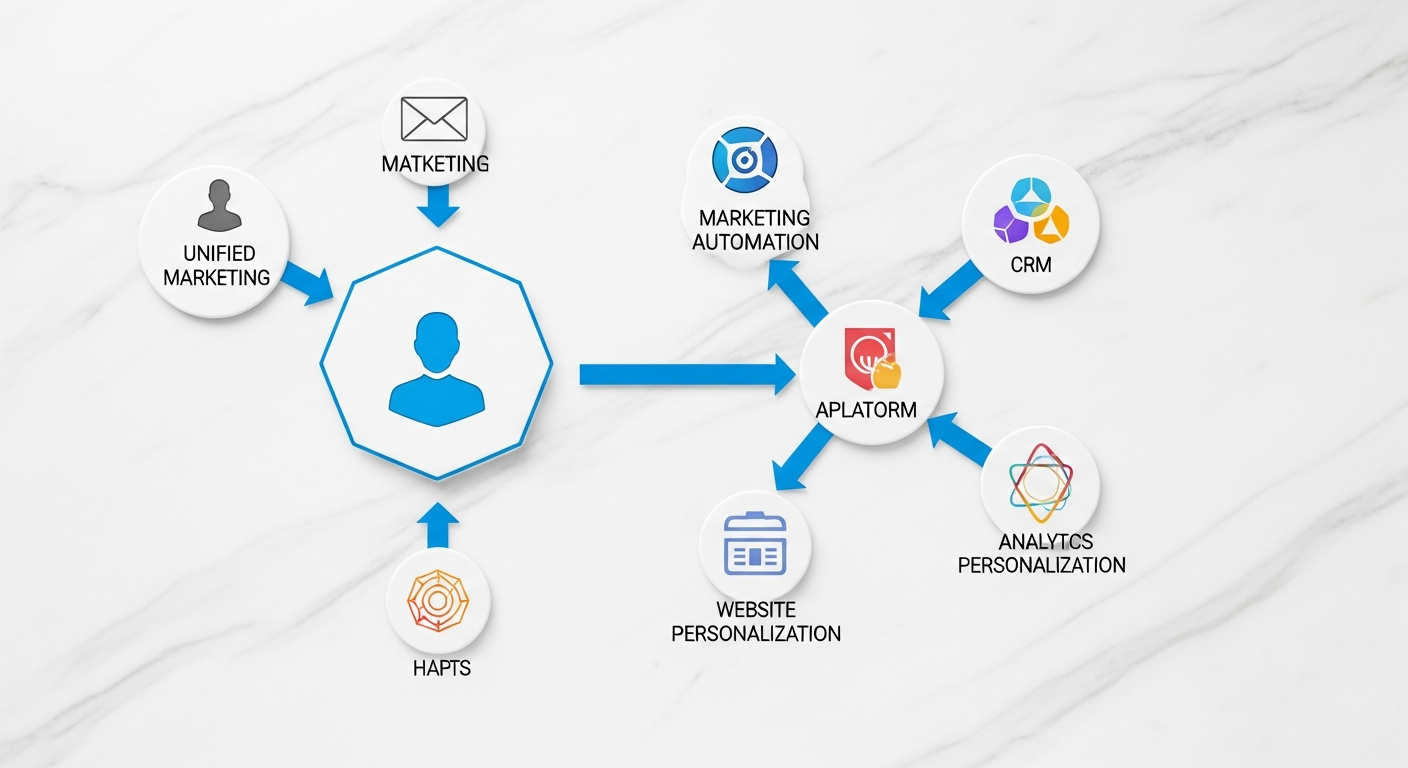
A truly effective marketing technology stack isn’t just a collection of software; it’s a strategic architecture designed to support your entire customer journey, from awareness to advocacy. While specific tools may vary by industry and business size, the underlying functional categories, or “pillars,” remain consistent. Understanding these pillars is crucial for building a cohesive and powerful marketing technology stack for 2026.
- Customer Relationship Management (CRM): At the heart of any MarTech stack, the CRM system serves as the central repository for all customer and prospect data. It tracks interactions, manages sales pipelines, and provides a unified view of each customer. Essential for sales, marketing, and customer service alignment.
- Customer Data Platform (CDP): Increasingly critical, a CDP unifies customer data from various sources (CRM, website, mobile apps, social media, email) into a single, comprehensive customer profile. Unlike CRMs, CDPs focus on data collection, unification, and making that data actionable for personalized experiences across all marketing channels.
- Marketing Automation Platforms (MAP): These platforms automate repetitive marketing tasks such as email campaigns, lead nurturing workflows, social media posting, and ad campaign management. They enable segmentation, personalization, and trigger-based communications, ensuring timely and relevant customer engagement.
- Content & Experience Management: This pillar encompasses tools for creating, managing, and delivering content across various digital touchpoints. It includes Content Management Systems (CMS) for websites and blogs, Digital Asset Management (DAM) systems for media files, and personalization engines to tailor content dynamically.
- Data Analytics & Business Intelligence (BI): These tools are the “brains” of your MarTech stack. They collect, process, and visualize data from all other components, providing insights into campaign performance, customer behavior, and overall marketing ROI. Essential for data-driven decision-making and continuous optimization.
- Advertising & Promotion Platforms: This category includes tools for managing paid media campaigns across search engines (e.g., Google Ads), social media (e.g., Facebook Ads Manager), display networks, and programmatic advertising platforms. They facilitate audience targeting, bid management, and ad performance tracking.
- Search Engine Optimization (SEO) & Content Planning Tools: To ensure content visibility, tools for keyword research, competitor analysis, technical SEO auditing, and content performance tracking are indispensable. They help optimize content for organic search and inform content strategy.
Each pillar supports distinct marketing functions, but their true power emerges when they are deeply integrated. Imagine a scenario where a CDP identifies a segment of customers interested in a specific product, pushes that segment to the MAP, which then triggers a personalized email campaign, while the CRM tracks the engagement, and analytics tools measure the conversion rate. This interconnectedness allows for seamless, data-driven marketing operations.
Actionable Tip: When evaluating tools for each pillar, prioritize those that offer robust APIs and native integrations with other critical components of your stack. Consider starting with an all-in-one platform (e.g., HubSpot, Salesforce Marketing Cloud) if you’re building from scratch, then augment with specialized tools as needed.
Data & Analytics: The Foundation of Intelligent Marketing
In the realm of digital marketing, data is the new oil, and analytics tools are the refinery. Without robust data collection, processing, and interpretation capabilities, even the most sophisticated campaigns are merely shots in the dark. By 2026, the data and analytics pillar will be more crucial than ever, serving as the central nervous system of your entire marketing technology stack. It’s what transforms raw interactions into actionable insights, enabling predictive modeling, personalization, and precise attribution.
A powerful data and analytics component includes:
- Web Analytics Platforms: Tools like Google Analytics 4 (GA4) are fundamental for understanding website traffic, user behavior, conversion paths, and content performance. GA4, with its event-driven data model, is particularly well-suited for cross-platform tracking and predicting user behavior, a critical feature for 2026.
- Customer Data Platforms (CDPs): As mentioned earlier, CDPs (e.g., Segment, Tealium, mParticle) are indispensable for consolidating fragmented customer data from various sources – website, CRM, email, social, mobile apps – into a unified, persistent customer profile. This ‘single source of truth’ allows for advanced segmentation and personalized activation across channels. Forrester estimates that CDPs can help companies boost marketing ROI by 25% or more by improving targeting accuracy.
- Business Intelligence (BI) & Data Visualization Tools: Platforms like Tableau, Microsoft Power BI, or Looker enable marketers to visualize complex data sets, create interactive dashboards, and uncover trends that might be hidden in raw numbers. These tools are vital for presenting performance metrics to stakeholders and driving strategic decisions.
- Attribution Modeling Tools: Understanding which marketing touchpoints contribute to a conversion is essential for optimizing spend. Modern attribution tools (often built into analytics platforms or standalone solutions) use various models (first-click, last-click, linear, time-decay, data-driven) to provide a more accurate picture of ROI across your marketing mix.
- A/B Testing & Experimentation Platforms: Tools like Optimizely, Adobe Target, or Google Optimize (soon to be sunset, replaced by GA4 and other solutions) allow marketers to test different versions of web pages, emails, or ad creatives to identify what resonates best with their audience, leading to continuous improvement in conversion rates.
The synergy between these tools is what truly drives intelligent marketing. A CDP feeds unified customer profiles to your marketing automation platform for targeted campaigns, while web analytics track the engagement with those campaigns. BI tools then aggregate this data, presenting it in a digestible format for strategic review, allowing marketers to allocate budgets more effectively based on empirical evidence. For example, a company using a robust analytics stack might discover that blog content featuring specific case studies drives 30% higher conversion rates for a particular customer segment, prompting them to create more such content.
Actionable Tip: Prioritize implementing a robust CDP early in your MarTech journey. This foundational layer will ensure all your customer data is clean, unified, and accessible, empowering every other tool in your stack to operate at its full potential. Also, invest in training your team on data literacy and the effective use of your analytics platforms.
CRM & Customer Engagement: Nurturing Relationships at Scale
At the heart of any successful business lies its ability to build and maintain strong relationships with its customers. In the digital age, Customer Relationship Management (CRM) systems and related engagement tools are the digital backbone for fostering these connections at scale. By 2026, the CRM will evolve beyond merely a contact database to become a dynamic, integrated hub for understanding, interacting with, and delighting customers throughout their entire lifecycle. This pillar of your marketing technology stack ensures that every interaction is informed, personalized, and contributes to long-term loyalty.
Key components within this pillar include:
- Core CRM Platform: Industry leaders like Salesforce, HubSpot CRM, Microsoft Dynamics 365, and Zoho CRM offer comprehensive solutions for managing contacts, leads, accounts, opportunities, and customer service interactions. Modern CRMs integrate sales, marketing, and service functions, providing a holistic view of the customer journey. For example, HubSpot’s growth suite integrates CRM with marketing automation, sales tools, and service features, offering a unified platform for smaller to mid-sized businesses.
- Sales Enablement Tools: Often integrated with the CRM, these tools streamline the sales process, including proposal generation, document management, e-signature capabilities, and sales content libraries. They empower sales teams to be more efficient and effective, ensuring they have the right information at the right time.
- Customer Service & Support Platforms: Solutions like Zendesk, Freshdesk, or Salesforce Service Cloud integrate with the CRM to manage customer inquiries, support tickets, and knowledge bases. They ensure consistent and efficient support, improving customer satisfaction and retention.
- Loyalty & Advocacy Programs: As retention becomes increasingly vital, tools for managing customer loyalty programs, referral programs, and influencer marketing help convert satisfied customers into brand advocates. These often connect directly with CRM data to track engagement and rewards.
- Live Chat & Chatbots: Providing real-time support and engagement on websites and within applications, these tools (e.g., Intercom, Drift) enhance the customer experience, answer frequently asked questions, and can even qualify leads before handing them over to sales. Many are now powered by AI for increasingly sophisticated interactions.
The true power of this pillar lies in its ability to centralize customer data and make it actionable across departments. When marketing uses CRM data to personalize campaigns, sales uses it to tailor pitches, and customer service uses it to provide informed support, the customer experiences a cohesive and considerate brand. This seamless flow of information ensures that customers don’t have to repeat themselves and feel truly understood.
For instance, a retail company might use their CRM to identify high-value customers who haven’t purchased in 60 days. This segment is then passed to the marketing automation platform to trigger a personalized re-engagement email campaign offering a special discount, while simultaneously alerting the sales team to follow up with a personalized call, all tracked within the CRM. This integrated approach can lead to a significant uplift in customer lifetime value (CLTV), with some businesses reporting a 15-20% increase after optimizing their CRM usage.
Actionable Tip: Don’t just implement a CRM; ensure it’s actively used and data is kept clean and up-to-date. Regular training for sales, marketing, and service teams is crucial for maximizing its potential. Focus on deep integrations with your marketing automation and analytics tools to unlock true relationship nurturing capabilities.
Content & Experience Management: Delivering Value at Scale
In the digital marketing landscape of 2026, content remains king, but context is queen. It’s no longer sufficient to just produce content; you must deliver the right content to the right person at the right time, across an ever-expanding array of channels. This is where the Content & Experience Management pillar of your marketing technology stack becomes indispensable. It encompasses the tools and processes that enable you to create, organize, personalize, and distribute engaging experiences that resonate with your audience and drive action.
Key components of this pillar include:
- Content Management Systems (CMS): Platforms like WordPress, Drupal, HubSpot CMS Hub, or Adobe Experience Manager are foundational for building and managing your website and blog. For future-proofing, consider a “headless CMS” (e.g., Contentful, Sanity.io) which separates content from its presentation layer, allowing you to publish to any digital endpoint (web, mobile app, IoT device) from a single content repository.
- Digital Asset Management (DAM) Systems: As content creation scales, managing images, videos, audio files, and other rich media becomes complex. DAM systems (e.g., Bynder, Canto, Adobe Experience Manager Assets) provide a centralized library for storing, organizing, and distributing digital assets, ensuring brand consistency and ease of access.
- SEO & Keyword Research Tools: Essential for ensuring your content is discoverable, tools like SEMrush, Ahrefs, Moz, and SpyFu help with keyword research, competitor analysis, technical SEO audits, backlink tracking, and content performance monitoring. These tools guide your content strategy and optimization efforts.
- Content Creation & Collaboration Tools: Beyond simple word processors, this includes tools for graphic design (Canva, Adobe Creative Suite), video editing (Adobe Premiere Pro, DaVinci Resolve), and team collaboration (Asana, Trello, Google Workspace) to streamline the content production workflow.
- Personalization & A/B Testing Engines: Tools such as Optimizely, Adobe Target, or built-in CMS personalization features allow you to dynamically serve different content or layouts to various user segments based on their behavior, demographics, or source. This is crucial for delivering highly relevant experiences.
- Social Media Management (SMM) Platforms: Hootsuite, Sprout Social, Buffer, and AgoraPulse enable scheduling posts, monitoring conversations, analyzing performance, and engaging with audiences across multiple social media channels from a single dashboard.
- Video Marketing Platforms: With video consuming a significant portion of online traffic, tools like Wistia, Vimeo, or Brightcove offer advanced hosting, analytics, and interactive features beyond standard YouTube capabilities, especially valuable for B2B and educational content.
The synergy within this pillar is critical. An SEO tool identifies high-opportunity keywords, guiding content creation in the CMS. The DAM ensures that all visual assets are on-brand and easily accessible. A personalization engine then ensures that variations of this content are delivered to different user segments, maximizing relevance. For example, a B2B SaaS company might use SEMrush to identify trending topics, create detailed blog posts in WordPress, manage graphics in their DAM, and then use Optimizely to test different CTAs on the blog post for various industry segments, leading to a 25% improvement in lead capture rates.
Actionable Tip: Adopt a “content-first” strategy, investing in a robust CMS or headless CMS that can serve as the single source of truth for all your content. Integrate your content tools with your analytics and personalization engines to measure content effectiveness and deliver truly dynamic user experiences.
Marketing Automation & AI: Efficiency Meets Engagement
The demand for efficiency and hyper-personalization has made marketing automation an indispensable component of any modern marketing technology stack. By 2026, the integration of Artificial Intelligence (AI) will further elevate these platforms, moving beyond simple task automation to predictive insights, dynamic content generation, and intelligent audience segmentation. This pillar is about streamlining repetitive processes, scaling personalized communication, and making your marketing efforts smarter and more responsive.
Core components of the Marketing Automation & AI pillar include:
- Marketing Automation Platforms (MAPs): Leaders like Marketo (Adobe), Pardot (Salesforce), HubSpot Marketing Hub, ActiveCampaign, and Mailchimp (for smaller businesses) enable the automation of email campaigns, lead nurturing workflows, landing page creation, form submissions, and segmentation. They allow marketers to define trigger-based sequences that move prospects through the sales funnel without constant manual intervention.
- Email Marketing Software: While often integrated into MAPs, standalone email platforms (e.g., Constant Contact, Campaign Monitor) provide robust tools for designing, sending, and tracking email campaigns, including A/B testing subject lines, segmenting lists, and analyzing open/click-through rates.
- AI-Powered Personalization Engines: Beyond rule-based personalization, AI engines (often embedded in CDPs or MAPs, or standalone like Dynamic Yield) use machine learning to analyze user behavior in real-time and dynamically adjust website content, product recommendations, email offers, and ad creatives. This leads to truly individualized experiences at scale. E-commerce businesses, for instance, have seen up to a 10-15% increase in conversion rates by implementing AI-driven product recommendations.
- AI Content Generation Tools: AI writers (e.g., Jasper AI, Copy.ai, OpenAI’s GPT models) are becoming more sophisticated, assisting with generating ideas, drafting copy for emails, social media posts, ad creatives, and even blog outlines. While human oversight remains crucial, these tools significantly accelerate content production.
- Chatbots & Conversational AI: AI-powered chatbots (e.g., Drift, Intercom, ManyChat) provide 24/7 customer support, answer common questions, qualify leads, and guide users through sales processes on websites and messaging apps. They enhance user experience and free up human agents for more complex queries.
- Predictive Analytics & Lead Scoring: AI and machine learning algorithms analyze historical data to predict future customer behavior, identify high-value leads, and score them based on their likelihood to convert. This allows marketing and sales teams to prioritize their efforts on the most promising prospects.
- Programmatic Advertising Platforms: Increasingly leveraging AI, these platforms automate the buying and selling of ad space, using algorithms to bid on impressions based on audience targeting, budget, and performance goals. This ensures ads are shown to the most relevant audiences at the optimal time.
The integration of these tools creates a powerful cycle of efficiency and engagement. A customer’s action (e.g., downloading a whitepaper) triggers an automated email sequence via the MAP. AI analyzes their subsequent website behavior and dynamically personalizes future content and product recommendations. If they engage with a chatbot, AI further refines their profile and helps guide them towards a purchase or support. This intelligent automation not only saves countless hours but also creates highly relevant, impactful interactions that resonate with the individual customer, driving higher conversion rates and stronger brand loyalty.
Actionable Tip: Start by automating your most repetitive marketing tasks (e.g., welcome email series, abandoned cart reminders). Then, explore AI-powered features for deeper personalization and predictive insights. Ensure your automation platform integrates seamlessly with your CRM and CDP to leverage unified customer data effectively.
Strategic Implementation: Optimizing Your Marketing Technology Stack for 2026
Building a powerful marketing technology stack isn’t a one-time project; it’s an ongoing strategic endeavor. As technology evolves and customer expectations shift, your MarTech stack must adapt to remain effective. For 2026 and beyond, successful implementation and continuous optimization will be paramount, requiring a methodical approach that prioritizes integration, scalability, and measurable ROI.
Here are strategic steps for implementing and optimizing your MarTech stack:
- Define Clear Business Goals & Requirements: Before selecting any tool, clearly articulate your marketing and business objectives. Are you aiming to increase lead generation by 30%? Improve customer retention by 15%? Reduce customer acquisition cost (CAC)? Your MarTech stack should be purpose-built to support these specific, measurable goals. This initial step prevents impulse purchases of trendy tools that don’t align with your core strategy.
- Conduct a Comprehensive Stack Audit: Review your existing tools. Identify what’s working, what’s redundant, what has overlapping functionality, and where critical gaps exist. Assess integration capabilities – are your tools talking to each other effectively, or are you manually transferring data? This audit helps streamline your current operations and identifies opportunities for consolidation or new acquisitions.
- Prioritize Integration & Data Flow: The effectiveness of your MarTech stack hinges on how well its components integrate and share data. Prioritize tools that offer robust APIs, native integrations, or are part of a unified suite. Consider an integration platform as a service (iPaaS) solution (e.g., Zapier, Workato, Tray.io) if native integrations are insufficient, to ensure seamless data flow between all systems.
- Phased Implementation & Pilot Programs: Don’t try to overhaul your entire stack at once. Implement new tools or significant changes in phases. Start with a pilot program for key functionalities or a specific team. This allows you to test the waters, gather feedback, and make adjustments before a full rollout, minimizing disruption and risk.
- Focus on User Adoption & Training: The most sophisticated MarTech tools are useless if your team doesn’t know how to use them effectively. Invest heavily in training, creating detailed documentation, and fostering a culture of continuous learning. Appoint MarTech champions within your team who can guide others and troubleshoot common issues. User adoption can make or break the ROI of your MarTech investments.
- Measure, Analyze, and Iterate: Implement clear KPIs for each tool and overall stack performance. Regularly review data from your analytics platforms to understand what’s working and what isn’t. Be prepared to adjust, replace, or reconfigure tools based on performance data. The MarTech landscape is dynamic; your stack should be too. Set quarterly or biannual review cycles.
- Future-Proofing Considerations:
- AI Strategy: How will new AI advancements (e.g., generative AI, advanced predictive models) be integrated?
- Data Privacy & Compliance: Ensure your stack adheres to current and future privacy regulations (GDPR, CCPA, etc.) and offers strong data governance features.
- Ethical AI: Consider the ethical implications of AI tools in your stack, particularly regarding data bias and transparency.
- Scalability: Choose tools that can grow with your business, handling increased data volumes and user loads without significant performance degradation or cost spikes.
- Vendor Relationships: Establish strong relationships with your MarTech vendors. Their support, roadmap, and partnership can be invaluable.
By treating your marketing technology stack as a living, breathing ecosystem that requires continuous care and strategic oversight, you ensure it remains a powerful engine for digital marketing success. A recent study indicated that companies with highly optimized MarTech stacks report 2.5 times higher marketing ROI compared to those with poorly integrated systems.
Actionable Tip: Allocate dedicated budget and resources not just for purchasing tools, but for integration, training, and ongoing optimization. Form a cross-functional MarTech committee to oversee the strategy and ensure alignment across departments.
Conclusion: Powering Your Path to 2026 and Beyond
The journey to building an optimal marketing technology stack for 2026 is a strategic imperative, not just a technical exercise. As digital landscapes grow more complex, customer expectations soar, and AI reshapes the possibilities, a thoughtfully constructed MarTech ecosystem becomes your brand’s most powerful differentiator. It’s about more than just collecting shiny new tools; it’s about intelligent integration, data-driven decision-making, and a relentless focus on delivering unparalleled customer experiences.
From establishing a robust foundation with data and analytics, to nurturing relationships with CRM, crafting engaging experiences with content management, and scaling efforts with marketing automation and AI – each pillar plays a vital role. The synergy between these components transforms fragmented efforts into a cohesive, high-performing marketing engine that drives efficiency, personalization, and measurable business growth. Remember, your MarTech stack is a living asset that demands continuous attention, optimization, and strategic alignment with your evolving business goals.
Don’t let your business fall behind in the race for digital dominance. Take the proactive steps outlined in this guide to assess, build, and refine your marketing technology stack. The future of digital marketing is integrated, intelligent, and customer-centric – are your tools ready to lead the way?
Frequently Asked Questions