
Building a Cost-Effective SaaS Marketing Stack: The 2026 Blueprint for Scalable Growth
The landscape of software marketing has shifted dramatically as we enter 2026. The era of “growth at any cost” has been replaced by a more disciplined, ROI-centric philosophy. For business owners and marketing professionals, the challenge is no longer finding tools—there are thousands of them—but rather assembling a “lean” marketing stack that delivers enterprise-grade results without the enterprise-level price tag. A cost-effective SaaS marketing stack isn’t about choosing the cheapest options; it’s about choosing tools that offer the highest “functional density” and seamless interoperability.
In 2026, the average SaaS company uses dozens of micro-services, but the most successful ones are consolidating. They are moving away from bloated, $2,000-a-month suites in favor of agile, specialized tools that communicate via robust APIs. This guide will walk you through the essential components of a high-performance, low-cost marketing stack designed to help you acquire, convert, and retain customers with surgical precision.
1. The Strategic Foundation: Why “Lean” is the New “Premium”
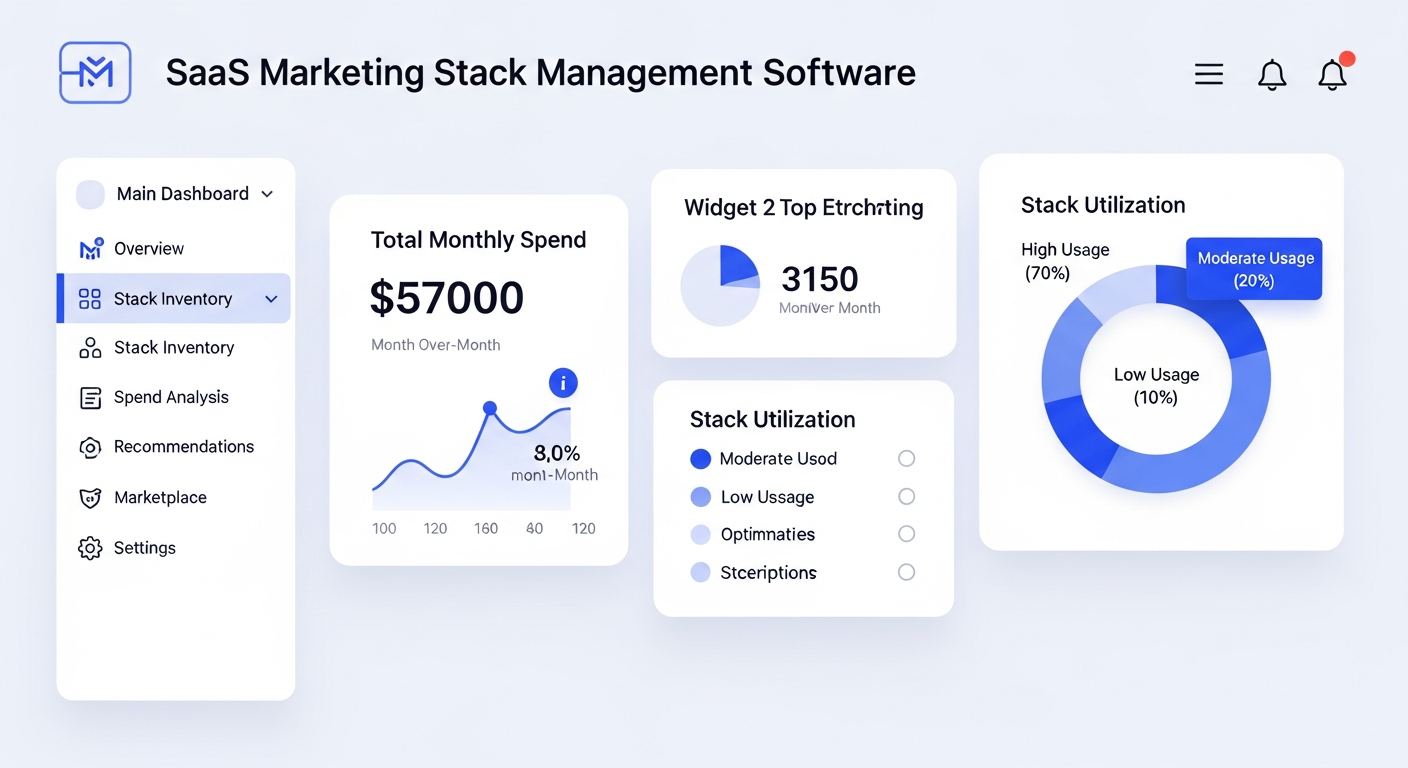
Before diving into specific software, it is vital to understand the philosophy of a cost-effective stack in 2026. The goal is to minimize “shelfware”—software that you pay for but rarely use. Many SaaS founders fall into the trap of purchasing high-tier subscriptions for features they won’t need for another eighteen months.
A cost-effective stack relies on three pillars: **Scalability**, **Automation**, and **Integration**. You want tools that offer a generous “forever free” tier or a “pay-as-you-grow” model. By 2026, the democratization of AI has also meant that many premium features—like predictive analytics or automated copywriting—are now included in entry-level packages.
Instead of hiring a massive team or buying a monolithic platform like Salesforce or Marketo too early, lean companies use “the glue” (automation platforms) to connect specialized, affordable tools. This creates a bespoke system that perfectly fits your unique workflow without the “feature tax” of larger platforms.
2. Customer Relationship Management (CRM): The Central Nervous System
Your CRM is the most important part of your stack. It is the single source of truth for every lead, trial user, and paying customer. For a cost-effective 2026 setup, you need a CRM that prioritizes ease of use over complex custom coding.
**HubSpot** remains a dominant player here, particularly because of its “Start-up Program” which offers significant discounts for eligible companies. Their free tier is incredibly robust, providing basic email marketing, lead capture forms, and contact management. However, if HubSpot’s pricing jumps feel too steep as you scale, consider **Pipedrive** or **Zoho CRM**.
Pipedrive is specifically designed for sales-heavy SaaS models, focusing on pipeline visualization. It is significantly more affordable than enterprise alternatives while offering a clean UI that ensures your team actually uses it. In 2026, the key is choosing a CRM with a strong API. This allows you to pull data from your product directly into your CRM, enabling your sales team to see exactly how a lead is interacting with your software in real-time—a high-value feature that used to be reserved for the biggest players.
3. Content Marketing and SEO: Driving Organic Demand
In 2026, SEO has evolved beyond mere keyword stuffing. It is now about “Information Gain” and topical authority. To build a cost-effective SEO engine, you need tools that help you identify gaps in the market without costing a fortune.
While **Ahrefs** and **Semrush** are the industry standards, their price points can be prohibitive for early-stage SaaS companies. A cost-effective alternative is **Ubersuggest** or **Keywords Everywhere** for basic research, combined with the power of **Google Search Console** (which is free and often underutilized).
For content creation, the 2026 workflow involves using AI as a “first-draft partner.” Tools like **Claude** or **Jasper** can help outline and draft content, but the cost-effectiveness comes from the “human-in-the-loop” model. Instead of paying an agency $1,000 per article, your internal team can use AI to produce 80% of a draft and spend their time on the 20% that adds unique value and brand voice.
Furthermore, consider **Ghost** as a CMS over WordPress if you want a lean, SEO-optimized blogging platform. Ghost is built for publishers; it is faster, has built-in newsletter features, and requires far less maintenance (and fewer paid plugins) than WordPress.
4. Email Marketing and Lifecycle Automation: Nurturing the Funnel
Email marketing remains the highest-ROI channel in the SaaS world. In 2026, the focus has shifted from “blasting” newsletters to “lifecycle triggers.” You need a tool that can send an email based on what a user does (or doesn’t do) inside your app.
**MailerLite** and **Brevo** (formerly Sendinblue) are the champions of cost-effective email marketing. Unlike Mailchimp, which has become increasingly expensive, MailerLite offers advanced automation features—like A/B testing and multi-step workflows—at a fraction of the cost.
For SaaS-specific lifecycle emails (e.g., “You haven’t finished setting up your profile”), **customer.io** is excellent but can get pricey. A more budget-friendly approach is using **Loops.so**. Loops is a modern email platform designed specifically for SaaS companies. It integrates deeply with your product and allows you to send transactional and marketing emails from a single, affordable interface. By 2026, the ability to combine marketing blasts with transactional updates (like password resets) in one tool is a major cost-saver.
5. Analytics and Data Attribution: Measuring What Matters
You cannot optimize what you do not measure. However, in 2026, many businesses are moving away from the complexity of Google Analytics 4 (GA4) in favor of “privacy-first, simple” analytics.
**Plausible** or **Fathom Analytics** are excellent, low-cost alternatives. They provide the 10% of data that actually drives 90% of your decisions: where people come from, what pages they visit, and whether they convert. They are lightweight, meaning they won’t slow down your site (improving SEO), and they are fully GDPR compliant out of the box, saving you potential legal costs.
To understand user behavior *inside* your SaaS, **Microsoft Clarity** is a must-have. It is a completely free alternative to Hotjar, providing heatmaps and session recordings. Seeing where users get stuck in your onboarding flow is the fastest way to increase conversion rates without spending a dollar on more traffic. For attribution—knowing which ad or social post actually led to a sale—ensure your UTM parameters are strictly managed in a simple (and free) Google Sheet or Airtable.
6. The “Glue”: No-Code Automation and Integration
The secret weapon of a cost-effective marketing stack is “The Glue”—automation tools that allow your different software pieces to talk to each other. In 2026, if you are manually exporting CSV files from one tool to import them into another, you are losing money.
**Zapier** is the most famous, but **Make (formerly Integromat)** is often the more cost-effective choice for sophisticated users. Make allows for more complex workflows at a significantly lower cost per execution. For example, you can build a workflow where:
1. A new lead signs up via a **Typeform** (Lead Gen).
2. Their company data is enriched via **Clearbit** or a cheaper API.
3. A personalized Slack notification is sent to your team.
4. The lead is added to a specific nurture sequence in **MailerLite**.
By building these automations, a single founder or a small marketing team can perform the workload of a five-person department. This “operational efficiency” is the ultimate form of cost-cutting in 2026.
FAQ: Maximizing Your Marketing Budget in 2026
#
1. How much should a “lean” SaaS marketing stack cost per month?
For an early-stage SaaS, you can run a professional-grade stack for between $150 and $400 per month. This typically covers a CRM, email automation, basic SEO tools, and a CMS. As your database grows, your email and CRM costs will scale, but your ROI should increase proportionally.
#
2. Can I build a marketing stack using only free tools?
While it is possible to start for $0 using the free tiers of HubSpot, Google Analytics, and MailerLite, you will eventually hit limits. The most “cost-effective” path is usually a hybrid: use free tools for what is non-essential and pay for one or two “anchor” tools (like a high-quality email automation platform) that directly generate revenue.
#
3. Should I choose an “all-in-one” platform or a “best-of-breed” stack?
In 2026, the “best-of-breed” approach is usually more cost-effective. All-in-one platforms often charge a premium for convenience, but you may end up paying for features you don’t use. A modular stack allows you to swap out individual tools as your needs change without overhauling your entire system.
#
4. How does AI affect the cost of a marketing stack in 2026?
AI has actually lowered the cost of entry. Many tools now include AI features that previously required separate, expensive subscriptions. For instance, most email platforms now include AI-driven subject line optimization and send-time optimization as standard features rather than “Pro” add-ons.
#
5. What is the most common mistake when building a marketing stack?
The most common mistake is “Tool Sprawl”—buying three different tools that all have overlapping features. Before adding a new tool to your stack in 2026, audit your current software to see if an existing tool has added that functionality or if it can be achieved through a simple automation via Make or Zapier.
Conclusion: Investing in Growth, Not Just Software
As we look toward the remainder of 2026, the successful SaaS professional is one who views software as an investment, not an expense. A cost-effective marketing stack is characterized by its lack of friction. It’s a system where data flows seamlessly from your website to your CRM, and from your CRM into personalized customer experiences.
By focusing on high-utility tools like HubSpot, MailerLite, Ghost, and Make, you can build a marketing engine that rivals enterprise competitors at a fraction of the cost. The key is to start small, automate relentlessly, and always prioritize tools that offer a clear path to scalability. In the end, the money you save on “bloated” software is capital you can reinvest into what truly matters: reaching your customers and refining your product.