From Data to Decisions: A Guide to Marketing Data Analysis and Reporting in 2026
What is the Evolving Landscape of Marketing Data in 2026?
The marketing data ecosystem in 2026 is a complex, dynamic environment, shaped by advancements in artificial intelligence, stringent privacy regulations, and an explosion of new engagement channels. No longer is it sufficient to merely track website visits or email open rates. Today’s marketers must grapple with predictive analytics, real-time personalization at scale, and fragmented customer journeys across an ever-expanding array of touchpoints.
How are AI and Machine Learning Reshaping Data Analysis?
The rise of AI and machine learning has revolutionized how data is processed and interpreted. AI-powered tools can identify patterns and correlations that human analysts might miss, predict future customer behavior with remarkable accuracy, and even automate elements of campaign optimization. For instance, an AI might analyze millions of data points to predict which customer segments are most likely to churn in the next quarter, allowing proactive retention efforts to be launched. This shift means marketers are less involved in manual data crunching and more in strategic interpretation and ethical deployment of AI.
What are the Impacts of Data Privacy Regulations on Marketing Data?
However, this technological leap is balanced by an intensifying focus on data privacy. Regulations like GDPR, CCPA, and their global counterparts have matured, pushing businesses towards first-party data strategies and transparent consent mechanisms. The deprecation of third-party cookies, while continually evolving, underscores the necessity for marketers to build direct relationships with their audiences and create value exchange that encourages data sharing. This necessitates a more strategic approach to data collection, focusing on quality, relevance, and user trust.
How Does Channel Proliferation Affect Marketing Data?
Furthermore, the proliferation of marketing channels—from emerging metaverse platforms and advanced voice search to niche social networks and increasingly sophisticated programmatic advertising—creates a fragmented data landscape. Customers interact with brands across dozens of touchpoints before converting, making it challenging to stitch together a cohesive view of their journey. Unified customer profiles, often facilitated by Customer Data Platforms (CDPs), are becoming indispensable for overcoming this fragmentation and enabling true cross-channel analysis.
Practical Steps for Adapting to the 2026 Data Landscape:
- Invest in First-Party Data Strategies: Prioritize collecting data directly from your audience through surveys, content interactions, loyalty programs, and direct website engagement. Offer clear value in exchange for data.
- Embrace AI-Powered Analytics: Explore tools that leverage AI for predictive modeling, anomaly detection, and automated insights. Train your team to work alongside AI, focusing on strategic oversight rather than manual processes.
- Fortify Data Governance and Privacy: Ensure your data collection and storage practices are compliant with all relevant privacy regulations. Implement robust consent management platforms and data anonymization techniques.
- Consolidate Customer Data: Implement a Customer Data Platform (CDP) to unify data from various sources into a single, comprehensive customer profile. This enables a 360-degree view of the customer journey.
- Develop Cross-Channel Attribution Models: Move beyond last-click attribution. Investigate multi-touch attribution models (e.g., linear, time decay, W-shaped) to accurately credit each touchpoint in the customer journey.
What are the Core Principles of Effective Marketing Data Analysis?

Effective marketing data analysis transcends mere number-crunching; it’s about asking the right questions, ensuring data integrity, and translating findings into meaningful narratives. In 2026, these core principles form the bedrock of any successful data-driven marketing strategy.
Firstly, clarity of objectives is paramount. Before diving into any dataset, you must clearly define what you aim to achieve or discover. Are you looking to optimize conversion rates for a specific campaign, understand customer lifetime value, or identify underperforming channels? Vague objectives lead to unfocused analysis and irrelevant insights. A well-defined objective acts as a compass, guiding your exploration and ensuring your analysis delivers actionable answers.
Secondly, data quality and integrity cannot be overstated. “Garbage in, garbage out” remains a timeless truth. In an era of automated data collection and diverse sources, ensuring accuracy, consistency, and completeness is crucial. This involves robust data cleaning processes, validation rules, and regular audits. Missing values, inconsistent naming conventions, and duplicate entries can severely skew your analysis and lead to flawed conclusions. Imagine basing a multi-million dollar campaign on flawed conversion data – the consequences could be disastrous.
Thirdly, choosing the right metrics and KPIs (Key Performance Indicators) is critical. Not all data points are created equal. Focus on metrics that directly align with your marketing objectives and provide insights into performance. For an e-commerce campaign, this might include conversion rate, average order value (AOV), customer acquisition cost (CAC), and return on ad spend (ROAS). For content marketing, it could be engagement rate, time on page, and lead generation. Avoid vanity metrics that look good but offer little strategic value.
Finally, segmentation and contextualization are essential for deeper insights. Analyzing aggregated data often masks important nuances. Segmenting your audience by demographics, behavior, source, or engagement level allows you to uncover unique patterns and tailor strategies more effectively. For instance, understanding that customers acquired through social media have a higher AOV than those from search ads, but also a higher CAC, allows for nuanced budget allocation. Contextualizing your data by comparing it against benchmarks, historical performance, or industry trends provides the necessary perspective to interpret findings accurately.
Actionable Tips for Building a Solid Foundation:
- Define SMART Objectives: Before any analysis, ensure your objectives are Specific, Measurable, Achievable, Relevant, and Time-bound.
- Implement Data Governance Policies: Establish clear guidelines for data collection, storage, and usage. Assign ownership for data quality and maintain a centralized data dictionary.
- Regularly Audit Data: Schedule routine checks for data accuracy, completeness, and consistency across all your marketing platforms. Utilize data validation tools where possible.
- Map KPIs to Objectives: For every marketing objective, identify 2-3 key performance indicators that will directly measure its success. Resist the urge to track everything.
- Embrace Granular Segmentation: Don’t just look at overall performance. Segment your data by various attributes (e.g., new vs. returning customers, geographic location, device type, acquisition channel) to uncover hidden trends and opportunities.
- Utilize Benchmarking: Compare your performance against industry standards, competitor data (if available), and your own historical trends to provide context to your findings.
What Tools and Technologies are Essential for Marketing Data Analysis in 2026?
The technological arsenal for marketing data analysis has grown exponentially, moving beyond basic spreadsheets to sophisticated platforms powered by AI and machine learning. In 2026, the right tech stack is crucial for efficient data processing, insightful visualization, and automated decision-making.
At the foundation, Customer Data Platforms (CDPs) have become indispensable. Unlike traditional CRMs or DMPs, CDPs unify customer data from all sources (website, mobile app, CRM, email, advertising, offline interactions) into a persistent, single customer view. This enables real-time segmentation, personalization at scale, and provides a clean, comprehensive dataset for deep analysis. For example, a CDP can ingest transactional data from your e-commerce platform, behavioral data from your website, and interaction data from your social media, stitching it all together to show a customer’s entire journey, not just isolated touchpoints.
Business Intelligence (BI) and Data Visualization Platforms like Tableau, Power BI, Looker Studio (formerly Google Data Studio), and Domo are essential for transforming raw data into understandable and actionable visual reports. These tools offer powerful dashboards, interactive charts, and drill-down capabilities, allowing marketers to spot trends, identify anomalies, and communicate insights effectively. They can connect to various data sources, from CDPs to advertising platforms, providing a centralized view of marketing performance.
AI-Powered Analytics and Predictive Modeling Tools represent the cutting edge. Solutions from companies like Adobe Analytics, Google Analytics 4 (GA4) with its predictive capabilities, and specialized AI platforms can automatically identify patterns, predict future outcomes (e.g., customer churn likelihood, next best action), and even suggest optimizations. For instance, an AI tool might analyze a website’s user flow and identify specific bottlenecks causing significant drop-offs, recommending A/B tests for those particular sections.
Marketing Automation Platforms (MAPs) and CRM systems also play a critical role, not just in executing campaigns but also in collecting behavioral data. Tools like HubSpot, Salesforce Marketing Cloud, and Marketo track customer interactions throughout the funnel, providing valuable data on lead nurturing, email engagement, and conversion paths, which can then be fed into a CDP or BI platform for deeper analysis.
Finally, specialized Attribution Modeling Software helps marketers understand the true impact of each touchpoint. As mentioned before, moving beyond last-click, these tools use advanced algorithms to distribute credit across all interactions, providing a more accurate ROI picture for different channels and campaigns. Tools like Adjust or AppsFlyer are particularly critical for mobile app marketing attribution.
Practical Steps for Selecting and Leveraging Your Tech Stack:
- Assess Your Needs First: Before investing, clearly define your data collection, analysis, and reporting requirements. What questions do you need answers to? What data do you need to achieve your objectives?
- Prioritize Integration: Choose tools that can seamlessly integrate with your existing systems (CRM, e-commerce, advertising platforms) to avoid data silos and ensure a unified view. CDPs excel here.
- Start with a Foundation: Begin with a robust analytics platform (like GA4) and a visualization tool (Looker Studio, Tableau Public for smaller budgets). Add a CDP once data volume and fragmentation become a challenge.
- Train Your Team: Provide comprehensive training for your marketing team on how to use these tools effectively. Foster a culture of data literacy.
- Leverage AI for Insights, Not Just Data: Don’t just collect data with AI; use it to generate actionable insights and predictions. Experiment with AI-driven testing and optimization.
- Stay Agile: The tech landscape evolves rapidly. Regularly review your tools to ensure they still meet your needs and explore new innovations.
What is the Marketing Data Analysis Process, from Raw Data to Actionable Insights?

Turning raw data into strategic decisions is a systematic journey, not a singular event. The process of marketing data analysis in 2026 involves several distinct, iterative steps, each crucial for extracting maximum value from your information assets. This structured approach ensures thoroughness, accuracy, and ultimately, impactful outcomes.
Step 1: Data Collection and Aggregation
The first stage involves gathering data from all relevant sources. This includes website analytics (Google Analytics 4), social media insights (Facebook Insights, LinkedIn Analytics), advertising platforms (Google Ads, Meta Ads Manager), CRM systems (Salesforce, HubSpot), email marketing platforms (Mailchimp, Braze), and potentially offline sales data. In 2026, this often means leveraging CDPs to automatically aggregate and deduplicate data, creating a centralized, real-time repository.
Example: A digital marketing manager for an online fashion retailer uses their CDP to pull website traffic, conversion data, email open rates, social media engagement, and purchase history for the past quarter.
Step 2: Data Cleaning and Preparation
Raw data is rarely pristine. This crucial step involves identifying and rectifying errors, inconsistencies, and redundancies. Tasks include removing duplicate entries, correcting spelling errors, handling missing values (e.g., imputation or removal), standardizing formats (e.g., date formats, UTM parameters), and filtering out irrelevant data (e.g., bot traffic). Data cleaning can be time-consuming but is non-negotiable for reliable analysis.
Example: The marketing manager discovers that UTM parameters were inconsistently applied across some social campaigns, leading to fragmented source data. They use a script to standardize these parameters and filter out known bot traffic spikes from analytics.
Step 3: Data Analysis and Interpretation
This is where patterns, trends, and relationships within the data are uncovered. This step can involve various techniques:
- Descriptive Analysis: Summarizing historical data to understand what happened (e.g., “Our website traffic increased by 15% last month”).
- Diagnostic Analysis: Investigating why something happened by looking for correlations and root causes (e.g., “The traffic increase was primarily driven by a viral TikTok campaign and improved SEO rankings for specific keywords”).
- Predictive Analysis: Using historical data to forecast future outcomes or identify potential risks and opportunities (e.g., “Based on current trends, we predict a 10% increase in Q4 conversions if current ad spend is maintained”). AI/ML models are heavily leveraged here.
- Prescriptive Analysis: Recommending specific actions to achieve desired outcomes (e.g., “To further boost conversions, we should allocate 20% more budget to TikTok ads and launch a retargeting campaign for users who engaged with the viral content”).
Example: The marketing manager performs diagnostic analysis and finds that while TikTok drove significant top-of-funnel traffic, Instagram stories had a higher conversion rate for high-value items, especially among younger demographics. Predictive analysis suggests that personalizing product recommendations based on past purchases could increase AOV by 7% for repeat customers.
Step 4: Data Visualization
Visualizing data makes complex insights accessible and understandable to a wider audience. This involves creating dashboards, charts (bar charts, line graphs, pie charts), heatmaps, and other visual representations that highlight key findings. Tools like Looker Studio, Tableau, or Power BI are invaluable here. Effective visualization tells a story with data.
Example: The marketing manager creates an interactive dashboard showing month-over-month performance, channel-specific ROI, and customer segmentation demographics, making it easy to spot trends and share with stakeholders.
Step 5: Reporting and Communication of Insights
The final step is to synthesize findings into a clear, concise report that answers the initial objectives and provides actionable recommendations. The report should tell a compelling story, focusing on the “so what?” and “now what?” for the business. Tailor the report to your audience – executives need high-level summaries and strategic implications, while campaign managers require granular details for optimization.
Example: The marketing manager presents a report to the executive team, highlighting the ROI of different channels, the success of the TikTok campaign in brand awareness, and the strategic recommendation to shift budget towards Instagram stories for high-value conversions and implement AI-driven personalization to boost AOV for repeat customers.
Actionable Tips for Streamlining Your Analysis Process:
- Automate Where Possible: Utilize connectors and APIs to automate data collection and aggregation, freeing up time for actual analysis.
- Create a Data Dictionary: Maintain a document that defines all your metrics, dimensions, and data sources for consistency across your team.
- Develop a Standard Operating Procedure (SOP): Document your cleaning and analysis steps to ensure consistency and reproducibility, especially for recurring reports.
- Prioritize Storytelling: When interpreting and reporting, focus on the narrative: problem, analysis, insight, recommendation.
- Iterate and Refine: Data analysis is not a one-time event. Continuously monitor performance, test new hypotheses, and refine your approach based on new data and changing market conditions.
How to Craft Impactful Marketing Reports Beyond Just Numbers?
A brilliantly executed marketing data analysis is only as good as the report that communicates its findings. In 2026, impactful marketing reports move beyond simple data dumps; they are strategic narratives that inform, persuade, and drive action. The goal is to transform complex datasets into clear, concise, and compelling stories that resonate with diverse audiences, from junior marketers to C-suite executives.
The first principle of effective reporting is audience-centricity. Before creating any report, consider who will be reading it and what their primary concerns are. An executive might need a summary of overall ROI and strategic implications, while a campaign manager requires granular details on ad performance, audience segments, and A/B test results. Tailoring the content, level of detail, and even the language ensures relevance and maximizes impact.
Secondly, focus on insights, not just data points. Resist the urge to present every single metric. Instead, highlight the most significant findings, the “so what?” behind the numbers. What did you learn? What trends are emerging? Why did a campaign succeed or fail? These insights are the true value of your analysis. For instance, instead of just stating “Website traffic increased by 20%,” explain, “Website traffic surged by 20% month-over-month, primarily driven by a successful influencer marketing campaign on Instagram, indicating a strong affinity for visual content among our target demographic.”
Thirdly, leverage powerful data visualization. Charts, graphs, and dashboards are your allies. Choose the right visualization for the data you’re presenting – a line graph for trends over time, a bar chart for comparing categories, a pie chart for showing parts of a whole, or a heatmap for dense data. Ensure visualizations are clean, clearly labeled, and easy to interpret at a glance. Tools like Looker Studio or Tableau allow for interactive dashboards, enabling recipients to explore data further if desired.
Fourthly, provide context and actionable recommendations. Data without context is just numbers. Compare current performance against historical data, benchmarks, or goals. Explain why certain metrics are important. Crucially, every report should culminate in clear, actionable recommendations. What should happen next as a result of these insights? “Based on the higher conversion rates for mobile users, we recommend optimizing our landing pages for mobile-first experiences and increasing mobile ad spend by 15%.”
Finally, maintain consistency and regularity. Establish a reporting cadence (weekly, monthly, quarterly) and stick to it. Use consistent templates and formatting across reports to build familiarity and make it easier for stakeholders to digest information over time. Regular reporting fosters a data-driven culture and ensures continuous monitoring and optimization.
Practical Steps for Developing Impactful Reports:
- Identify Your Audience and Their Needs: Create persona-like profiles for your report recipients. What decisions do they make? What information do they need to make those decisions?
- Start with an Executive Summary: For high-level stakeholders, begin with a concise summary of the key findings, insights, and recommendations upfront.
- Structure Your Narrative: Organize your report logically, perhaps following a problem-solution or objective-results-insights-recommendations framework.
- Master Your Visualization Tool: Learn to effectively use your chosen data visualization software to create compelling and easy-to-understand charts and dashboards. Avoid cluttered visuals.
- Quantify Recommendations: Whenever possible, include projected outcomes or ROI associated with your recommendations to demonstrate potential impact (e.g., “This optimization is projected to increase conversions by X% and generate Y additional revenue”).
- Schedule and Automate Delivery: Set up automated report generation and delivery for recurring reports, ensuring timely dissemination of insights.
- Gather Feedback: Regularly ask recipients for feedback on your reports to continuously improve their relevance and clarity.
How to Leverage Marketing Data Insights for Strategic Business Growth?
The ultimate purpose of marketing data analysis is not merely to understand the past, but to strategically shape the future. In 2026, translating insights into tangible business growth requires a proactive, iterative approach, embedding data-driven decision-making into every facet of your marketing strategy and beyond. This means moving from reactive reporting to predictive optimization and true competitive advantage.
One of the most direct pathways to growth is optimizing campaign performance and ROI. By continuously analyzing the effectiveness of various marketing channels, campaigns, and creatives, businesses can allocate resources more efficiently. For instance, if data reveals that a particular ad creative consistently outperforms others in terms of conversion rate and ROAS, strategic growth dictates scaling that creative and identifying its key success factors for future campaigns. Conversely, underperforming elements can be quickly identified and either optimized or retired, preventing wasted budget. This agile optimization leads to higher returns on marketing investment and a stronger bottom line.
Data insights are also critical for enhancing customer personalization and experience. Understanding customer behavior, preferences, and journey touchpoints allows for highly targeted messaging, product recommendations, and tailored experiences. For example, an e-commerce brand analyzing purchase history and browsing behavior can send personalized email offers that are 3x more likely to convert than generic promotions. This level of personalization fosters stronger customer relationships, increases customer lifetime value (CLTV), and reduces churn – all powerful drivers of growth.
Furthermore, marketing data analysis provides a critical foundation for identifying new market opportunities and product development. By analyzing market trends, competitive landscapes, and customer feedback embedded in your data (e.g., search queries, support tickets), you can spot unmet needs, emerging niches, or areas where your product offerings can be expanded or improved. A SaaS company, for example, might analyze user feature requests and usage patterns to prioritize new feature development that directly addresses customer pain points, leading to higher adoption and customer satisfaction.
Finally, embedding data-driven decision-making throughout the organization fosters a culture of continuous improvement and competitive advantage. When every department, from sales to product development, is informed by marketing insights, it creates synergy. Sales teams can leverage insights into lead quality, product teams can develop features based on user behavior, and customer service can proactively address common issues. This holistic approach ensures that business growth is not just a marketing objective but a shared organizational goal, constantly informed and refined by empirical evidence.
Practical Steps for Driving Growth with Marketing Data:
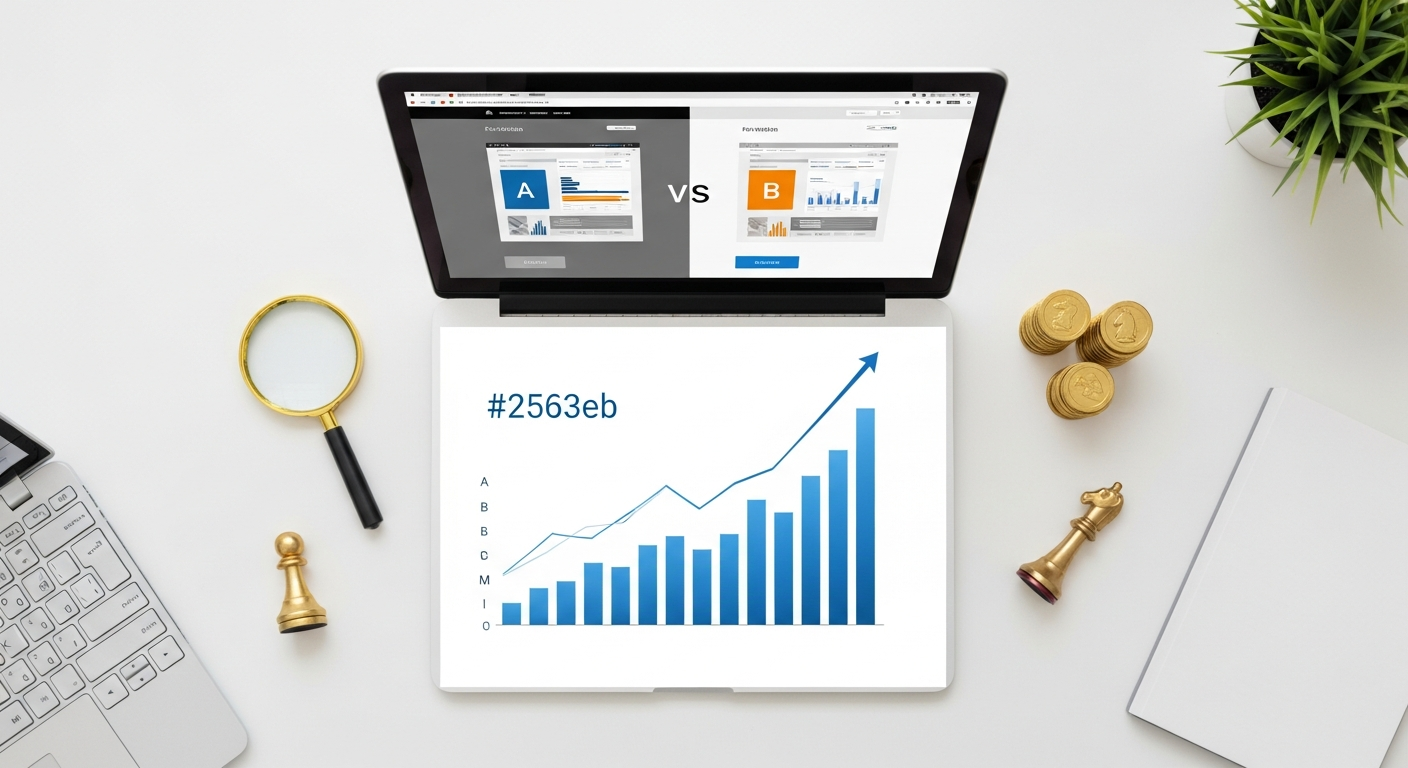
- Implement A/B Testing Consistently: Use data to form hypotheses and rigorously test variations of ads, landing pages, email subject lines, and calls to action. Let the data dictate winning strategies.
- Develop Predictive Models: Leverage AI-driven tools to predict customer churn, identify high-value customer segments, or forecast campaign outcomes, allowing for proactive strategic interventions.
- Personalize at Scale: Utilize CDP capabilities to segment audiences dynamically and deliver hyper-personalized content, offers, and experiences across all touchpoints.
- Feedback Loop Integration: Establish mechanisms to feed marketing insights back into product development, sales strategies, and customer service to drive cross-functional alignment and innovation.
- Monitor Competitors with Data: Use competitive intelligence tools and public data sources to analyze competitor strategies, identify gaps, and uncover potential competitive advantages.
- Focus on Customer Lifetime Value (CLTV): Use data to identify factors that contribute to higher CLTV, then tailor strategies to acquire and retain these valuable customers.
- Experiment and Innovate: Dedicate a portion of your budget to testing new channels, technologies, or creative approaches, using data to quickly evaluate their potential for growth.
Conclusion: Mastering Marketing Data Analysis for the Future
In 2026, the journey “From Data to Decisions” is no longer a luxury for advanced marketing teams; it’s the fundamental operating principle for any business aiming for sustainable growth. Mastering marketing data analysis is about more than just numbers—it’s about foresight, agility, and a deep, empathetic understanding of your customer. We’ve explored the dynamic data landscape, the core principles of effective analysis, the indispensable tools, the systematic process of extracting insights, and the art of crafting reports that truly compel action. By embracing these strategies, you equip yourself to navigate the complexities of the modern marketing world with confidence and precision.
The future of marketing is undeniably data-driven. As technology continues to evolve and consumer behaviors shift, the ability to collect, analyze, interpret, and act upon marketing data will remain your most potent weapon. It ensures your strategies are not based on guesswork but on verifiable truth, leading to optimized campaigns, stronger customer relationships, and ultimately, unparalleled business growth. Start today by reviewing your current data infrastructure, upskilling your team in data literacy, and committing to an insights-first approach. The insights are waiting; it’s time to unlock them and transform your marketing future.
Frequently Asked Questions