
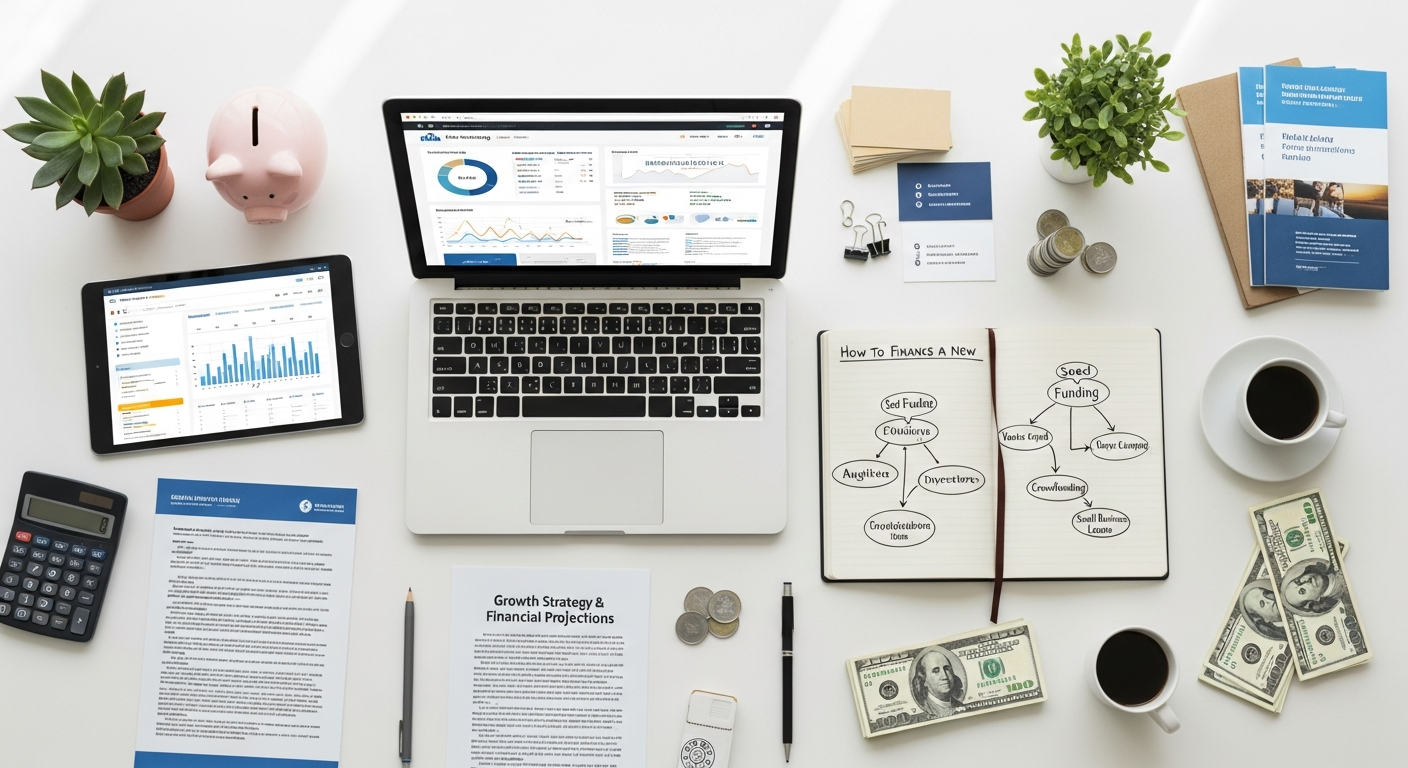
Understanding Your Financial Needs and Business Model
Before embarking on the quest for funding, a foundational understanding of your specific financial requirements is paramount. This isn’t merely a rough estimate; it demands meticulous planning and a deep dive into your business model. A robust, data-backed business plan serves as your compass, outlining everything from your unique value proposition to your operational roadmap and, critically, your detailed financial projections. For any new venture, especially those aiming for significant growth, a clear picture of startup costs, ongoing operational expenses, and realistic revenue forecasts is non-negotiable.
Consider startup costs first. These typically include expenses incurred before your business generates revenue, such as legal fees for incorporation, intellectual property registration, initial equipment purchases, technology development, office setup, and initial marketing campaigns. For instance, a manufacturing business might require substantial upfront capital for specialized machinery, raw materials, and factory space. Understanding these specific needs is crucial. Indeed, when considering 3 services you need for your manufacturing business, you’ll quickly realize that these, such as supply chain optimization, advanced robotics maintenance, or quality control automation, all carry significant initial and ongoing costs that must be factored into your financial model.
Beyond initial setup, projecting your operational expenses is vital. This includes salaries, rent, utilities, insurance, software subscriptions, and marketing spend. A common metric here is the “burn rate” – the rate at which your company spends money, typically per month, before generating positive cash flow. Your financial projections must clearly define your burn rate and, subsequently, your “runway” – how long your current capital will last before you need additional funding. Investors scrutinize these figures intensely, seeking evidence of realistic planning and fiscal prudence.
Revenue forecasting, while inherently challenging for a new venture, must be grounded in market research, competitive analysis, and a clear understanding of your pricing strategy and sales cycle. Avoid overly optimistic projections that lack credible justification. Instead, present a range of scenarios (best-case, most likely, worst-case) with clear assumptions for each. This demonstrates a sophisticated understanding of market dynamics and potential risks.
Finally, tailor your financial needs assessment to your specific business type. A SaaS startup, for example, might have lower physical asset costs but higher R&D and customer acquisition costs. A retail business will focus more on inventory, storefronts, and point-of-sale systems. Each model dictates different capital requirements and, consequently, different funding strategies. By meticulously dissecting your financial needs, you not only prepare for investor scrutiny but also gain invaluable clarity on the true capital required to launch and scale your vision effectively in 2026.
Traditional Funding Avenues for Startups

Once you have a crystal-clear understanding of your financial needs, the next step is to explore the various funding avenues available. Traditional financing options have long served as the backbone for new business ventures, each with its unique characteristics, requirements, and implications for your company’s ownership structure and debt burden.
Bank Loans: For many small and medium-sized businesses, traditional bank loans are a primary consideration. These typically come in several forms:
- SBA Loans: The U.S. Small Business Administration (SBA) doesn’t lend money directly but guarantees a portion of loans made by approved lenders. This reduces the risk for banks, making them more willing to lend to small businesses. SBA loans, such as the popular 7(a) program, often offer favorable terms, lower down payments, and longer repayment periods compared to conventional bank loans. They are ideal for businesses with solid business plans and some operating history, though certain programs cater to startups.
- Term Loans: These are lump-sum loans repaid over a fixed period with regular interest payments. They are suitable for specific capital expenditures like purchasing equipment, real estate, or making a significant investment in growth.
- Lines of Credit: Similar to a credit card, a business line of credit provides access to a predetermined amount of funds that can be drawn upon as needed, repaid, and then drawn again. This flexibility makes them excellent for managing cash flow fluctuations or covering unexpected expenses.
While bank loans offer non-dilutive capital (meaning you retain full ownership), they require good credit, collateral, and a demonstrated ability to repay the debt. Banks are typically risk-averse, making it challenging for true startups with no revenue or assets to secure significant funding through this route.
Venture Capital (VC): Venture capital firms invest in high-growth potential, scalable businesses, typically in exchange for an equity stake. VCs look for companies that can deliver significant returns within a few years, often targeting industries like technology, biotechnology, and clean energy. They invest at various stages:
- Seed Stage: Early funding for product development and market validation.
- Series A, B, C, etc.: Subsequent rounds for scaling operations, expanding market reach, and further product development.
Securing VC funding is highly competitive. Firms seek strong management teams, innovative solutions to large market problems, defensible competitive advantages, and a clear path to profitability or acquisition. While VCs provide substantial capital and often strategic guidance, be prepared for significant equity dilution and intense scrutiny of your business. This path is generally reserved for businesses with exponential growth potential, not lifestyle businesses or those with limited scalability.
Angel Investors: Angel investors are affluent individuals who provide capital for a business startup, usually in exchange for convertible debt or ownership equity. They typically invest smaller amounts than VC firms, often in the seed or early stages, and may offer valuable mentorship and industry connections. Angels often have personal experience in the industries they invest in, making them more than just capital providers; they can be strategic partners. Finding angel investors often involves networking, pitch events, and online platforms. Their investment criteria can be more flexible than VCs, often driven by personal interest in the product or team.
Crowdfunding: This method involves raising small amounts of capital from a large number of individuals, typically via internet platforms. Types include:
- Reward-based Crowdfunding: Backers receive a product or service in exchange for their contribution (e.g., Kickstarter, Indiegogo). Ideal for product launches and validating market interest.
- Equity Crowdfunding: Investors receive a small equity stake in the company. Regulations (like the JOBS Act in the US) have made this more accessible to a broader range of investors.
- Debt Crowdfunding (P2P Lending): Individuals lend money to businesses in exchange for interest payments.
Crowdfunding offers market validation, customer acquisition opportunities, and avoids traditional gatekeepers. However, it requires a compelling story, significant marketing effort, and transparency with your community. While it might not provide the massive capital injections of VC, it can be a powerful tool for initial funding and community building.
Each of these traditional avenues presents distinct advantages and disadvantages. The optimal choice depends on your business stage, growth potential, industry, and tolerance for debt versus equity dilution. A well-prepared business owner in 2026 will explore all these options, understanding that securing funding is often a multi-faceted approach.
Exploring Non-Dilutive and Alternative Financing Options
Beyond the traditional funding routes, a diverse landscape of non-dilutive and alternative financing options exists, offering capital without requiring you to give up equity in your company. These methods are increasingly popular, especially for founders keen on maintaining maximum ownership and control.
Grants: Grants are non-repayable funds awarded by governments, foundations, and corporations to support specific projects, research, or business development initiatives. They are highly sought after because they don’t require repayment or equity. However, they are typically competitive and come with stringent eligibility criteria and reporting requirements. Types of grants include:
- Government Grants: Agencies like the Small Business Innovation Research (SBIR) and Small Business Technology Transfer (STTR) programs in the U.S. offer grants to small businesses engaged in federal R&D with commercialization potential. Similar programs exist globally.
- Foundation Grants: Private foundations often offer grants for businesses aligned with their philanthropic missions, such as environmental sustainability, social impact, or community development.
- Corporate Grants: Larger corporations may offer grants as part of their corporate social responsibility initiatives or to foster innovation in areas relevant to their business.
Identifying and applying for grants requires significant time and effort to craft compelling proposals that demonstrate alignment with the grantor’s objectives.
Revenue-Based Financing (RBF): RBF, sometimes called royalty-based financing, involves an investor providing capital in exchange for a percentage of the company’s future revenue until a certain multiple of the initial investment is repaid. This model is particularly attractive to businesses with predictable revenue streams, such as SaaS companies or subscription services. The repayment schedule adjusts with your revenue, offering flexibility that traditional loans often lack. It’s non-dilutive and aligns the investor’s interest with your growth, as they benefit from your increased sales.
Invoice Factoring/Financing: For businesses that frequently issue invoices and have long payment terms, invoice factoring or financing can provide immediate access to cash.
- Invoice Factoring: You sell your outstanding invoices to a third-party factor at a discount. The factor then collects the payment directly from your customers. This frees up working capital but can be costly.
- Invoice Financing: You use your outstanding invoices as collateral for a loan. You retain control of your collections, and once your customers pay, you repay the loan plus interest.
Both options are excellent for bridging cash flow gaps but are generally more expensive than traditional bank loans and are best suited for B2B businesses with reliable customers.
Asset-Based Lending (ABL): ABL allows businesses to borrow money by using their assets as collateral. These assets can include accounts receivable, inventory, machinery, and equipment. ABL facilities are often structured as revolving lines of credit, providing flexibility. They are particularly useful for capital-intensive businesses or those experiencing rapid growth that need flexible working capital. The amount you can borrow is directly tied to the value of your collateral.
SaaS Debt/Venture Debt: Specifically tailored for Software-as-a-Service (SaaS) and other recurring revenue businesses, venture debt is a type of loan provided by specialized lenders. It often complements equity funding rounds, allowing companies to extend their runway or achieve milestones without further diluting ownership. Unlike traditional bank loans, venture debt lenders typically focus on a company’s recurring revenue, customer acquisition metrics, and future growth potential rather than just collateral. It often includes warrants (the right to purchase equity at a future date), which introduces a small element of dilution, but significantly less than an equivalent equity round.
Exploring these alternative financing options can provide crucial capital while preserving your ownership stake, an increasingly important consideration for founders navigating the competitive landscape of 2026. Each option has its specific use case, cost structure, and ideal business profile, requiring careful evaluation to align with your venture’s strategic goals.
Leveraging Personal Resources and Bootstrapping
For many entrepreneurs, the journey of financing a new business venture often begins closest to home: with personal resources and the strategic practice of bootstrapping. This approach emphasizes self-reliance, lean operations, and the efficient allocation of every dollar, making it a powerful foundation, especially in the early stages.
Personal Savings: The most common and often the first source of capital for a new business is the entrepreneur’s personal savings. Investing your own money demonstrates a profound commitment to your venture, a quality highly valued by potential future investors. It shows you have “skin in the game.” However, it also carries the highest personal risk. It’s crucial to create a clear boundary between personal and business finances and to have a realistic understanding of how much personal capital you can afford to invest without jeopardizing your financial stability.
Friends & Family: Approaching friends and family for capital can be a viable option, particularly for seed funding. These investments often come with more flexible terms than institutional funding and can be a significant vote of confidence. However, it’s absolutely critical to treat these arrangements professionally. Formalize everything with clear loan agreements or equity stakes, outlining repayment terms, interest rates (if applicable), and expectations. Mixing personal relationships with business finances without clear boundaries can lead to misunderstandings and strained relationships.
Bootstrapping Strategies: Bootstrapping is the art of building and growing a business using only existing funds or minimal external capital. It forces entrepreneurs to be incredibly resourceful, creative, and disciplined. Key bootstrapping strategies include:
- Lean Operations: Minimize overheads wherever possible. This might mean working from a home office, utilizing co-working spaces, or leveraging cloud-based solutions instead of expensive on-premise infrastructure. Every expenditure must be justified and aligned with immediate revenue generation or critical operations.
- Reinvesting Profits: As soon as your business starts generating revenue, prioritize reinvesting profits back into the business for growth rather than taking large salaries or making non-essential purchases. This organic growth model allows you to scale without external debt or equity dilution.
- Customer-Funded Growth: Can you secure pre-orders or deposits from customers before delivering a product or service? This is a powerful form of non-dilutive funding, essentially having your customers finance your initial production or service delivery.
- Bartering and Trade: Exchange goods or services with other businesses instead of cash. This can be particularly effective for marketing, web development, or administrative support in the early days.
- Delayed Gratification: Avoid unnecessary expenses like fancy office furniture, lavish launch parties, or extensive travel until the business has a solid financial footing. Every dollar saved is a dollar earned.
Implementing operational efficiencies is a cornerstone of successful bootstrapping. For instance, understanding how to implement an online waiver system in your business might seem like a small detail, but for service-based businesses, it can significantly reduce administrative costs, improve customer experience, and streamline legal compliance. Such systems eliminate paper, save staff time, and reduce potential legal liabilities, directly contributing to a leaner operational model and supporting your bootstrapping efforts. Similarly, optimizing your digital marketing spend to achieve maximum ROI, perhaps with the guidance of the best Denver SEO firm for business marketing, ensures that every marketing dollar contributes to growth rather than being a sunk cost.
Bootstrapping instills financial discipline, forces a focus on profitability from day one, and allows founders to retain maximum control over their vision. While it may slow initial growth compared to a venture-backed startup, it often builds a more resilient and sustainable business model in the long run.
The Role of Strategic Partnerships and Accelerators
Beyond direct capital infusion, strategic partnerships, incubators, and accelerators play a pivotal role in financing a new business venture by providing resources, mentorship, and indirect funding that can significantly reduce capital requirements and accelerate growth. These alliances are about more than just money; they offer invaluable support networks and validation.
Strategic Alliances and Joint Ventures: Forming strategic alliances can be a powerful way to access resources, expertise, and market reach without giving up equity or incurring debt.
- Co-Marketing Partnerships: Collaborating with a complementary business on marketing campaigns can expand your audience and reduce individual marketing spend.
- Distribution Partnerships: Gaining access to an established distribution network can significantly reduce your go-to-market costs and time.
- Technology Partnerships: Integrating your solution with an existing platform or leveraging another company’s technology can save significant development costs and time.
- Joint Ventures: Two or more businesses collaborate on a specific project, sharing resources, risks, and profits. This can be a way to pool capital and expertise for a new initiative that neither company could undertake alone.
These partnerships can effectively “finance” parts of your business by offsetting expenses, providing access to new customer segments, or accelerating product development. The key is to find partners whose goals align with yours and where there’s a clear mutual benefit.
Accelerator and Incubator Programs: These programs are designed to support early-stage startups with mentorship, resources, and often seed funding, typically in exchange for a small equity stake.
- Incubators: Generally focus on nurturing early-stage ideas, providing shared office space, resources, and a collaborative environment. They often don’t have a fixed timeline and are less about rapid growth and more about developing a solid foundation.
- Accelerators: Offer intensive, time-limited programs (e.g., 3-6 months) designed to accelerate a startup’s growth. They provide mentorship from experienced entrepreneurs, access to a network of investors, and often a small amount of seed capital. Famous accelerators include Y Combinator and Techstars. Participation in a reputable accelerator can significantly increase a startup’s chances of securing follow-on funding due to the validation and connections it provides.
Applying to and being accepted into these programs is competitive, but the benefits – including structured guidance, networking opportunities, and initial capital – can be transformative for a new venture.
Government Support Programs & Grants (Beyond direct funding): While direct grants were mentioned earlier, governments often provide other forms of support that indirectly finance businesses:
- Tax Incentives: Research and Development (R&D) tax credits can reduce your tax burden, effectively freeing up capital for reinvestment. Many countries offer incentives for job creation, investment in specific regions, or adoption of green technologies.
- Subsidized Services: Government agencies or local economic development offices may offer subsidized consulting services, training programs, or access to specialized equipment.
- Export Promotion Programs: For businesses looking to expand internationally, government programs can provide funding for market research, trade mission participation, or export credit insurance.
These programs, though not always direct cash injections, significantly reduce operational costs and market entry barriers, allowing your existing capital to stretch further. Actively researching and leveraging these strategic partnerships and support ecosystems can dramatically improve a new venture’s financial sustainability and growth trajectory in 2026, creating pathways to success that extend beyond mere capital acquisition.
Preparing for Funding: Documentation and Presentation
Securing financing for a new business venture is as much about preparation and presentation as it is about having a great idea. Investors, lenders, and grant committees are looking for well-thought-out plans, credible projections, and a clear understanding of your business. Meticulous documentation and a compelling narrative are crucial for success in 2026.
Comprehensive Business Plan: This remains the cornerstone of your funding application. Your business plan should be a living document, robust and detailed, but also adaptable. Key sections include:
- Executive Summary: A concise, compelling overview of your entire business plan, designed to grab attention and summarize the opportunity.
- Company Description: What your business does, its mission, vision, and legal structure.
- Market Analysis: Detailed research on your target market, industry trends, competitive landscape, and your unique selling proposition. Demonstrate a deep understanding of customer needs and market size.
- Organization and Management: Introduce your team, highlighting their relevant experience, skills, and roles. Investors invest in people as much as ideas.
- Service or Product Line: Describe what you offer, its features, benefits, and intellectual property.
- Marketing and Sales Strategy: How you plan to reach your target customers, generate leads, and convert sales. This is where you might highlight the importance of a strong digital presence, potentially supported by the best Denver SEO firm for business marketing, to ensure visibility and customer acquisition in a competitive digital landscape.
- Financial Projections: Crucial for funding, this includes startup costs, projected profit and loss statements, cash flow analysis, and balance sheets for at least 3-5 years. Include clear assumptions for all projections.
- Funding Request: Clearly state how much capital you are seeking, how you plan to use it, and what milestones it will enable you to achieve.
Detailed Financial Statements: Beyond the high-level projections in your business plan, be prepared to present detailed pro forma financial statements. This includes:
- Projected Profit & Loss (P&L) Statement: Shows expected revenues, costs, and profits over time.
- Projected Cash Flow Statement: Essential for understanding liquidity, showing how cash moves in and out of your business. This is often more critical for startups than the P&L.
- Projected Balance Sheet: A snapshot of your assets, liabilities, and equity at a specific point in time.
Ensure these statements are realistic, defensible, and clearly show how the requested funding will impact your financial health and growth trajectory.
Compelling Pitch Deck: For equity investors, a concise and visually appealing pitch deck is paramount. This 10-15 slide presentation should tell your story, highlight the problem you’re solving, present your solution, market opportunity, business model, team, financial highlights, and your “ask.” It’s a storytelling tool designed to generate interest and secure a follow-up meeting, not to dump all your data.
Legal Structure and Documentation: Ensure your business is properly incorporated (LLC, C-Corp, S-Corp, etc.) and all legal documentation is in order. This includes articles of incorporation, operating agreements, intellectual property registrations, and any existing contracts. Investors conduct thorough due diligence, and a well-organized legal framework signals professionalism and reduces perceived risk.
Due Diligence Readiness: Anticipate the questions and requests for information investors will have. Have a “data room” (physical or virtual) ready with all relevant documents, including resumes of key team members, market research reports, product development timelines, customer testimonials, and legal agreements. Being prepared streamlines the due diligence process and builds confidence.
By meticulously preparing your documentation and honing your presentation, you not only increase your chances of securing funding but also demonstrate a deep understanding of your business and a professional approach that inspires confidence in potential financial partners. In the competitive funding environment of 2026, this level of preparedness can be the differentiator between success and stagnation.
Future-Proofing Your Financial Strategy
Securing initial funding is a significant milestone, but it’s merely the beginning of an ongoing financial journey. For sustainable business growth in 2026 and beyond, your financial strategy must be dynamic, adaptable, and forward-looking. Future-proofing your approach involves continuous monitoring, strategic planning, and relationship building.
Continuous Financial Monitoring and Adaptation: The business landscape is constantly evolving, and your financial strategy must evolve with it. Regularly monitor your key financial metrics – burn rate, cash flow, revenue per customer, customer acquisition cost (CAC), and customer lifetime value (CLTV). Compare actual performance against your projections and be prepared to adapt. If your burn rate is higher than expected, identify areas for cost reduction. If revenue is lagging, reassess your marketing and sales strategies. A proactive approach to financial health prevents small issues from escalating into major crises.
Scenario Planning: Don’t just plan for the best-case scenario. Develop financial models for various outcomes: optimistic, realistic, and pessimistic. Understand how different market shifts, economic downturns, or unexpected challenges (e.g., supply chain disruptions, new regulations) would impact your financials. This allows you to identify potential risks and develop contingency plans, such as alternative funding sources or operational adjustments, before they become urgent.
Building Relationships with Potential Investors Early: Even if you’re not actively seeking funds, cultivate relationships with venture capitalists, angel investors, and strategic partners. Attend industry events, network, and keep them informed of your progress. This “warm” relationship building means that when you are ready for your next funding round, you’re approaching people who already know your business, understand your vision, and have witnessed your growth. This significantly shortens the fundraising cycle and increases your chances of success.
Understanding Exit Strategies: While it might seem premature when just starting, having a clear understanding of potential exit strategies (e.g., acquisition by a larger company, IPO) is crucial, especially for equity investors. They want to know how they will eventually realize a return on their investment. Your financial strategy should implicitly support a path towards one or more viable exits, even if the timeline is flexible. This demonstrates strategic foresight and a long-term vision for your company’s value creation.
The Importance of a Diversified Funding Approach: Relying solely on one type of funding can be risky. A future-proof financial strategy often involves a mix of debt, equity, and non-dilutive options over time. For instance, initial bootstrapping might be followed by angel investment, then venture debt, and later a Series A equity round. This diversified approach can minimize dilution, maintain financial flexibility, and ensure a stable capital structure capable of supporting growth through various stages.
In 2026, the business environment demands agility and strategic financial planning. By continuously monitoring, planning for contingencies, building relationships, understanding your exit, and diversifying your funding sources, you can future-proof your financial strategy, ensuring your new business venture has the resilience and resources to thrive for years to come.
FAQ: How to Finance a New Business Venture
1. What’s the fundamental difference between debt and equity financing for a new business?
Debt financing involves borrowing money that you promise to repay with interest over a set period. You retain full ownership of your company but incur a liability. Examples include bank loans, lines of credit, and venture debt. Equity financing involves selling a portion of your company’s ownership (shares) to investors in exchange for capital. You don’t have to repay the money, but you give up a percentage of control and future profits. Examples include angel investors, venture capital, and equity crowdfunding. The choice impacts your ownership, risk profile, and future financial obligations.
2. How important is a comprehensive business plan for securing startup funding?
A comprehensive business plan is absolutely critical. It serves as your venture’s roadmap, demonstrating to potential funders that you’ve thoroughly researched your market, understand your operational needs, have a clear strategy for growth, and possess realistic financial projections. Without a well-articulated plan, it’s nearly impossible to convince investors or lenders of your business’s viability and potential for return. It’s the foundation upon which all funding decisions are made.
3. Can I get funding for my new business venture if I have bad personal credit?
While challenging, it’s not impossible. Traditional bank loans and SBA loans often require good personal credit, especially for startups, as your personal financial history is often tied to the business’s perceived risk. However, alternative options like crowdfunding, grants, revenue-based financing, or seeking angel investors who prioritize your business idea and team over personal credit can be viable. Additionally, focusing on building business credit early and potentially seeking a co-signer or guarantor can help.
4. What are common mistakes new entrepreneurs make when seeking funding?
Common mistakes include:
- Lack of clear financial projections: Vague or overly optimistic numbers without strong assumptions.
- Underestimating capital needs: Running out of money before reaching key milestones.
- Failing to research investors: Pitching to the wrong type of investor who doesn’t fund your industry or stage.
- Poor pitch presentation: A confusing,
Recommended Resources
For more on how to finance, see What Is Account Based Marketing (Abm) on Kacerr.
Learn more about this topic in Best Buy Now Pay Later Apps 2026 at Gold Points.