Mastering SEO for 2026: Beyond Keywords and Towards Intent
In 2026, Search Engine Optimization (SEO) remains the bedrock of organic traffic growth, but its sophistication has dramatically increased. The days of simply stuffing keywords are long gone; search engines, powered by advanced AI and machine learning, are now incredibly adept at understanding user intent, context, and semantic relationships. To truly master SEO for 2026 and effectively answer the question of how to increase website traffic 2026, businesses must shift their focus from individual keywords to comprehensive topic clusters and user experience.
E-A-T (Expertise, Authoritativeness, Trustworthiness) continues to be paramount. Google’s algorithms heavily reward content from credible sources that demonstrate deep knowledge and reliability. This means investing in subject matter experts, citing authoritative sources, and building a strong online reputation through backlinks from reputable domains. For a Digital Marketing Strategy Small Business 2026, establishing E-A-T might involve showcasing founder expertise, accumulating positive customer reviews, and engaging in industry thought leadership, even if on a smaller scale.
Technical SEO gains new layers of importance. Core Web Vitals, which measure page loading speed, interactivity, and visual stability, are no longer just a suggestion but a critical ranking factor. Websites must be lightning-fast, mobile-first, and offer a seamless user experience across all devices. This includes optimizing images, minifying code, leveraging browser caching, and ensuring secure HTTPS connections. Voice search optimization will also mature significantly; structuring content with natural language questions and answers will be key to capturing queries from smart speakers and virtual assistants.
Beyond traditional text, optimizing for diverse content formats like video, podcasts, and interactive tools will be essential. Search engines are increasingly capable of understanding and ranking these formats. Transcriptions for audio and video content, clear metadata, and engaging snippets will help these assets rank in universal search results. Furthermore, understanding the nuances of local SEO, especially for small businesses, will be crucial. Google Business Profile optimization, localized content creation, and geo-targeted keyword strategies will help businesses capture nearby customers searching for specific products or services.
Finally, AI will play a dual role in SEO. While search engines use AI to understand and rank content, marketers can leverage AI tools for keyword research, content generation (as a starting point for human refinement), SEO auditing, and competitor analysis. However, AI-generated content must always be reviewed and enhanced by human experts to ensure accuracy, originality, and adherence to E-A-T principles, preventing it from being flagged as low-quality or spammy.
Content Marketing: The Ever-Evolving Core of Traffic Growth in 2026
Content marketing in 2026 is far more than just blogging; it’s about strategically creating and distributing valuable, relevant, and consistent content to attract and retain a clearly defined audience. It’s the engine that fuels many other digital marketing efforts and is indispensable for anyone asking how to increase website traffic 2026. The landscape demands diversity in format and depth in insight.
The debate between Long Form Vs Short Form Content will continue to evolve. Long-form content, such as comprehensive guides, whitepapers, and in-depth articles, remains vital for establishing authority, ranking for competitive keywords, and capturing audiences in the research phase of their buyer’s journey. These pieces allow for a deep dive into complex topics, providing immense value and building trust. They are excellent for SEO, often attracting high-quality backlinks and serving as evergreen resources. On the other hand, short-form content, including social media posts, quick tips, infographics, and short videos, is crucial for engagement, brand awareness, and driving immediate interaction. It caters to shrinking attention spans and the prevalence of mobile consumption, making it ideal for rapid distribution and audience connection on platforms like TikTok, Instagram Reels, and even short-form updates on LinkedIn.
A successful content strategy for 2026 will expertly blend both. Businesses should create foundational long-form pieces and then atomize them into numerous short-form content snippets for various platforms. For example, a comprehensive guide on “Digital Marketing Strategy Small Business 2026” could be broken down into dozens of social media tips, infographic data points, short video explainers, and email newsletter segments.
Interactive content will also see a surge. Quizzes, polls, calculators, and interactive infographics not only capture attention but also provide valuable first-party data. Personalization driven by AI will enable content marketers to deliver highly tailored experiences, showing users content most relevant to their past behavior and preferences. This level of personalization significantly boosts engagement and reduces bounce rates, directly contributing to increased traffic and longer session durations.
Video content, in particular, will dominate. From live streams and webinars to short-form viral clips and long-form YouTube tutorials, video is an unparalleled medium for storytelling and connection. Businesses must invest in high-quality video production and distribution strategies. Podcasting also continues its upward trajectory, offering an intimate way to connect with audiences during commutes or while multitasking. Transcribing these audio and video assets will amplify their SEO value and accessibility.
Finally, content distribution cannot be an afterthought. Relying solely on organic search is insufficient. A robust content distribution strategy for 2026 includes email marketing, social media promotion, partnerships, influencer collaborations, and even paid amplification to ensure your valuable content reaches the right eyes and ears.
Leveraging Social Media & Community Building in 2026
Platforms like TikTok and Instagram Reels will continue to dominate for short-form, engaging video content, crucial for brand awareness and quick virality. Businesses need to embrace authentic, creative, and trend-aware content to capture attention. This often means humanizing the brand, showcasing behind-the-scenes glimpses, and participating in challenges or trending sounds.
Facebook and Instagram will remain strong for visual content, targeted advertising, and community groups. Facebook Groups, in particular, offer a powerful avenue for building niche communities around shared interests, allowing businesses to position themselves as valuable resources and thought leaders. Engaging genuinely in these groups, answering questions, and sharing insights can subtly drive traffic to relevant website content without being overly promotional.
How To Use Linkedin For Marketing will be a critical component, especially for B2B businesses and professionals. In 2026, LinkedIn is far more than an online resume; it’s a content hub, a networking powerhouse, and a lead generation machine. Businesses should prioritize sharing long-form articles, industry insights, company news, and employee spotlights. Leveraging LinkedIn Live for webinars, Q&A sessions, and product launches can significantly boost engagement. Personal branding for key executives and employees also plays a massive role, as their professional networks can amplify company messages. Participating in relevant LinkedIn Groups, commenting thoughtfully on industry posts, and sharing valuable content without direct sales pitches are excellent ways to establish authority and drive traffic to a company’s website or specific landing pages.
Community building is at the heart of 2026 social media success. This involves actively listening to your audience, responding to comments and messages, running interactive polls and Q&As, and creating user-generated content campaigns. The goal is to cultivate a loyal following that feels connected to your brand and is motivated to visit your website for more in-depth information, resources, or to make a purchase. Influencer marketing will also mature, with a greater focus on micro and nano-influencers who have highly engaged, niche audiences. These partnerships, when authentic, can drive highly qualified traffic and build trust more effectively than broad celebrity endorsements.
Finally, social media advertising will become even more sophisticated, with advanced targeting capabilities driven by AI. Businesses can reach highly specific demographics, interests, and behaviors, ensuring their ad spend is optimized for maximum traffic generation and conversion. Retargeting campaigns, which show ads to users who have previously interacted with your website or social media profiles, will be crucial for nurturing leads and bringing back interested visitors.
Paid Advertising in 2026: Precision, Personalization, and Performance
While organic methods form the backbone of sustainable traffic growth, paid advertising remains an indispensable, often accelerated, answer to how to increase website traffic 2026. However, the paid landscape in 2026 is characterized by hyper-precision, deep personalization, and an unwavering focus on measurable performance, moving far beyond simple keyword bidding.
Search engine advertising (PPC) platforms like Google Ads will continue to evolve with AI-powered bidding strategies and dynamic creative optimization. Advertisers will rely more on smart bidding to maximize conversions and value, rather than just clicks. Understanding user intent will be paramount, requiring ad copy and landing pages that directly address specific needs and pain points. Google’s Performance Max campaigns, which leverage AI to find converting customers across all Google channels (Search, Display, YouTube, Gmail, Discover), will become a standard for comprehensive campaign management.
Social media advertising will offer unparalleled targeting capabilities. Platforms will allow for even more granular audience segmentation based on interests, behaviors, demographics, and custom audience lists. For a Digital Marketing Strategy Small Business 2026, this means the ability to reach highly specific local audiences or niche interest groups with remarkable efficiency. Video ads, interactive ads, and augmented reality (AR) experiences within social feeds will become more commonplace and effective, captivating users and driving them to websites or app downloads.
Programmatic advertising, the automated buying and selling of ad space, will become more sophisticated and accessible. This allows advertisers to target specific users across a vast network of websites and apps based on real-time data and behavior, rather than just placing ads on specific sites. This precision reduces wasted ad spend and ensures that ads are shown to the most receptive audience at the optimal time. Connected TV (CTV) advertising, targeting viewers on streaming services, will also see significant growth, offering brand awareness and engagement opportunities.
A major trend in 2026 will be the increased importance of first-party data. With growing privacy concerns and the deprecation of third-party cookies, businesses must focus on collecting and leveraging their own customer data to inform targeting and personalization. This involves building robust email lists, implementing effective CRM systems, and encouraging website visitors to provide their information in exchange for value. This first-party data will be crucial for creating highly effective custom audiences and lookalike audiences across various ad platforms.
Retargeting and remarketing campaigns will be more intelligent. Instead of showing generic ads to everyone who visited your site, AI-driven retargeting will present highly personalized offers or content based on specific pages visited, products viewed, or actions taken on the website. This nurtures potential customers through the sales funnel, significantly increasing the likelihood of conversion and bringing back valuable traffic.
Finally, measuring ROI will be more critical than ever. Attribution models will become more advanced, helping marketers understand the true impact of each touchpoint in the customer journey. Businesses will need to invest in robust analytics tools and dashboards to track performance, optimize campaigns in real-time, and ensure every advertising dollar contributes effectively to traffic growth and business objectives.
Email Marketing & Automation: Nurturing Your Traffic Pipeline in 2026
In 2026, amidst the clamor of social media and search engines, email marketing remains one of the most powerful and direct channels for driving repeat traffic, nurturing leads, and building lasting customer relationships. It’s a cornerstone for anyone looking to understand how to increase website traffic 2026, particularly for turning one-time visitors into loyal readers or customers. The key to its continued efficacy lies in hyper-personalization, automation, and segmentation.
Building a quality email list is the first critical step. This involves strategically placing opt-in forms across your website, offering valuable lead magnets (e.g., ebooks, checklists, exclusive content, webinars) in exchange for email addresses, and integrating email sign-ups with pop-ups and exit-intent forms. For a Digital Marketing Strategy Small Business 2026, this might mean creating highly targeted lead magnets specific to their local market or niche industry, demonstrating immediate value.
Segmentation is no longer optional; it’s essential. Dividing your email list into smaller, more specific groups based on demographics, purchase history, engagement levels, interests, and website behavior allows for incredibly targeted communication. Instead of sending a generic newsletter, you can send tailored product recommendations to past buyers, industry updates to blog subscribers, or abandoned cart reminders to those who nearly converted. This relevancy dramatically increases open rates, click-through rates, and ultimately, traffic back to relevant pages on your website.
Automation takes email marketing to the next level. Welcome sequences for new subscribers, automated follow-ups after a content download, re-engagement campaigns for inactive users, and birthday or anniversary emails can all be pre-programmed to deliver timely and personalized messages. These automated workflows ensure that your audience receives relevant content at crucial points in their journey, gently guiding them back to your site for more information or to complete a desired action.
Interactive emails will also gain traction. Elements like embedded polls, quizzes, GIFs, and even short video snippets directly within emails can boost engagement and encourage clicks. Gamification – offering rewards or challenges within email campaigns – can further motivate recipients to visit your website.
AI will play an increasingly significant role in email marketing for 2026. AI-powered tools can optimize send times, personalize subject lines and content dynamically, and even predict which offers are most likely to resonate with individual subscribers. This level of optimization ensures that each email has the maximum impact, driving the highest possible traffic back to your site.
Finally, integrating email marketing with your CRM (Customer Relationship Management) system is crucial for a unified customer view. This allows for seamless data flow between sales, marketing, and customer service, ensuring that all communications are consistent and personalized, further enhancing the customer experience and fostering loyalty that translates into recurring website visits.
Analytics & Optimization: The Continuous Improvement Loop for 2026 Traffic
In the dynamic digital landscape of 2026, merely attracting traffic isn’t enough; understanding its behavior, optimizing its journey, and continuously refining your strategies are paramount. Analytics and optimization form the crucial feedback loop that answers how to increase website traffic 2026 effectively and sustainably. Without robust data analysis, all other marketing efforts are essentially shots in the dark.
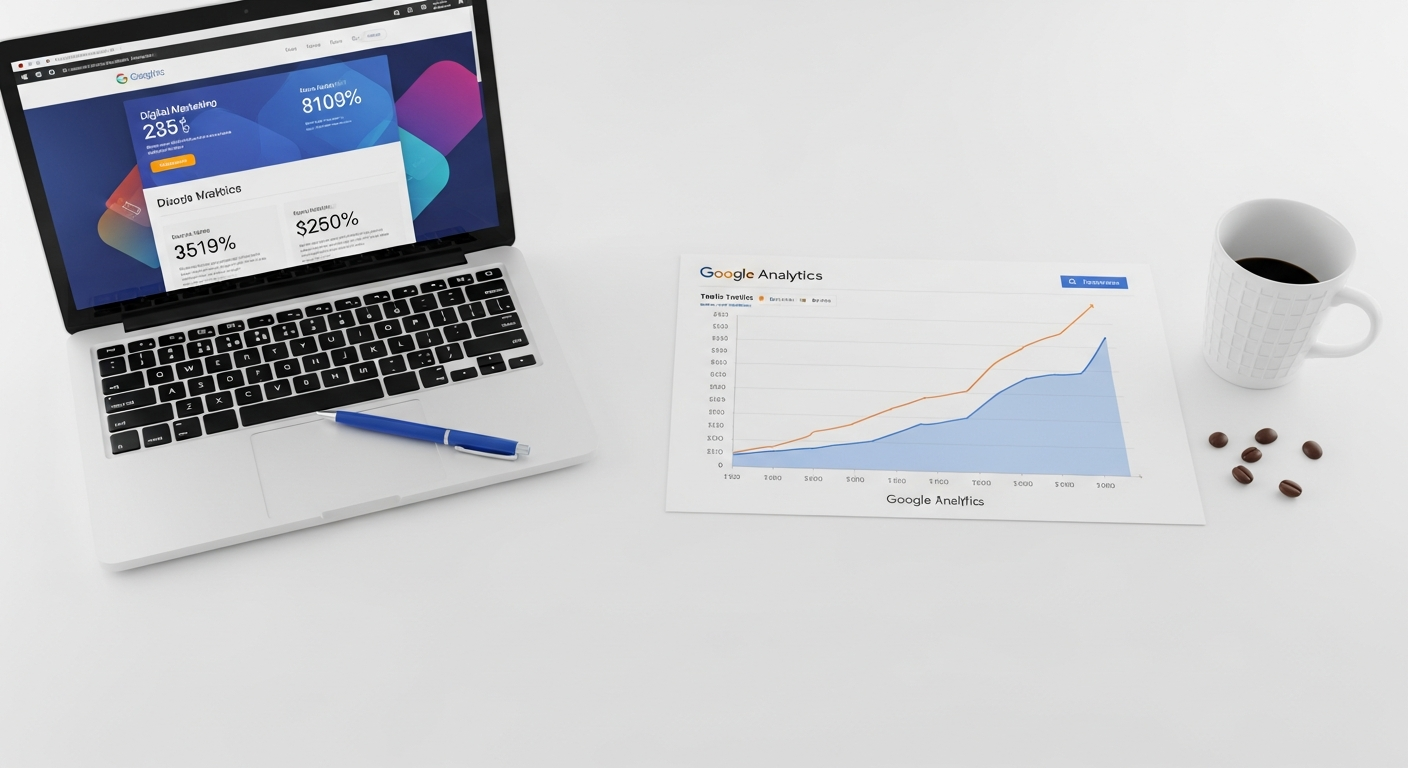
The foundation is strong analytics implementation. Tools like Google Analytics 4 (GA4) are designed for a future with less reliance on third-party cookies, focusing on user-centric, event-based data. Businesses must ensure their analytics are properly configured to track key metrics: website visits, unique visitors, bounce rate, average session duration, pages per session, conversion rates, and the source/medium of traffic. Understanding these metrics provides insights into what’s working and what isn’t, helping to identify bottlenecks and opportunities for improvement.
Beyond basic metrics, delving into user behavior analytics is critical. Heatmaps, session recordings, and user journey mapping tools provide visual insights into how visitors interact with your website. Where do they click? Where do they scroll? What elements do they ignore? This qualitative data complements quantitative metrics, revealing pain points in the user experience that, when addressed, can significantly improve engagement and traffic flow.
Conversion Rate Optimization (CRO) is the practical application of these insights. CRO isn’t just about sales; it’s about optimizing any desired action on your website, whether it’s signing up for a newsletter, downloading an ebook, filling out a contact form, or making a purchase. A/B testing will be a cornerstone of CRO in 2026. This involves testing different versions of headlines, calls-to-action (CTAs), page layouts, images, and content to see which performs best. Even small improvements in conversion rates can have a massive impact on the effectiveness of your traffic generation efforts.
AI and machine learning will increasingly augment analytics and optimization efforts. AI can identify patterns in vast datasets that humans might miss, predict user behavior, and even recommend specific optimization strategies. For example, AI could suggest which landing page variant is most likely to convert a specific segment of traffic, or identify which content topics are most likely to resonate with a particular audience, guiding future content creation and promotion efforts.
For a Digital Marketing Strategy Small Business 2026, continuous analysis means regularly reviewing performance dashboards, identifying trends, and making iterative changes. This agile approach allows small businesses to quickly adapt to market changes, competitor actions, and evolving customer preferences without large-scale resource commitments. The goal is to move beyond simply generating traffic to generating high-quality, engaged traffic that contributes meaningfully to business objectives.
Finally, integrating data from various marketing channels – SEO, social media, email, paid ads – into a unified dashboard provides a holistic view of your digital presence. This cross-channel analysis helps understand how different initiatives impact each other and contributes to an overall understanding of the customer journey, ensuring that your efforts to increase website traffic are synergistic and maximally effective.
Emerging Technologies & Future Trends for Traffic Growth in 2026
As we advance into 2026, the digital landscape is being reshaped by a confluence of emerging technologies that present both challenges and exciting new avenues for increasing website traffic. Staying ahead of these trends is crucial for maintaining a competitive edge and answering the perennial question of how to increase website traffic 2026.
Generative AI and Personalized Experiences: AI’s role will expand beyond mere analysis to content generation and hyper-personalization. While human oversight remains essential for quality and E-A-T, AI tools will assist in rapidly creating diverse content formats, tailoring website experiences in real-time based on user behavior, and even generating personalized product recommendations. Imagine a website that dynamically rearranges its layout and content for each visitor based on their inferred interests and past interactions, guiding them more efficiently to relevant pages and boosting engagement.
Web3 and Decentralized Web: While still in nascent stages for mainstream marketing, the principles of Web3 – decentralization, user ownership, and token-based economies – will begin to influence traffic strategies. Businesses might explore building communities on decentralized platforms, leveraging NFTs for exclusive content access or loyalty programs, and engaging with audiences in metaverses. Early adopters who understand how to create value and utility in these emerging spaces could capture significant new traffic streams. This is particularly relevant for brands targeting younger, tech-savvy demographics.
Augmented Reality (AR) and Virtual Reality (VR): AR and VR are moving beyond gaming into e-commerce and experiential marketing. Imagine users trying on clothes virtually or placing furniture in their living room before buying, all through AR features embedded on a website or linked via QR codes. Creating immersive AR/VR experiences can significantly enhance user engagement, reduce bounce rates, and drive traffic by offering a unique, interactive way to explore products and services. These experiences can also be shared on social media, acting as powerful traffic drivers.
Advanced Voice Search and Conversational AI: Voice search will become even more nuanced. Beyond simple queries, conversational AI will enable multi-turn dialogues, where users ask follow-up questions. Websites need to optimize for these conversational patterns, structuring content with Q&A formats and natural language processing in mind. Chatbots, powered by advanced AI, will offer more sophisticated customer service and lead qualification directly on the website, guiding users to relevant information and fostering longer sessions.
Sustainability and Ethical Marketing: Consumers in 2026 will be more conscious than ever about a brand’s ethical stance and environmental impact. Businesses that transparently communicate their sustainability efforts, engage in ethical marketing practices, and prioritize data privacy will build stronger trust and attract a loyal customer base. Incorporating these values into your website content and brand messaging can differentiate you and attract values-aligned traffic.
Hyper-Local and Geo-Specific Strategies: For many businesses, particularly small and medium-sized enterprises (SMEs), hyper-local strategies will be crucial. This involves not just local SEO but also geo-fencing for mobile ads, local community engagement, and creating content that directly addresses specific local needs or events. The Digital Marketing Strategy Small Business 2026 needs to be deeply embedded in its local context, leveraging “near me” searches and local directory listings to capture highly motivated traffic.
Embracing these trends requires flexibility and a willingness to experiment. While not every technology will be suitable for every business, understanding their potential allows marketers to strategically integrate them into their overall plan to keep their website at the forefront of traffic generation.
Frequently Asked Questions
How critical is mobile optimization for increasing website traffic in 2026?▾
What role does AI play in boosting website traffic by 2026?▾
Is long-form content still relevant for traffic in 2026, given the rise of short-form videos?▾
How can a small business effectively compete for website traffic in 2026 against larger competitors?▾
What are the most effective ways to use LinkedIn for marketing to increase website traffic in 2026?▾
Beyond SEO and content, what is an often-overlooked strategy for increasing website traffic in 2026?▾
Recommended Resources
Check out Influencer Marketing For Small Brands on E-ComProfits for a deeper dive.
Check out How To Manage Business Cash Flow Effectively on Kacerr for a deeper dive.