

What is Schema Markup and Why Does it Matter for SEO?
At its core, schema markup is a form of structured data vocabulary that you add to your website’s HTML. It’s not visible to users browsing your site, but it’s readily consumable by search engines like Google, Bing, Yahoo!, and Yandex. Developed collaboratively by these major search engines under the schema.org initiative, this standardized vocabulary provides a common language for describing content on the web. Think of it as labeling the various elements on your page – identifying a piece of text as a product name, a price, a review rating, an event date, or a person’s name.
Traditionally, search engines relied heavily on keywords, links, and content structure to guess the meaning of a page. While effective to a degree, this approach often left room for ambiguity. Schema markup eliminates this guesswork by explicitly telling search engines what your data means, not just what it says. For instance, if you have the number “100” on your page, schema can specify whether that “100” refers to a price, a quantity in stock, a rating out of 5, or the number of attendees at an event. This semantic clarity is paramount in an age where search engines are constantly striving to provide the most accurate and relevant results possible.
The primary reason schema markup matters so profoundly for SEO is its direct impact on how your content appears in the Search Engine Results Pages (SERPs). By implementing schema, your website becomes eligible for rich snippets – visually enhanced search results that display additional information directly below your page title and meta description. These rich snippets can include star ratings, product prices, author names, cooking times for recipes, event dates, and much more. This enhanced presentation makes your listing significantly more appealing and informative to users, leading to a substantial increase in your organic Click-Through Rate (CTR).
Beyond rich snippets, schema markup contributes to a deeper understanding of your brand and content by search engines, feeding into sophisticated features like Google’s Knowledge Graph and improving eligibility for voice search results. As search behaviors evolve, and AI-powered assistants become more prevalent, the ability of search engines to quickly and accurately extract specific pieces of information from your site via structured data will be a critical determinant of visibility. In essence, schema markup is your website’s way of speaking directly to the search engine’s brain, ensuring your message is not only heard but perfectly understood.
The Core Benefits of Implementing Schema Markup
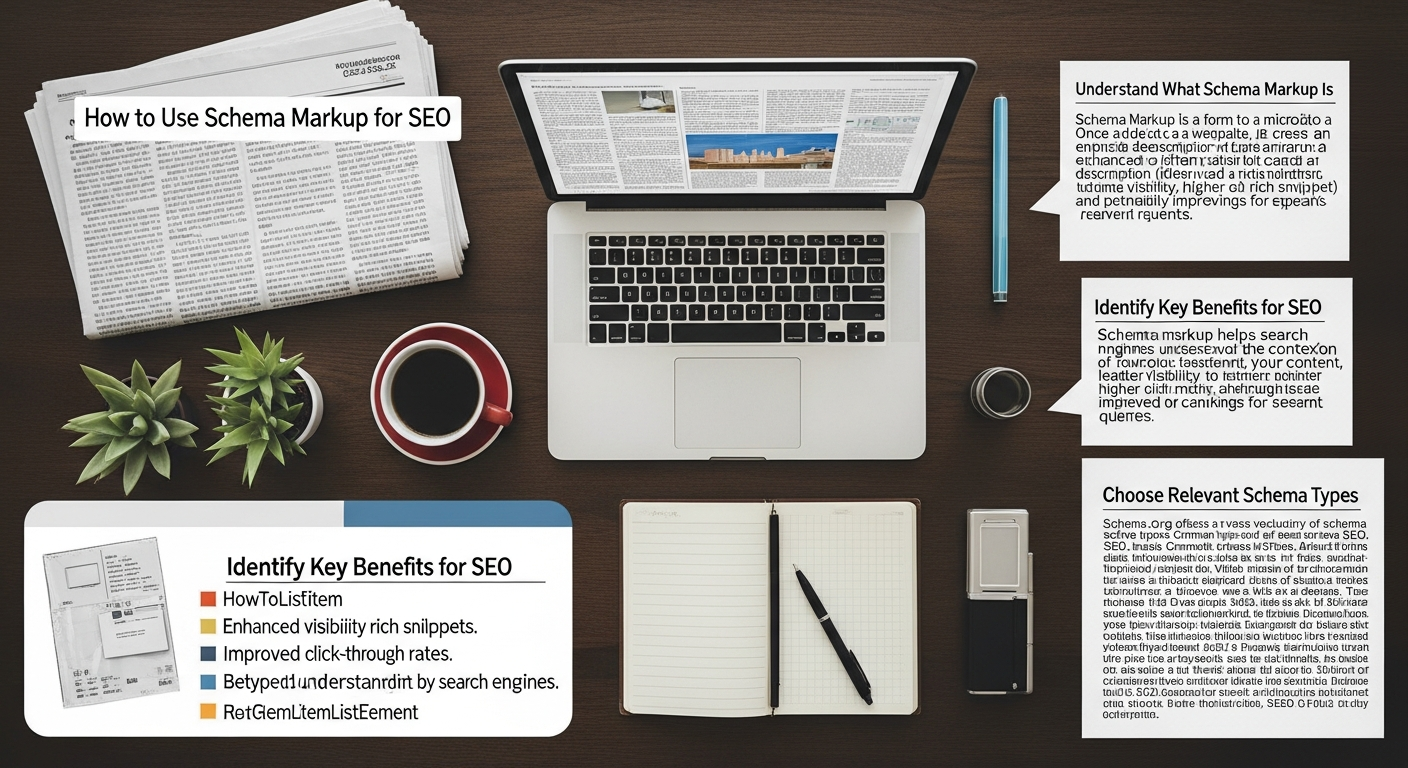
Implementing schema markup is far more than a technical SEO checkbox; it’s a strategic move that delivers a multitude of tangible benefits crucial for any modern digital marketing strategy. These advantages directly impact your visibility, user engagement, and ultimately, your bottom line.
- Enhanced Visibility Through Rich Snippets: This is arguably the most immediate and recognizable benefit. By providing structured data, your web pages become eligible for rich snippets. Imagine a search result for a product that includes its star rating, price, and availability right in the SERP. Or a recipe showing its cook time and calorie count. These visually appealing additions make your listing stand out dramatically from standard blue-link results, drawing the user’s eye and significantly increasing the likelihood of them clicking on your link. This increased visibility doesn’t necessarily mean a higher ranking, but it does mean a higher chance of being clicked when you do rank.
- Improved Click-Through Rate (CTR): A direct consequence of enhanced visibility is a boosted CTR. When users see more compelling and relevant information about your page directly in the search results, they are more inclined to click. Rich snippets provide immediate value and context, helping users quickly determine if your page is exactly what they’re looking for, reducing wasted clicks and improving the quality of traffic to your site. A higher CTR, in turn, can signal to search engines that your page is highly relevant and valuable, potentially influencing future rankings.
- Deeper Search Engine Understanding: Schema markup is the language of semantic search. It helps search engines interpret the context and meaning of your content with greater precision. This deeper understanding is crucial for modern AI-driven algorithms. When search engines truly understand what your page is about – not just the keywords it contains – they can more accurately match it with complex user queries, including long-tail and conversational searches. This semantic clarity helps search engines build a richer profile of your business and its offerings.
- Better Eligibility for SERP Features: Beyond standard rich snippets, schema markup is essential for appearing in advanced SERP features like Knowledge Panels, Answer Boxes, and Carousel results. For local businesses, accurate LocalBusiness schema is vital for appearing in the local pack and on Google Maps. For publishers, Article schema can help content appear in Google News carousels. These prime SERP positions offer unparalleled exposure and authority.
- Voice Search Optimization: As voice search continues to grow in popularity, driven by devices like smart speakers and virtual assistants, structured data becomes even more critical. Voice queries are often specific and question-based. Schema markup allows search engines to quickly extract precise answers to these questions directly from your content, making your site a preferred source for voice search results. This is a key consideration for any Digital Marketing Strategy Small Business 2026 looking to capture emerging search trends.
- Competitive Advantage: While schema markup is becoming more common, it’s still not universally adopted by all businesses. By implementing it effectively, you gain a significant edge over competitors who haven’t yet embraced structured data. Your listings will stand out, attract more clicks, and provide a better overall search experience, helping you capture market share and establish your brand as an authority.
- Future-Proofing Your SEO: Search engine algorithms are constantly evolving, with a clear trajectory towards deeper semantic understanding and AI integration. By investing in schema markup now, you are aligning your website with the future direction of search. You are building a foundation that will remain relevant and effective as search technology advances, ensuring your content continues to be discoverable and understood by the most sophisticated algorithms.
In essence, schema markup transforms your website from a collection of words into a database of structured, machine-readable information. This transformation is invaluable for search engines and, by extension, for your business’s online success.
Key Schema Types for Enhanced Visibility and Engagement
Organization Schema
The Organization schema type is fundamental for any business. It helps search engines understand who you are, what your brand represents, and key details about your entity. This schema can inform search engines about your official name, logo, contact information, social media profiles, and more. It’s especially powerful for contributing to a brand’s Knowledge Panel on Google, establishing authority and trustworthiness.
- SEO Benefit: Builds brand recognition in SERPs, improves eligibility for Knowledge Panel, and consolidates brand information across search results.
- Use Case: Apply to your homepage to define your company as an organization, including your legal name, logo URL, and links to official social media profiles.
LocalBusiness Schema
A specialized extension of Organization, the LocalBusiness schema is absolutely critical for any business with a physical location serving a local customer base. This schema provides specific details like your physical address, phone number, opening hours, department-specific contact info, and accepted payment methods. It’s essential for local SEO.
- SEO Benefit: Enhances visibility in local search results, Google Maps, and the local pack, driving foot traffic and local inquiries.
- Use Case: Implement on your contact page or homepage for businesses like restaurants, retail stores, service providers (e.g., plumbers, electricians), specifying all relevant local details.
Product Schema
For e-commerce websites, Product schema is non-negotiable. It allows you to mark up specific details about a product, such as its name, description, image, brand, SKU, and critically, its price, currency, and availability. When combined with Offer and AggregateRating schema, it can create highly compelling rich snippets.
- SEO Benefit: Generates rich snippets displaying price, availability, and review ratings directly in SERPs, significantly boosting CTR for product listings.
- Use Case: Apply to individual product pages on an e-commerce site, detailing all relevant product attributes.
Article/Blog Post Schema
Content creators, bloggers, and news organizations heavily benefit from Article (or more specific types like NewsArticle or BlogPosting) schema. This markup helps search engines understand the type of content, who authored it, when it was published, and even an associated image. It provides context that distinguishes a blog post from a product page or a recipe.
- SEO Benefit: Improves eligibility for Google News features, top stories carousels, and enhances the visibility of evergreen content with author and publication dates.
- Use Case: Implement on every blog post, news article, or informational page, specifying the author, publication date, headline, and main image.
Review/AggregateRating Schema
User reviews and ratings are powerful social proof. The Review and AggregateRating schema types allow you to mark up individual reviews or an average rating for a product, service, organization, or piece of content. This is one of the most visually striking rich snippets.
- SEO Benefit: Displays star ratings in SERPs, dramatically increasing the visual appeal and trustworthiness of your listing, leading to higher CTR.
- Use Case: Apply to product pages, service pages, or local business listings where you collect and display customer reviews.
FAQPage Schema
For pages that contain a list of questions and answers, the FAQPage schema is incredibly valuable. It allows you to explicitly mark up each question and its corresponding answer. This schema is a prime candidate for generating direct answers in SERPs.
- SEO Benefit: Creates rich snippets that expand to show answers directly in the SERP, providing immediate value to users and occupying more SERP real estate.
- Use Case: Implement on dedicated FAQ pages, product pages with common questions, or informational articles that structure content in a Q&A format.
HowTo Schema
If your content provides step-by-step instructions on how to accomplish a task, HowTo schema is perfect. It allows you to detail each step, the tools required, and the estimated time to complete the task. This is particularly useful for instructional guides and tutorials.
- SEO Benefit: Generates interactive rich snippets that display the steps of a process directly in search results, aiding users and increasing engagement.
- Use Case: Use on articles or pages that explain “how to” do something, like a cooking recipe (though
Recipeschema is more specific), a DIY guide, or a software tutorial.
VideoObject Schema
For pages featuring embedded videos, VideoObject schema provides search engines with crucial metadata about the video content. This includes the video’s title, description, thumbnail URL, upload date, and duration. This helps videos appear more prominently in video search results.
- SEO Benefit: Improves visibility of your videos in Google Video search and can lead to video rich snippets appearing in regular web search results.
- Use Case: Apply to pages where you have embedded videos, such as product demos, tutorials, interviews, or promotional content.
BreadcrumbList Schema
Breadcrumbs are navigation aids that show users their current location within a website’s hierarchy. BreadcrumbList schema marks up this navigation path, helping search engines understand your site’s structure and display this path in search results.
- SEO Benefit: Replaces the URL in search results with a more user-friendly and navigable breadcrumb path, improving user experience and clarity.
- Use Case: Implement on all internal pages where breadcrumb navigation is present, clearly defining the hierarchical path from the homepage.
Person Schema
For individuals like authors, speakers, or public figures, the Person schema helps search engines understand their identity, professional affiliations, and other relevant details. This is especially useful for establishing authoritativeness and expertise.
- SEO Benefit: Can contribute to Knowledge Panels for individuals, linking their works and online presence, fostering E-E-A-T (Experience, Expertise, Authoritativeness, and Trustworthiness).
- Use Case: Apply to author bio pages, “about us” pages featuring key team members, or speaker profiles.
By strategically applying these schema types, businesses can provide search engines with a clear, comprehensive understanding of their content, leading to enhanced visibility, increased engagement, and a stronger competitive position in the digital landscape.
Implementing Schema Markup: Best Practices and Tools
Successfully integrating schema markup into your website involves more than just knowing which types to use; it requires a systematic approach, adherence to best practices, and the utilization of appropriate tools. A careful implementation ensures that your structured data is valid, accurate, and truly beneficial for your SEO efforts.
Choosing the Right Schema Type
The first and most crucial step is to accurately identify the primary content of each page and select the most appropriate schema type. Do not try to force schema where it doesn’t naturally fit. For instance, marking up a blog post as a product will likely lead to penalties or ignored markup. Focus on the most specific and relevant type available. If your page features a recipe, use Recipe schema, not just Article. If it’s a local business, use LocalBusiness. Accuracy and relevance are paramount; misleading schema can harm your search performance.
Structured Data Testing Tool
Before deploying any schema markup to your live site, it is absolutely essential to test it for validity. Google provides the “Rich Results Test” tool (formerly the Structured Data Testing Tool). This free online tool allows you to paste your schema code or a URL and immediately checks for syntax errors, missing required properties, and compliance with Google’s guidelines. It will also show you which rich snippets your page is eligible for. Using this tool rigorously for every new implementation or update is a non-negotiable best practice to prevent deployment of faulty markup that Google might ignore or even penalize.
Google Search Console Monitoring
Once your schema markup is live, Google Search Console becomes your central hub for monitoring its performance and identifying any issues. The “Enhancements” section in Search Console provides detailed reports on various rich result types (e.g., Products, Reviews, FAQs). Here, you can see if your structured data is being detected, which pages are eligible for rich results, and most importantly, any errors or warnings that need to be addressed. Regularly checking these reports allows you to quickly troubleshoot problems and ensure your schema continues to function correctly, keeping your site eligible for valuable rich snippets.
Integration with CMS
Implementing schema markup can be done in several ways, with the method often depending on your Content Management System (CMS).
- WordPress: For WordPress users, plugins like Yoast SEO or Rank Math offer built-in schema generation for common content types (e.g., articles, local business, FAQs). These plugins often automate much of the process, reducing the need for manual coding. For more complex or custom schema, plugins like Schema Pro or custom code snippets can be used.
- Other CMS Platforms: Many other CMS platforms offer similar plugin or module functionality. Custom-built websites may require manual implementation, directly embedding JSON-LD (the recommended format) into the HTML head or body of the page.
- Google Tag Manager (GTM): For dynamic or client-side generated schema, GTM can be used to inject structured data onto pages. However, this method can be more complex and requires careful testing to ensure search engines can properly render and crawl the injected schema.
The Role of AI in Schema Implementation
The landscape of SEO and content creation is rapidly being transformed by artificial intelligence, and schema markup is no exception. AI writing tools content marketing solutions are evolving to assist in more intelligent schema implementation. While AI cannot replace the strategic decision-making of a human SEO specialist, it can significantly streamline and enhance the process:
- Content Analysis and Schema Suggestion: Advanced AI tools can analyze your content and automatically suggest the most relevant schema types and properties based on the page’s context, images, and text. This saves time and ensures greater accuracy.
- Automated Schema Generation: Some AI-powered platforms are beginning to generate basic schema code (e.g., JSON-LD) directly from your content or inputs, reducing the manual effort required for coding. This is particularly useful for large websites with many pages.
- Error Detection and Optimization: AI can be trained to identify potential errors or omissions in existing schema markup, offering recommendations for optimization to align with the latest schema.org guidelines and search engine best practices.
- Keeping Up with Changes: Schema.org is constantly updated with new types and properties. AI tools can help keep your schema implementations current by flagging new opportunities or deprecated elements, ensuring your structured data remains effective and compliant with a robust Digital Marketing Strategy Small Business 2026.
While still an emerging area, leveraging AI for schema implementation holds immense potential for improving efficiency and accuracy, allowing SEO professionals to focus on higher-level strategy rather than meticulous manual coding.
Schema Markup in the Evolving Digital Landscape
As we look towards Digital Marketing Strategy Small Business 2026, schema markup is not just a tactical SEO enhancement but a strategic imperative that underpins several critical advancements in how businesses connect with their audience online. The digital landscape is becoming increasingly intelligent, personalized, and automated, and structured data is the fuel that powers many of these innovations.
For small businesses, in particular, schema markup represents a powerful equalizer. In a competitive digital environment, larger enterprises often have the resources for extensive content creation and link building. However, a meticulously implemented schema strategy can help a small business stand out with visually appealing rich snippets, capture local search visibility, and directly answer user queries, all of which are vital for a successful Digital Marketing Strategy Small Business 2026. By communicating clearly and unambiguously with search engines about their products, services, and location, small businesses can achieve disproportionate visibility and attract highly qualified traffic.
The integration of schema markup also plays a pivotal role in the effectiveness of Marketing Automation Tools 2026. Imagine a scenario where your marketing automation platform can leverage the structured data from your website to create more personalized and effective campaigns. For example:
- Dynamic Content Creation: Product schema can feed directly into marketing automation tools to generate dynamic ad copy, email content, or social media posts that automatically pull in product names, prices, and availability, ensuring consistency and real-time accuracy across all channels.
- Enhanced Audience Segmentation: By understanding the type of content users interact with (thanks to schema-informed search results), marketing automation platforms can create more granular audience segments. A user who clicks on a “HowTo” rich snippet might be interested in educational content, while someone clicking a “Product” rich snippet is likely closer to a purchase decision.
- Improved Reporting and Attribution: When search engines better understand your content through schema, they can provide richer data in analytics platforms. This data, when integrated with Marketing Automation Tools 2026, can offer deeper insights into user journeys, content performance, and the true ROI of your SEO efforts.
- Voice Search Integration: As voice search becomes more prevalent, marketing automation can leverage schema-driven answers to provide more personalized responses through AI chatbots or virtual assistants, guiding users through the sales funnel via conversational interfaces.
Furthermore, the continuous advancements in AI writing tools content marketing are intrinsically linked to the utility of schema markup. AI models trained on vast datasets can analyze content and suggest optimal schema types, or even generate the necessary structured data code, making schema implementation more accessible and efficient. This synergy allows businesses to produce high-quality, schema-optimized content at scale, ensuring their digital assets are not only engaging but also perfectly understood by search engines. As AI continues to evolve, its ability to interpret and generate structured data will only become more sophisticated, making it an indispensable partner in content strategy for 2026 and beyond.
In this future-forward context, schema markup is not merely a technical detail; it is a fundamental component of a holistic digital strategy. It enables clearer communication, empowers automation, and ensures that businesses, particularly small ones, can compete effectively and thrive in an increasingly intelligent and interconnected online world.
Common Mistakes to Avoid When Using Schema Markup
While schema markup offers significant SEO advantages, incorrect implementation can negate its benefits or even lead to penalties. Avoiding common pitfalls is as important as understanding the correct procedures. Here are some critical mistakes to steer clear of:
- Using Irrelevant or Misleading Schema: This is perhaps the most egregious error. Marking up content that doesn’t genuinely represent what’s on the page is a direct violation of Google’s guidelines. For example, adding “Product” schema to a blog post that doesn’t sell a product, or giving a fake high rating to an item that has no reviews. Google’s algorithms are increasingly sophisticated at detecting such deceptive practices, and this can result in your rich snippets being ignored, manual penalties, or even a drop in rankings. Always ensure your schema accurately reflects the visible content.
-
Incomplete or Missing Required Properties: Every schema type has a set of “required” properties, and often “recommended” ones. Failing to include the required properties will cause your schema to be invalid and ignored by search engines. For instance, a
Productschema often requires a name, image, and an offer (with price and currency). Always refer to schema.org documentation or use Google’s Rich Results Test to ensure all necessary fields are populated. -
Incorrect Nesting and Hierarchy: Structured data often involves nesting different schema types within each other to represent complex relationships (e.g., an
Offernested within aProduct, which is part of anOrganization). Incorrect nesting or improper hierarchy can break the entire schema, making it unreadable for search engines. Pay close attention to the structure, especially when manually coding JSON-LD. - Marking Up Content Not Visible to Users: Google explicitly states that structured data should be used to mark up content that is visible to users on the page. Hiding content in a collapsed section, off-screen, or using CSS to make it invisible, but still marking it up with schema, is a deceptive practice. The purpose of schema is to clarify visible content, not to inject hidden information.
- Over-Markup or Excessive Schema: While it might seem beneficial to add as much schema as possible, excessively marking up every single element on a page, especially with less relevant types, can be counterproductive. Focus on the primary entities and actions on the page. Over-markup can sometimes dilute the importance of key information or make the structured data harder to maintain.
- Not Testing Your Schema: As mentioned, using Google’s Rich Results Test is crucial. Many beginners skip this step, only to find later that their schema is not generating rich snippets because of simple syntax errors or missing fields. Treat testing as an integral part of the implementation process.
- Ignoring Google Search Console Reports: Even after successful implementation, it’s vital to monitor your structured data reports in Google Search Console. This dashboard will alert you to any errors Google detects on your live pages, such as parsing errors or issues with specific rich result types. Regularly checking these reports allows you to quickly address problems and maintain your eligibility for rich snippets.
- Not Keeping Up with Schema.org Updates: Schema.org and Google’s guidelines for structured data are not static; they evolve over time. New schema types are introduced, existing ones are refined, and best practices can change. Failing to stay informed about these updates can lead to outdated or less effective schema implementations. Subscribe to industry news and regularly check Google’s developer documentation to ensure your strategy remains current.
By consciously avoiding these common mistakes, you can ensure that your schema markup is valid, effective, and contributes positively to your overall SEO performance, helping your website achieve superior visibility and user engagement.
Frequently Asked Questions
Recommended Resources
For more on how to use, see How To Use Hotel Points For Free Stays on Gold Points.
Learn more about this topic in How To Hire Your First Employee at AssetBar.