

Understanding CPQ Software: The Foundation of Efficiency
At its core, CPQ software is designed to streamline and automate the process of creating quotes for complex products and services. The acronym stands for Configure, Price, Quote, each element addressing a distinct yet interconnected challenge in the sales process. Configuration involves defining what products or services can be sold together, ensuring compatibility, and adhering to specific business rules. This is particularly vital for businesses offering highly customizable solutions, where manual configuration can lead to errors, delays, and frustrated customers. Imagine a manufacturing business trying to manage thousands of possible product permutations manually; the potential for error is immense. CPQ centralizes product catalogs, rules, and dependencies, guiding sales reps through valid configurations effortlessly.
Pricing, the second component, ensures that products and services are priced accurately and consistently, taking into account various factors such as discounts, bundles, promotions, regional pricing, customer-specific contracts, and even competitor analysis. This eliminates the guesswork and reliance on spreadsheets, which are prone to human error and can quickly become outdated. A robust CPQ system integrates with CRM (Customer Relationship Management) and ERP (Enterprise Resource Planning) systems to pull real-time data, ensuring that every quote reflects the most current pricing, inventory levels, and customer entitlements. This consistency is not just about accuracy; it’s about maintaining profit margins and adhering to pricing strategies that support overall business goals. It’s about having a single source of truth for pricing, which is invaluable for both sales teams and financial planning.
Finally, Quoting is the process of generating professional, error-free proposals and contracts. A CPQ solution automates the creation of these documents, pulling configured products and accurate prices into branded templates. This dramatically reduces the time sales reps spend on administrative tasks, freeing them to focus on selling and building customer relationships. Beyond mere document generation, CPQ often includes features for e-signatures, version control, and approval workflows, ensuring that every quote is compliant and moves through the necessary internal channels swiftly. The cumulative effect of these three pillars is a significant boost in operational efficiency, translating directly into faster sales cycles, improved customer satisfaction, and a more streamlined path to revenue realization. For businesses, especially those with complex offerings, CPQ isn’t just an upgrade; it’s a fundamental shift towards a more intelligent, automated, and error-proof sales ecosystem.
Streamlining the Sales Process: From Quote to Close
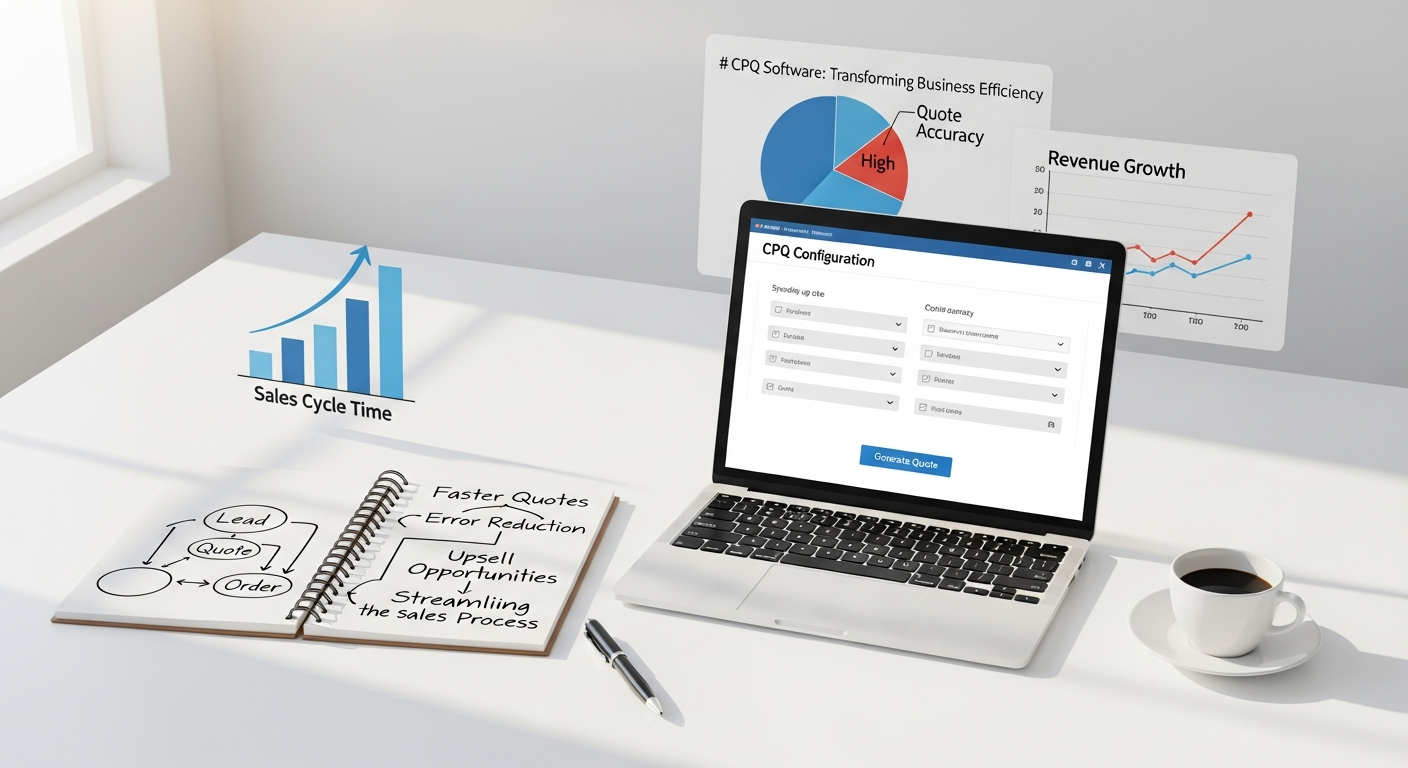
One of the most immediate and profound impacts of CPQ software is its ability to radically streamline the sales process. In traditional sales environments, the journey from initial customer inquiry to a closed deal can be fraught with bottlenecks. Sales representatives often spend an inordinate amount of time navigating complex product catalogs, cross-referencing pricing sheets, obtaining internal approvals, and manually drafting proposals. These administrative burdens not only reduce selling time but also introduce opportunities for errors, which can lead to costly rework, customer dissatisfaction, and even lost deals. CPQ directly addresses these inefficiencies, transforming a cumbersome, multi-step process into a fluid, accelerated workflow.
With CPQ, the process of configuring complex products becomes intuitive and guided. Sales reps, even new hires, can confidently build accurate product bundles using pre-defined rules and dependencies. This eliminates the need for extensive product knowledge training for every single permutation and ensures that only valid, buildable configurations are quoted. For a manufacturing business, where product complexity can be staggering, this is a game-changer. It ensures that the sales team isn’t promising something the factory can’t deliver, which is a critical aspect of the 3 services you need for your manufacturing business: efficient production, robust supply chain management, and accurate sales forecasting. CPQ contributes significantly to the latter by ensuring that what’s sold can actually be produced and delivered.
Furthermore, CPQ significantly accelerates the pricing stage. Instead of manual calculations and multiple spreadsheet lookups, CPQ systems automatically apply the correct prices, discounts, and terms based on predefined rules, customer segments, and real-time data. This not only ensures accuracy but also consistency across all sales interactions. Imagine a scenario where a sales rep can generate an accurate, professional quote in minutes rather than hours or days. This speed allows businesses to respond to customer inquiries faster, seize opportunities before competitors, and ultimately shorten the sales cycle. Faster quotes mean more quotes can be generated, and more deals can be pursued.
The automation extends to the proposal generation itself. CPQ systems automatically pull all configured items, prices, and terms into branded, professional-looking proposals. These proposals can often be customized with dynamic content, tailored specifically to the customer’s needs, without any manual effort from the sales rep. This eliminates the tedious process of copying and pasting, formatting, and proofreading, which are common time sinks. Moreover, integrated approval workflows mean that complex deals requiring management or legal sign-off can be routed automatically, tracked, and approved digitally, removing further delays. By digitizing and automating these critical steps, CPQ empowers sales teams to be more productive, more accurate, and more responsive, directly impacting their ability to move deals from the initial quote stage to a successful close with unprecedented speed and precision. This efficiency is directly measurable in terms of reduced sales cycle times and increased win rates, providing a clear ROI for the investment.
Enhancing Customer Experience and Satisfaction
One of the most significant contributions of CPQ to customer satisfaction is the ability to deliver lightning-fast, accurate quotes. In a world where instant gratification is increasingly the norm, making a customer wait days for a proposal, only for it to contain errors, is a surefire way to lose their business. CPQ enables sales reps to configure and price even the most intricate solutions on the fly, often during the initial customer interaction. This immediate feedback instills confidence and demonstrates professionalism. Customers receive precise quotes that reflect their exact requirements, eliminating the frustration of back-and-forth corrections and clarifying ambiguities.
Beyond speed and accuracy, CPQ facilitates a highly personalized buying experience. By integrating with CRM systems, CPQ can leverage existing customer data – such as past purchases, preferences, and contractual agreements – to tailor configurations and pricing specifically for them. This allows sales reps to suggest relevant upsell or cross-sell opportunities that genuinely meet the customer’s evolving needs, rather than generic add-ons. For instance, if a customer has previously purchased a specific product line, the CPQ system can automatically suggest compatible accessories or service plans, making the sales interaction feel more consultative and value-driven. This level of personalization not only improves the chances of closing a deal but also strengthens customer loyalty and perception of value.
Furthermore, CPQ often includes capabilities for generating visually appealing, customized proposals and contracts. These documents are professional, branded, and easy to understand, clearly outlining the configured products, pricing, and terms. The clarity and presentation of these documents contribute significantly to customer trust and satisfaction. The ability to quickly iterate on quotes based on customer feedback, presenting alternative configurations or pricing scenarios in real-time, further enhances the collaborative aspect of the sales process. Customers feel more involved and in control of their purchasing decisions. In some cases, businesses might even leverage CPQ-driven portals to allow customers to self-configure and price simpler products, offering a truly self-service experience that aligns with modern digital expectations, similar to how an efficient online waiver system streamlines customer onboarding by providing a convenient, digital self-service option for documentation. Both systems empower customers with speed and autonomy, reflecting a broader digital transformation trend aimed at improving customer touchpoints across the board. By reducing friction, increasing transparency, and providing a highly responsive sales interaction, CPQ transforms the buying journey into a positive and memorable experience, fostering stronger relationships and encouraging repeat business.
Driving Revenue Growth and Profitability
While efficiency often translates into cost savings, the strategic implementation of CPQ software extends far beyond operational improvements to directly impact a business’s top-line revenue and overall profitability. By optimizing critical stages of the sales process, CPQ empowers sales teams to sell more effectively, at higher margins, and with greater predictability. This makes it an indispensable tool for business growth professionals focused on tangible financial outcomes.
One of the most potent revenue-driving capabilities of CPQ is its ability to facilitate intelligent upselling and cross-selling. CPQ systems are configured with intricate product rules and dependencies. When a sales rep configures a core product, the system can automatically suggest complementary products, services, or upgrades based on logic and past successful sales patterns. This ensures that no potential revenue opportunity is missed. For example, if a customer is buying a particular piece of machinery, the CPQ might automatically recommend extended warranties, maintenance contracts, or compatible accessories. These suggestions are not random; they are data-driven and aligned with customer needs, making them more likely to convert. This automated guidance transforms sales reps into more effective consultants, increasing the average deal size and overall customer lifetime value.
Moreover, CPQ ensures optimal pricing strategies are consistently applied. Manual pricing is often inconsistent, leading to either underpricing (leaving money on the table) or overpricing (losing deals). CPQ enforces predefined pricing rules, including volume discounts, regional pricing, promotional offers, and customer-specific contracts. It can even incorporate dynamic pricing based on market conditions or inventory levels. This eliminates “rogue discounting” and ensures that every quote maintains healthy profit margins while remaining competitive. By centralizing pricing logic, businesses gain greater control over their revenue streams and can analyze the impact of different pricing strategies with precision.
Another significant benefit for profitability comes from improved sales forecasting and reporting. With CPQ, every quote generated, every configuration built, and every deal stage update is captured within the system, often integrated with CRM. This rich data provides invaluable insights into sales performance, product popularity, pricing effectiveness, and pipeline health. Sales leaders can generate accurate forecasts, identify trends, and make data-driven decisions to optimize their sales strategies. This level of visibility is crucial for resource allocation, inventory management, and strategic planning, allowing businesses to anticipate future demand and adjust operations accordingly. For a company working with the best Denver SEO firm for business marketing, this data can be a goldmine. Improved sales data from CPQ can inform SEO strategies, helping the firm target keywords related to popular product configurations or services, optimize content for high-converting offerings, and refine marketing campaigns based on real-world sales performance, thereby creating a symbiotic relationship between sales execution and marketing strategy.
Finally, by reducing errors in quotes and contracts, CPQ minimizes the need for costly rework, renegotiations, and potential legal disputes, all of which chip away at profitability. The overall acceleration of the sales cycle means that revenue is realized faster, improving cash flow and allowing for quicker reinvestment into the business. In essence, CPQ doesn’t just make sales easier; it makes them smarter, more strategic, and ultimately, more profitable, solidifying its role as a critical driver for sustained business growth in 2026.
Operational Benefits and Interdepartmental Synergy
The impact of CPQ software extends far beyond the sales department, creating a ripple effect of operational benefits across the entire organization. By automating and standardizing the quoting process, CPQ fosters unprecedented interdepartmental synergy, breaking down silos and improving collaboration between sales, operations, finance, and even legal teams. This holistic approach to efficiency is what truly elevates CPQ from a mere tool to a strategic business asset.
One of the most significant operational advantages is the reduction of manual effort and administrative overhead. Before CPQ, sales reps might spend hours configuring products, calculating prices, and drafting proposals. This time is often taken away from actual selling activities. CPQ automates these tasks, freeing up sales personnel to focus on customer engagement, prospecting, and closing deals. This increased sales capacity translates directly into more opportunities pursued and more revenue generated, without necessarily increasing headcount. Furthermore, the automation extends to the finance department, as accurate quotes flow seamlessly into billing and invoicing systems, reducing discrepancies and accelerating the revenue recognition process.
CPQ’s ability to enforce business rules and ensure compliance is another critical operational benefit. Complex products often come with specific regulatory requirements, contractual obligations, or internal policies that must be adhered to. Manually tracking these can lead to errors, non-compliance, and potentially significant legal or financial repercussions. CPQ systems embed these rules directly into the configuration and quoting process, preventing sales reps from creating invalid configurations or offering unapproved terms. This ensures that every quote and contract is compliant from the outset, significantly reducing risk for the legal and compliance teams. For instance, in industries with strict product safety or environmental regulations, CPQ ensures that only compliant components and configurations are proposed, safeguarding the business from potential liabilities.
The seamless integration with existing enterprise systems like CRM, ERP, and even marketing automation platforms is where CPQ truly shines in fostering synergy. When CPQ is integrated with a CRM, sales reps have a 360-degree view of the customer, and quote data automatically updates customer records, enriching the customer profile for future interactions. Integration with ERP systems allows CPQ to pull real-time inventory data, production schedules, and cost information, ensuring that quotes are not only accurate but also feasible from an operational standpoint. This prevents sales from promising products that are out of stock or have excessively long lead times, which would otherwise lead to customer dissatisfaction and operational headaches. For a manufacturing business, this integration is paramount to ensuring alignment between what sales promises and what production can deliver, directly contributing to the efficacy of the 3 services you need for your manufacturing business: production planning, inventory management, and customer order fulfillment. By connecting sales, production, and finance, CPQ creates a unified operational ecosystem where information flows freely and accurately, minimizing friction and maximizing overall business velocity.
Moreover, CPQ can improve internal communication and reduce interdepartmental conflicts. When sales, operations, and finance are all working from a single, consistent source of truth for product configurations and pricing, misunderstandings and disputes decrease. Everyone is aligned on what has been sold, at what price, and under what terms. This improved collaboration leads to a more harmonious and productive work environment, allowing teams to focus on strategic initiatives rather than resolving internal discrepancies. The downstream impact on customer satisfaction, driven by a well-oiled internal machine, further solidifies CPQ’s role as a catalyst for comprehensive operational efficiency.
Strategic Implementation for Sustainable Business Growth
Implementing CPQ software is not merely a technical undertaking; it’s a strategic business initiative that, when executed thoughtfully, can lay the groundwork for sustainable growth and a significant competitive advantage. For business growth professionals, understanding the strategic elements of CPQ deployment is crucial to maximize its impact and ensure long-term success. A poorly planned implementation can negate many of the potential benefits, while a well-executed strategy can unlock transformative efficiency and revenue gains.
The first critical step in strategic implementation is a thorough assessment of current processes and pain points. Before selecting a CPQ solution, businesses must meticulously analyze their existing sales processes, identify bottlenecks, common errors, and areas of manual inefficiency. This includes understanding the complexity of their product catalog, pricing structures, discount policies, and approval workflows. This initial audit helps define clear objectives for the CPQ implementation, ensuring that the chosen solution directly addresses the most pressing challenges. Without a clear understanding of “why” CPQ is needed, the “what” and “how” of implementation become much harder to define.
Next comes the careful selection of the right CPQ solution. The market offers a diverse range of CPQ platforms, each with different strengths, features, and integration capabilities. Businesses must choose a solution that aligns with their specific industry needs, product complexity, budget, and existing technology stack (e.g., CRM, ERP). Factors to consider include scalability, ease of use for sales reps, integration capabilities, vendor support, and the flexibility to adapt to future business changes. A CPQ system that integrates seamlessly with your existing infrastructure, such as Salesforce or SAP, will yield far greater benefits than a standalone solution that creates new data silos. This choice also involves considering whether a cloud-based SaaS solution or an on-premise deployment is more suitable for the organization’s IT strategy and security requirements for 2026.
Data migration and configuration of product rules represent a significant phase of implementation. Accurate and complete product data, pricing matrices, and business rules are the lifeblood of any CPQ system. This often requires a substantial effort to clean, standardize, and migrate existing data. The configuration of complex product rules, dependencies, and pricing logic within the CPQ system is critical to ensuring accuracy and preventing errors. This stage often requires close collaboration between sales, product management, and IT teams to translate business logic into system rules effectively. Investing sufficient time and resources here will prevent issues down the line.
Crucially, user adoption and training are paramount for success. Even the most sophisticated CPQ system is useless if sales reps don’t use it effectively. Comprehensive training programs, ongoing support, and clear communication about the benefits of the new system are essential. The implementation should be framed as an empowerment tool for the sales team, reducing their administrative burden and increasing their selling time, rather than just another piece of software to learn. Change management strategies, including identifying internal champions and celebrating early successes, can significantly boost adoption rates. It’s not just about teaching them how to click buttons, but how the new system enhances their ability to serve customers and close deals.
Finally, continuous monitoring, optimization, and evolution are vital. A CPQ system is not a set-it-and-forget-it solution. As products evolve, pricing strategies change, and market conditions shift, the CPQ system must be updated and optimized. Regular reviews of system performance, user feedback, and sales data can identify areas for improvement. Embracing an agile approach to CPQ management ensures that the system remains aligned with business objectives and continues to deliver maximum value over time, solidifying its role as a cornerstone of sustainable business growth well into 2026 and beyond.
The Future of Sales: CPQ as a Competitive Edge in 2026
As businesses hurtle towards 2026, the competitive landscape is more fierce and digitally driven than ever before. In this environment, the ability to respond swiftly, accurately, and personally to customer demands is no longer a luxury but a fundamental requirement for survival and growth. CPQ software, far from being a niche tool, is rapidly evolving into a mainstream, indispensable technology that provides a significant competitive edge across various industries. Its role will only intensify as market dynamics continue to shift and customer expectations reach new heights.
One of the key ways CPQ will solidify its competitive advantage in 2026 is through its deepening integration with Artificial Intelligence (AI) and Machine Learning (ML). Future CPQ systems will leverage AI to offer predictive pricing based on market trends, competitor analysis, and customer behavior, ensuring optimal margins and win rates. ML algorithms will analyze past sales data to recommend the most effective product bundles and upsell opportunities, moving beyond rule-based configurations to truly intelligent selling suggestions. Imagine a CPQ system that not only ensures compatibility but also predicts the likelihood of a customer purchasing a specific add-on based on millions of data points. This level of predictive analytics will empower sales teams with unparalleled insights, allowing them to personalize offers with surgical precision and anticipate customer needs before they are even articulated.
Another crucial aspect will be the rise of guided selling and self-service capabilities. While CPQ already guides sales reps through complex configurations, 2026 will see more sophisticated guided selling modules that act as virtual sales assistants, providing real-time coaching and best-practice recommendations during the quoting process. Furthermore, for simpler products or specific customer segments, CPQ-powered self-service portals will become more prevalent, allowing customers to configure, price, and even order products directly. This caters to the growing preference for digital self-service, empowering customers and freeing up sales reps for more complex, high-value interactions. This mirrors the efficiency gains seen from implementing digital solutions like an online waiver system in your business, where self-service reduces administrative burden and enhances customer convenience. Both represent shifts towards empowering the end-user through intuitive digital interfaces.
The increasing complexity of global supply chains and product offerings will also underscore CPQ’s importance. As businesses expand internationally and diversify their product portfolios, managing localized pricing, varying regulations, and complex multi-currency transactions manually becomes untenable. CPQ solutions will be crucial in managing this complexity, ensuring global consistency while allowing for local adaptation. For a manufacturing business, especially one dealing with intricate product lines and a global customer base, CPQ will be a lifeline, ensuring that what’s quoted can actually be produced and delivered in any region, complying with local standards – a critical component of optimizing the 3 services you need for your manufacturing business for global operations.
Finally, CPQ will be central to delivering a truly unified and seamless customer journey. Integrated with CRM, marketing automation, and e-commerce platforms, CPQ will ensure that the customer experience is consistent from the very first marketing touchpoint through to purchase and beyond. This holistic view will allow businesses to optimize their entire customer lifecycle, driving loyalty and repeat business. For digital marketing agencies or businesses leveraging the best Denver SEO firm for business marketing, the data derived from CPQ can further refine marketing strategies, identifying which product configurations or service bundles resonate most with specific audience segments, allowing for highly targeted and effective campaigns. By providing speed, accuracy, personalization, and intelligent automation, CPQ software is not just improving sales operations; it’s redefining the very nature of sales, positioning itself as a non-negotiable competitive imperative for businesses aiming for sustained success and market leadership in 2026 and beyond.
FAQs about CPQ Software and Business Efficiency
What types of businesses benefit most from CPQ software?
CPQ software offers significant benefits to businesses that deal with complex product configurations, multiple pricing models, frequent discounts, or a high volume of quotes. This typically includes manufacturing, technology (software and hardware), telecommunications, medical devices, energy, and professional services industries. Any business where manual quoting is time-consuming, error-prone, or requires extensive product knowledge stands to gain immensely from CPQ implementation.
How long does it take to implement CPQ software?
The implementation timeline for CPQ software can vary widely, typically ranging from a few months to over a year, depending on the complexity of the business’s product catalog, pricing rules, existing IT infrastructure, and the extent of integrations required. A phased approach, starting with core functionalities and gradually expanding, can help manage the process and deliver quicker initial value.
Can CPQ integrate with my existing CRM and ERP systems?
Yes, most modern CPQ solutions are designed for seamless integration with leading CRM (e.g., Salesforce, Microsoft Dynamics) and ERP (e.g., SAP, Oracle, NetSuite) systems. These integrations are crucial for pulling customer data, product catalogs, inventory levels, and financial information, ensuring data consistency and automating workflows across sales, operations, and finance.
What is the typical ROI for CPQ software?
The ROI for CPQ software can be substantial and multifaceted. Businesses often report significant improvements in sales cycle times (20-30% reduction), quote accuracy (up to 100%), average deal size (10-20% increase through upsell/cross-sell), and a reduction in administrative costs. Faster revenue realization, improved customer satisfaction, and enhanced profitability also contribute to a strong return on investment, often within 12-18 months.
Does CPQ replace the need for sales reps?
No, CPQ software does not replace sales representatives; rather, it empowers them to be more effective and strategic. By automating mundane, administrative tasks, CPQ frees up sales reps to focus on building customer relationships, understanding client needs, and engaging in high-value consultative selling. It acts as a powerful assistant, enhancing their capabilities and allowing them to close more deals faster.
How does CPQ ensure pricing accuracy and consistency?
CPQ ensures pricing accuracy and consistency by centralizing all pricing rules, discount structures, and promotional offers within the system. It automatically applies these rules based on predefined logic, customer segments, product bundles, and real-time data from integrated ERPs. This eliminates manual calculation errors, prevents unauthorized discounting, and ensures that every quote generated adheres to the company’s established pricing strategy, maintaining profitability and brand integrity.
Recommended Resources
Learn more about this topic in Best Budgeting Apps 2025 at Fin3go.
Check out How To Use Rakuten For Cashback on Gold Points for a deeper dive.