
The Evolving Landscape of Marketing Automation in 2026: Beyond Basic Workflows
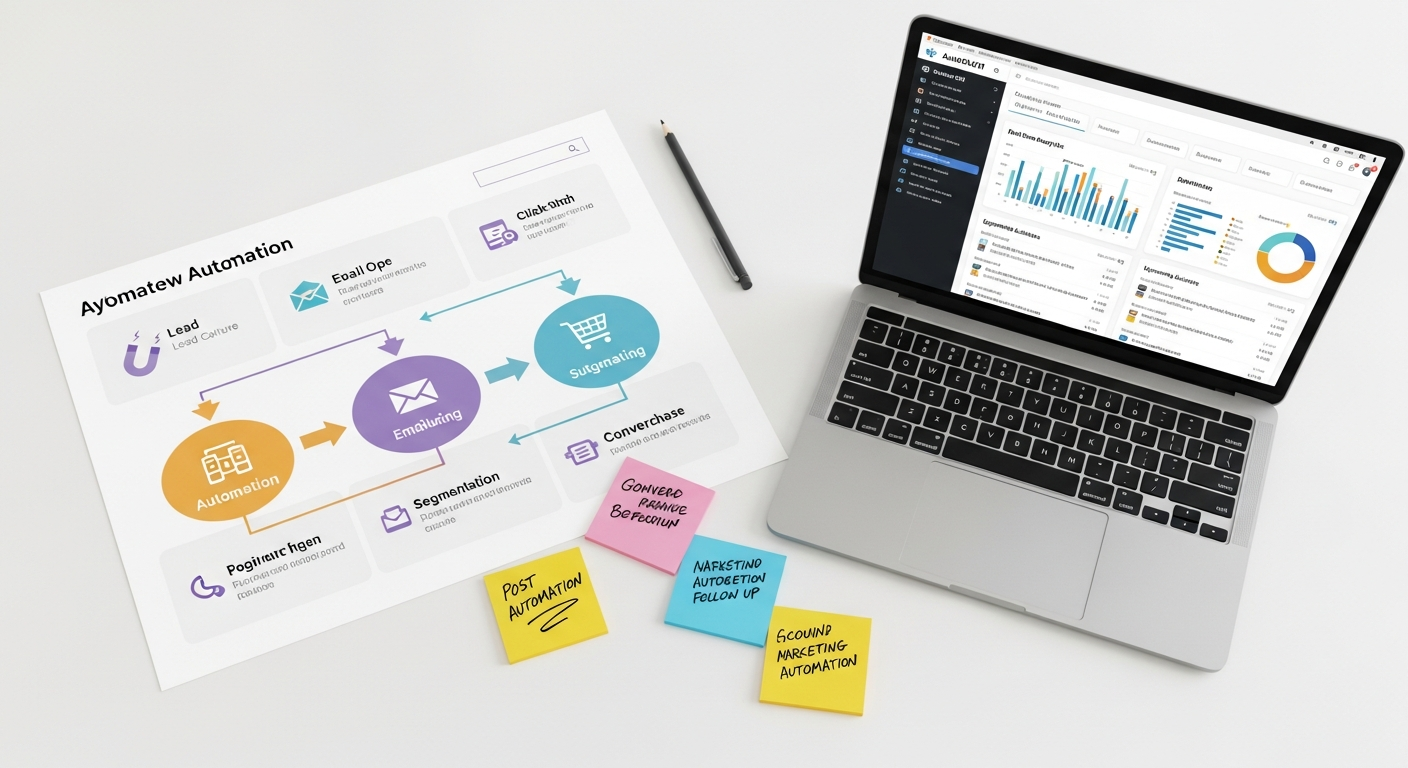
The marketing automation of today is a far cry from the rudimentary email schedulers of a decade ago. By 2026, the industry will have matured significantly, driven by advancements in artificial intelligence (AI), machine learning (ML), and predictive analytics. The focus is shifting from simple task automation to creating hyper-personalized, dynamic, and proactive customer journeys that anticipate needs and preferences.
- AI and Machine Learning Integration: Expect AI to be deeply embedded in every facet of marketing automation. This means not just automating email sends based on triggers, but using AI to determine the optimal send time, personalize subject lines, recommend content, and even predict customer churn. ML algorithms will continuously learn from vast datasets, refining segmentation and targeting with unprecedented accuracy.
- Hyper-Personalization at Scale: Generic messaging is dead. In 2026, customers will expect brands to understand their individual preferences, purchase history, and real-time behavior. Marketing automation tools will facilitate this by orchestrating personalized experiences across every touchpoint – from website interactions and app notifications to email campaigns and social media ads. This level of personalization is crucial for building lasting customer relationships and driving conversions.
- Omnichannel Orchestration: The customer journey is rarely linear or confined to a single channel. Tomorrow’s successful automation platforms will seamlessly integrate and manage interactions across email, SMS, push notifications, social media, chatbots, and even offline channels. This ensures a consistent brand message and a fluid customer experience, regardless of where the customer chooses to engage.
- Predictive Analytics and Proactive Marketing: Rather than reacting to customer behavior, marketing automation tools 2026 will empower businesses to anticipate it. Predictive analytics will identify potential leads, foresee purchasing patterns, and flag at-risk customers, allowing marketers to launch targeted campaigns proactively. This shift from reactive to proactive marketing will be a significant competitive differentiator.
- Data-Driven Everything: The volume and complexity of marketing data will continue to grow exponentially. Automation tools will not only collect this data but also provide sophisticated analytics and reporting capabilities, offering actionable insights into campaign performance, customer behavior, and ROI. This empowers marketers to make informed strategic decisions and continuously optimize their efforts.
For any Digital Marketing Strategy Small Business 2026, understanding these shifts is paramount. Small businesses, often constrained by resources, can leverage advanced automation to punch above their weight, compete with larger enterprises, and deliver highly effective, tailored experiences to their niche markets.
Core Benefits of Implementing Marketing Automation Tools for 2026
The advantages of adopting sophisticated marketing automation tools extend far beyond mere convenience. They represent a fundamental shift in how businesses interact with their audience, manage their resources, and ultimately, grow their revenue. In 2026, these benefits will be even more pronounced, offering a strategic edge in an increasingly competitive digital landscape.
- Enhanced Efficiency and Productivity:
One of the most immediate benefits of automation is the ability to handle repetitive, time-consuming tasks without human intervention. This includes scheduling social media posts, sending welcome emails, segmenting audiences, and lead nurturing. By automating these processes, marketing teams can free up valuable time and resources, allowing them to focus on higher-level strategic planning, creative content development, and complex problem-solving. This boost in efficiency directly translates to increased productivity and a better allocation of human capital.
- Unprecedented Personalization at Scale:
As mentioned, personalization is key. Automation tools enable marketers to deliver highly relevant content and offers to individuals based on their demographic information, behavioral data, purchase history, and preferences. This isn’t just about addressing someone by their first name; it’s about delivering the right message, to the right person, at the right time, on their preferred channel. This level of tailored communication significantly improves engagement rates, conversion rates, and customer loyalty.
- Improved Customer Experience and Retention:
A seamless and personalized customer journey is crucial for satisfaction. Automation ensures that customers receive timely, consistent, and relevant communications throughout their lifecycle – from initial awareness to post-purchase support. This proactive engagement makes customers feel valued and understood, fostering stronger relationships and significantly improving retention rates. Loyal customers are not only more likely to make repeat purchases but also become brand advocates.
- Data-Driven Decision Making:
Modern marketing automation platforms come equipped with robust analytics and reporting features. These tools track every interaction, campaign performance, conversion path, and customer segment. Marketers gain access to a wealth of data that provides deep insights into what’s working, what’s not, and why. This empowers them to make informed, data-backed decisions, optimize campaigns in real-time, and refine their overall marketing strategy for maximum impact and ROI.
- Consistent Lead Nurturing and Sales Alignment:
Automation plays a vital role in nurturing leads through the sales funnel. It ensures that potential customers receive a steady stream of valuable content and targeted communications designed to move them closer to a purchase decision. By scoring leads based on their engagement and behavior, automation tools can identify sales-ready prospects and seamlessly hand them off to the sales team, along with a rich history of their interactions. This alignment between marketing and sales is crucial for maximizing conversion rates and revenue.
- Enhanced Measurability and ROI:
With comprehensive tracking and reporting, businesses can accurately measure the effectiveness of their marketing efforts. Automation tools provide clear metrics on open rates, click-through rates, conversions, customer lifetime value, and overall campaign ROI. This transparency allows marketers to justify their spend, identify successful strategies, and continuously improve their return on investment. For a Digital Marketing Strategy Small Business 2026, proving ROI is essential for continued growth and investment.
Key Features to Look For in Marketing Automation Platforms in 2026
- Advanced AI & Machine Learning Capabilities:
This is no longer a luxury but a necessity. Look for tools that leverage AI for predictive analytics (e.g., predicting customer churn, identifying high-value leads), intelligent content recommendations, dynamic audience segmentation, optimal send time analysis for emails, and even AI-powered copywriting assistance. Machine learning should continuously refine these processes based on real-time data.
- Omnichannel Marketing and Orchestration:
A truly effective platform must allow you to manage and synchronize customer interactions across all relevant channels. This includes email, SMS, push notifications, in-app messages, social media, chatbots, and even integration with CRM systems for sales calls. The ability to create cohesive, cross-channel customer journeys is paramount.
- Robust CRM Integration:
Seamless integration with your customer relationship management (CRM) system is non-negotiable. This ensures a unified view of the customer, allowing marketing and sales teams to work from the same, up-to-date data. It facilitates lead scoring, smooth lead handoffs, and personalized follow-ups, enhancing the entire customer lifecycle.
- Sophisticated Segmentation and Personalization Engines:
Beyond basic demographic segmentation, look for tools that can create dynamic segments based on real-time behavior, purchase history, website activity, engagement levels, and predictive insights. The platform should then allow you to easily create personalized content, offers, and journeys for each of these micro-segments.
- Intuitive Workflow Automation and Journey Builders:
Drag-and-drop visual workflow builders are standard, but in 2026, expect more intelligent, AI-assisted journey mapping. These tools should allow you to easily design complex, multi-stage customer journeys with conditional logic, A/B testing capabilities within flows, and clear reporting on each step of the journey.
- Comprehensive Analytics and Reporting:
Data is power. The platform should offer detailed, customizable dashboards and reports that track key performance indicators (KPIs) across all campaigns and channels. Look for insights into email performance, website engagement, conversion rates, lead source attribution, customer lifetime value, and overall ROI. The ability to drill down into specific segments or campaigns is crucial.
- Content Management and Dynamic Content Capabilities:
The platform should facilitate the management and delivery of various content types. Dynamic content capabilities are vital, allowing different blocks of content (text, images, calls-to-action) to be displayed to different users based on their profile or behavior, even within the same email or web page.
- A/B Testing and Optimization Tools:
Continuous improvement is key. The automation platform should have built-in A/B testing capabilities for emails, landing pages, workflows, and even social media ads. Furthermore, it should offer recommendations for optimization based on performance data.
- Scalability and Integration Ecosystem:
Ensure the platform can scale with your business growth and integrate with other essential tools in your tech stack (e.g., e-commerce platforms, webinar software, analytics tools). A rich API and a strong partner ecosystem are indicators of future-proofing.
Leveraging Automation for Specific Channels: Social Media & Content in 2026
While email remains a cornerstone of marketing automation, its capabilities extend far beyond the inbox. In 2026, truly effective automation will encompass and optimize every critical touchpoint, especially social media and content distribution. These channels, when integrated with automation, become powerful engines for engagement, lead generation, and brand building.
How To Use LinkedIn For Marketing with Automation in 2026
LinkedIn, as the preeminent professional networking platform, offers immense potential for B2B marketing, thought leadership, and talent acquisition. Automation can significantly amplify your efforts on this crucial channel:
- Automated Post Scheduling and Content Distribution:
Use automation tools to schedule a consistent flow of updates, articles, and company news. This ensures your presence is regular and visible, reaching your target audience at optimal times. Integrate with your content calendar to auto-publish new blog posts or whitepapers directly to your company page and relevant groups.
- Personalized Connection Requests and Follow-ups:
While mass outreach is often frowned upon, ethical automation can personalize initial connection requests and follow-up messages. For example, if someone downloads a specific whitepaper from your website, an automation tool could suggest a personalized LinkedIn connection request message (still requiring manual send for authenticity) that references their interest, followed by a nurture sequence of relevant content posts once connected.
- Lead Generation and Nurturing through LinkedIn Sales Navigator Integration:
Advanced marketing automation tools 2026 will integrate more deeply with LinkedIn Sales Navigator. This allows for automated lead scoring based on LinkedIn activity, syncing prospect data to your CRM, and triggering personalized email sequences or follow-up tasks for your sales team based on specific actions (e.g., viewing your company page, engaging with a post).
- Employee Advocacy Automation:
Encourage and facilitate employee sharing of company content. Automation platforms can curate relevant content for employees to share on their personal LinkedIn profiles, making it easy for them to become brand advocates and extend your reach organically.
- Event Promotion and Follow-up:
Automate the promotion of webinars, virtual events, or industry meet-ups on LinkedIn. After an event, use automation to send personalized follow-up messages to attendees, providing resources, recordings, or next steps, and nurturing them further.
Long Form Vs Short Form Content: Automating Distribution and Personalization
The debate between Long Form Vs Short Form Content is less about which is better and more about how to strategically deploy both for maximum impact. Automation is the key to managing this dynamic content strategy:
- Automating Long-Form Content Promotion:
Long-form content (e.g., whitepapers, comprehensive guides, in-depth blog posts, webinars) is excellent for establishing authority, SEO, and deep engagement. Automation helps distribute these assets. For example, once a new long-form blog post is published, automation can:
- Schedule social media posts promoting it across LinkedIn, Twitter, Facebook, etc., with varied copy and visuals.
- Trigger an email newsletter segment to existing subscribers interested in that topic.
- Add it to a lead nurturing workflow for specific segments who have shown interest in related subjects.
- Create retargeting ad campaigns on social media for website visitors who viewed the content but didn’t convert.
- Optimizing Short-Form Content Delivery:
Short-form content (e.g., social media snippets, infographics, short videos, quick tips, email blasts) is ideal for capturing attention, driving immediate engagement, and maintaining top-of-mind awareness. Automation excels here by:
- Scheduling a consistent stream of short, digestible posts across all social media channels.
- Repurposing snippets from long-form content into engaging short-form pieces, then scheduling their distribution.
- Delivering personalized short video messages or quick tips via email or in-app notifications based on user behavior.
- Managing dynamic ad creative for short-form video ads or carousel ads that are tailored to specific audience segments.
- Personalized Content Journeys:
Automation allows you to orchestrate content delivery based on user interaction. A user who engages with a short-form social media post might then be served a related long-form article via email. Conversely, a user who downloads a comprehensive guide might receive a series of short, reinforcing tips over social media or email. This ensures that the right content, regardless of its length, reaches the right person at the right stage of their journey.
Strategic Implementation: Beyond the Tools in 2026
Acquiring the best marketing automation tools 2026 is only half the battle. True success lies in the strategic implementation and ongoing optimization of these platforms. Without a clear vision, a well-defined strategy, and a commitment to continuous improvement, even the most advanced tools will fall short of their potential. For any Digital Marketing Strategy Small Business 2026, this strategic foresight is critical to maximizing ROI and achieving sustainable growth.
- Define Clear Goals and KPIs:
Before implementing any automation, clearly articulate what you aim to achieve. Are you looking to increase lead generation, improve conversion rates, boost customer retention, reduce churn, or enhance brand engagement? Define measurable Key Performance Indicators (KPIs) for each goal. This will guide your automation strategy and provide a benchmark for success.
- Understand Your Audience and Map Customer Journeys:
Deeply understand your target audience by developing detailed buyer personas. Then, map out their entire customer journey, from initial awareness to post-purchase advocacy. Identify touchpoints, pain points, and opportunities for automated intervention. This holistic view is crucial for designing effective, personalized automation workflows.
- Develop a Robust Content Strategy:
Automation feeds on content. You need a consistent supply of high-quality, relevant content for every stage of the customer journey and for different segments. This includes emails, blog posts, social media updates, landing pages, videos, and more. Consider how Long Form Vs Short Form Content can be leveraged at different stages and for different purposes within your automated sequences.
- Integrate with Your Existing Tech Stack:
Your marketing automation platform should not operate in a silo. Ensure it integrates seamlessly with your CRM, website, e-commerce platform, analytics tools, and other essential software. This creates a unified view of your customers and ensures data flows freely between systems, preventing data silos and enabling true omnichannel marketing.
- Start Small, Iterate, and Scale:
Don’t try to automate everything at once. Begin with a pilot project – perhaps a welcome email series, a basic lead nurturing flow, or automated social media scheduling. Monitor its performance, gather insights, and iterate. As you gain confidence and see results, gradually expand your automation efforts to more complex workflows and channels.
- Establish Lead Scoring and Sales Alignment:
Implement a robust lead scoring system within your automation platform to identify and prioritize the most engaged and sales-ready leads. Work closely with your sales team to define what constitutes a “qualified lead” and establish clear protocols for lead handoff. Automation should enhance, not complicate, the sales process.
- Continuous Monitoring, Testing, and Optimization:
Marketing automation is not a set-it-and-forget-it solution. Regularly monitor the performance of your automated campaigns and workflows. Utilize A/B testing to experiment with different subject lines, call-to-actions, content, and send times. Analyze the data, identify areas for improvement, and continuously optimize your strategies to maximize effectiveness.
- Invest in Training and Team Adoption:
Your team needs to be proficient in using the automation platform and understanding the strategic implications of automation. Provide comprehensive training and foster a culture of data-driven decision-making. Ensure everyone understands their role in the automated marketing ecosystem.
Top Marketing Automation Tools to Watch in 2026 (Categorical Overview)
While specific platforms evolve rapidly, understanding the categories of marketing automation tools 2026 and their core functionalities will help you make informed decisions. The best tool for your business will depend on your specific needs, budget, and existing tech stack. Here, we highlight the prominent categories and what to look for.
1. All-in-One Marketing Automation Suites:
These platforms aim to provide a comprehensive solution for various marketing functions, often including email marketing, CRM, landing page creation, social media management, lead scoring, and analytics. They are ideal for businesses looking for a centralized hub for their marketing efforts. In 2026, these suites will emphasize deeper AI integration across all modules and more sophisticated omnichannel orchestration.
Key features to look for: Robust CRM, extensive integration capabilities, advanced segmentation, visual journey builders, comprehensive analytics, and strong support for various marketing channels.
2. Email Marketing Automation Platforms (with enhanced capabilities):
While many tools offer email automation, dedicated platforms in 2026 will push the boundaries with hyper-personalization, AI-driven content recommendations, predictive send times, and dynamic content blocks. They will integrate seamlessly with other tools to trigger emails based on website behavior, CRM data, and social media interactions.
Key features to look for: AI-powered personalization, advanced A/B testing, dynamic content, robust list segmentation, detailed email analytics, and API for integration.
3. CRM with Integrated Marketing Automation:
Many leading CRM systems now come with powerful marketing automation capabilities built-in or as seamlessly integrated modules. This approach is highly beneficial for businesses that want a single source of truth for customer data, ensuring tight alignment between sales and marketing.
Key features to look for: Unified customer view, lead scoring and routing, sales pipeline management, marketing campaign management directly within CRM, and strong reporting on marketing-to-sales handoff efficiency.
4. Social Media Management & Automation Tools:
Beyond basic scheduling, marketing automation tools 2026 for social media will focus on AI-driven content suggestions, optimal posting times, sentiment analysis, automated response mechanisms (chatbots), and deeper integration with overall customer journeys. This is where you can truly implement strategies for How To Use LinkedIn For Marketing effectively, from scheduled posts to personalized outreach sequences.
Key features to look for: Multi-platform scheduling, audience engagement tools, social listening, sentiment analysis, automated reporting, integration with CRM and content management systems.
5. Customer Data Platforms (CDPs) with Activation Capabilities:
CDPs are becoming increasingly crucial for unifying customer data from various sources into a single, comprehensive profile. In 2026, CDPs will not only collect and organize data but also offer robust activation capabilities, allowing marketers to use this unified data to trigger highly personalized campaigns through integrated automation tools.
Key features to look for: Data unification from all sources, identity resolution, real-time segmentation, audience activation to various marketing channels, and robust data governance.
6. Website Personalization & Optimization Tools:
These tools automate the delivery of personalized website experiences based on visitor behavior, demographics, and preferences. This includes dynamic content, personalized calls-to-action, product recommendations, and targeted pop-ups. In 2026, expect these to be heavily driven by AI to create truly adaptive web experiences.
Key features to look for: A/B testing, multivariate testing, real-time personalization, content recommendations, integration with analytics and CRM.
When selecting your tools, always consider your budget, the complexity of your marketing strategy, the size of your team, and your growth trajectory. A scalable solution that offers strong support and a clear roadmap for future innovation will be your best bet for 2026 and beyond.
Frequently Asked Questions
Recommended Resources
You might also enjoy How To Create A B2B Content Marketing Strategy from Kacerr.
You might also enjoy How To Negotiate A Better Price Shopping Tips from Gold Points.