

The Foundational Role of SEO in Modern Business Growth
At its core, SEO is about enhancing your website’s visibility when people search for products or services related to your business on search engines like Google, Bing, and others. In an era where nearly all purchasing decisions begin with an online search, appearing high in search engine results pages (SERPs) directly correlates with increased organic traffic, brand recognition, and ultimately, revenue. Data consistently shows that the vast majority of searchers click on one of the top three organic results, with very few venturing beyond the first page. This makes SEO a critical determinant of whether your business is discovered or remains unseen.
Think of search engines as the digital Yellow Pages, but infinitely more sophisticated and discerning. They utilize complex algorithms to crawl, index, and rank billions of web pages based on relevance, authority, and user experience. For your business, this means that merely having a website is insufficient. Your site must be optimized to communicate effectively with these algorithms, demonstrating its value and relevance to specific search queries. This foundational work includes optimizing content with strategic keywords, ensuring technical site health, building a robust backlink profile, and providing an exceptional user experience.
The credibility conferred by high search rankings is invaluable. Users instinctively trust search engines to deliver the most relevant and authoritative information. Consequently, a business that consistently appears at the top of SERPs is perceived as a leader and a trustworthy source in its industry. This inherent trust translates into higher click-through rates, longer on-site engagement, and a greater likelihood of conversion. Without a strong SEO foundation, your marketing efforts, no matter how creative or well-funded, will struggle to achieve their full potential, akin to building a magnificent house on shifting sand.
Furthermore, SEO is an investment with a compounding return. Unlike paid advertising, which ceases to deliver traffic the moment your budget runs out, the efforts put into SEO continue to yield results over time. A well-optimized page can rank for months or even years, consistently driving free, qualified traffic to your site. This long-term sustainability makes SEO an incredibly cost-effective strategy for businesses looking to establish a lasting online presence and secure a competitive edge well into 2026 and beyond.
Driving Targeted Traffic and Qualified Leads
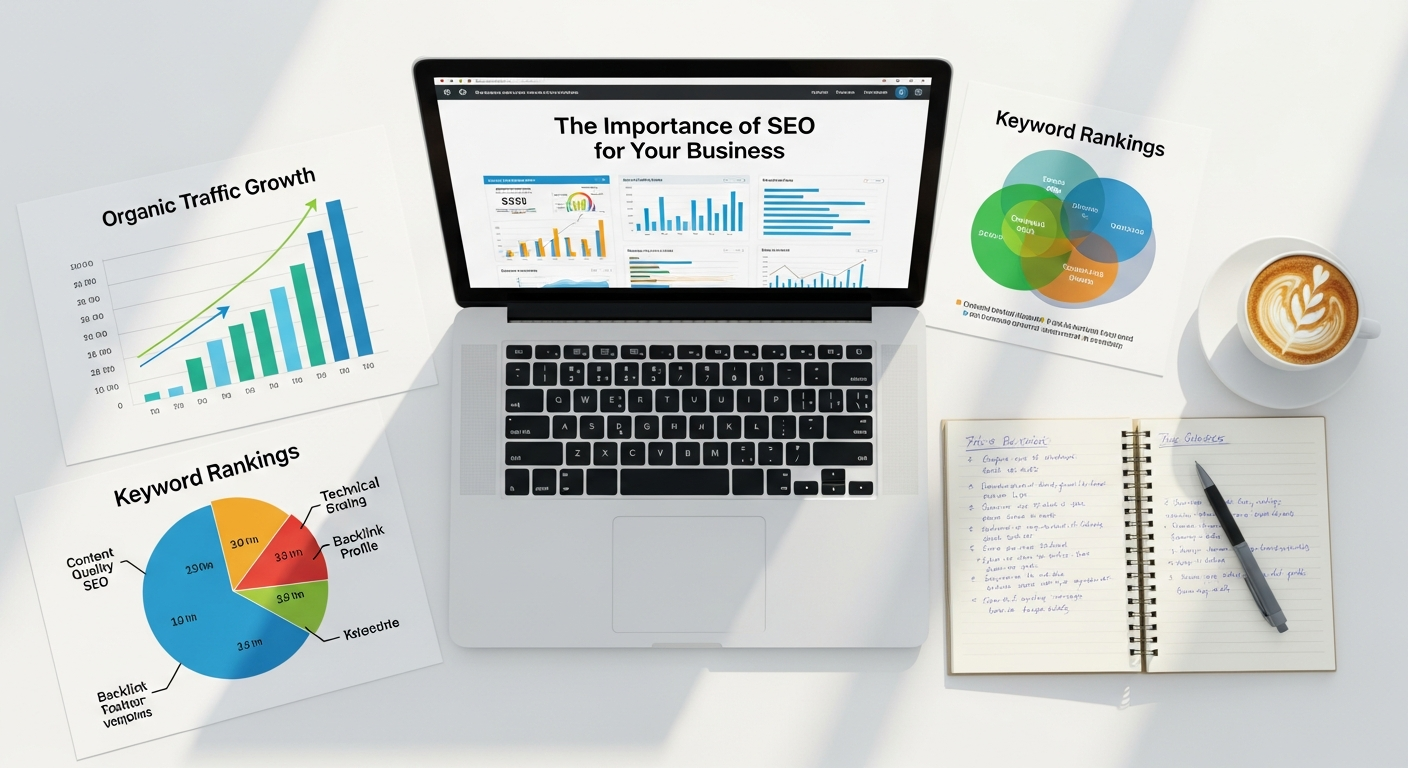
One of the most compelling advantages of SEO is its unparalleled ability to drive highly targeted traffic to your website. Unlike traditional advertising, which often casts a wide net, SEO focuses on connecting with users who are actively searching for what you offer. This intent-driven approach ensures that the visitors arriving at your site are already predisposed to be interested in your products, services, or information, significantly increasing the likelihood of conversion.
The process begins with meticulous keyword research. By understanding the specific phrases and questions your target audience uses when searching online, businesses can tailor their content to directly address those needs. This includes not only broad, high-volume keywords but also long-tail keywords – more specific, multi-word phrases that, while having lower search volume individually, collectively account for a significant portion of web traffic and often indicate stronger purchase intent. For instance, someone searching for “best CRM software for small businesses” is likely much closer to making a purchase decision than someone searching for “CRM.” By optimizing for these intent-rich queries, you attract visitors who are further along in their buyer’s journey.
Consider the contrast with other marketing channels. While social media can build brand awareness and display ads can catch attention, SEO delivers users who are actively expressing a need. This proactive engagement makes the traffic generated through organic search incredibly valuable. Businesses consistently report higher conversion rates from organic search traffic compared to other sources, underscoring its efficacy in generating qualified leads.
Moreover, SEO offers a superior return on investment (ROI) compared to many paid advertising models. While paid ads deliver immediate visibility, the costs can escalate quickly, especially in competitive industries. SEO, once established, continues to deliver traffic without a per-click cost. This allows businesses to reallocate marketing budgets towards other growth initiatives, such as refining their product offerings or enhancing customer service, knowing that a steady stream of organic leads is being generated. For a manufacturing business, understanding the specific searches for industrial machinery repair or custom fabrication services, and ranking for those, can be far more impactful than broad banner ads. Indeed, integrating SEO with strategic planning for 3 services you need for your manufacturing business—like equipment maintenance, supply chain optimization, and product development—ensures that potential clients searching for these critical services find your solutions first.
By consistently appearing in front of an audience that is actively seeking your solutions, SEO transforms your website from a passive online brochure into an active lead generation engine, making it indispensable for any business aiming for sustainable growth in 2026.
Building Authority, Trust, and Brand Recognition
When your website consistently ranks on the first page for relevant and competitive keywords, it signals to users that your business is a leader in its field. This perception of authority translates into increased trust, which is a critical factor in consumer decision-making. Users are more likely to engage with, purchase from, and recommend brands they perceive as knowledgeable and reliable. This trust building is a long-term play, nurtured through consistent creation of high-quality, informative content, secure website practices, and positive user experiences.
Building authority also involves developing a robust backlink profile – receiving links from other reputable websites. These backlinks act as “votes of confidence” from other sites, signaling to search engines that your content is valuable and worthy of referral. The more high-quality, relevant backlinks your site acquires, the stronger its authority becomes in the eyes of search algorithms, leading to higher rankings and greater visibility.
Furthermore, SEO significantly contributes to brand recognition. Each time your business appears in search results, whether it’s for a specific product, a service, or an informational query, it reinforces your brand’s presence in the user’s mind. Over time, this repeated exposure builds familiarity and recall, making your brand the top-of-mind choice when a purchasing decision needs to be made. This is particularly crucial for local businesses. Local SEO strategies, which optimize for geographical searches (e.g., “bakery near me” or “dentist in Denver”), ensure that brick-and-mortar establishments are found by local customers precisely when they are looking for immediate solutions. For instance, if you’re a local service provider, ensuring your Google My Business profile is optimized and your site ranks well for local queries is as vital as your main website’s SEO. This is where expertise from a firm specializing in local search, like The best Denver SEO firm for business marketing, can be invaluable, especially for businesses looking to dominate their local market with targeted strategies.
In essence, SEO helps you cultivate a digital reputation that resonates with both search engines and human users. It’s about demonstrating your expertise, earning trust through valuable content and reliable service, and ensuring your brand is not just seen, but remembered and respected. This holistic approach to building authority and trust is foundational for sustained business growth in the competitive landscape of 2026.
Staying Ahead of the Competition in 2026 and Beyond
In the digital marketing arena, inaction is a direct path to obsolescence. The moment your competitors invest in SEO and you don’t, you begin to cede market share. SEO is not a one-time setup; it’s an ongoing, dynamic process that requires continuous adaptation and optimization to stay ahead. As search engine algorithms become increasingly sophisticated and user expectations evolve, businesses must maintain a proactive SEO strategy to remain competitive in 2026 and the years to follow.
Competitive analysis is a cornerstone of effective SEO. By monitoring what your competitors are doing well—which keywords they rank for, their backlink strategies, their content quality, and their technical SEO health—you can identify opportunities and develop strategies to outperform them. This isn’t about mere imitation, but about understanding market dynamics and innovating to create superior value and visibility. What works for one business might need tailoring for another, and understanding the nuances of your industry is key.
Search engine algorithms are constantly being updated, sometimes with minor tweaks and other times with significant core updates that can dramatically shift rankings. What ranked yesterday might not rank tomorrow if your site isn’t aligned with the latest best practices. This necessitates an ongoing commitment to staying informed about algorithm changes, adapting your technical SEO, refreshing content, and continually building domain authority. Businesses that treat SEO as a set-it-and-forget-it task will inevitably fall behind those that embrace it as a continuous improvement process.
The cost of not doing SEO in 2026 is substantial. It means relinquishing organic traffic to competitors, losing out on valuable leads, and diminishing your brand’s online authority. Every click your competitor gets from a top organic search result is a click you didn’t get. Over time, these missed opportunities accumulate, severely impacting revenue and growth potential. For businesses operating in highly competitive markets, such as tech startups or specialized service providers, a robust SEO strategy is not merely advantageous; it is existential.
Consider a business looking to expand its reach or launch new products. Without a strong SEO foundation, even the most innovative offerings might struggle to find their audience. SEO ensures that your new initiatives are discoverable from day one, allowing you to capture early adopters and establish market presence quickly. This proactive approach to SEO is what differentiates market leaders from followers. Engaging with an expert team, perhaps even a specialized partner like The best Denver SEO firm for business marketing, can provide the strategic insights and tactical execution required to navigate these complexities and secure a leading position in your niche.
Ultimately, staying competitive in the digital landscape of 2026 means making SEO a central pillar of your business strategy. It’s about anticipating market shifts, continuously optimizing your online presence, and consistently delivering the best possible experience to both search engines and users. Only through this sustained effort can your business not only survive but thrive amidst the ever-intensifying competition.
SEO’s Synergistic Relationship with Other Digital Strategies
While powerful on its own, SEO doesn’t operate in a vacuum. Its true strength is unlocked when integrated seamlessly with other digital marketing strategies, creating a synergistic effect that amplifies overall business growth. A holistic digital marketing approach views SEO not as a standalone tactic, but as the foundational layer that enhances and supports every other online initiative.
Content Marketing: This is arguably the most intertwined relationship. High-quality, relevant, and engaging content is the fuel for SEO. Without valuable content, there’s nothing for search engines to crawl, index, and rank. SEO guides content strategy by identifying target keywords, understanding user intent, and determining the optimal structure for articles, blog posts, videos, and infographics. In return, well-optimized content attracts backlinks, drives organic traffic, and establishes topical authority, feeding directly back into SEO performance.
Social Media Marketing: While social signals aren’t direct ranking factors, social media plays a crucial role in amplifying content reach. Sharing SEO-optimized content on social platforms can increase its visibility, drive traffic, and encourage engagement, potentially leading to more shares, mentions, and even backlinks, all of which indirectly benefit SEO. A piece of content that goes viral on social media can quickly gain traction in search results due to increased exposure and implied relevance.
Website Development and User Experience (UX): Technical SEO is deeply embedded in website development. A fast, mobile-friendly, secure, and easily navigable website is not only a boon for user experience but also a critical ranking factor. Search engines prioritize sites that offer a smooth, intuitive experience. Elements like site speed, mobile responsiveness, clear site structure, and secure HTTPS protocols are all technical SEO considerations that directly impact how users interact with your site and how search engines perceive its quality. For instance, when considering How to implement an online waiver system in your business, the underlying website architecture and user flow must be SEO-friendly. A poorly structured site, even with a great waiver system, will struggle to attract the initial traffic needed for the system to be utilized effectively.
Paid Advertising (PPC): SEO and PPC (Pay-Per-Click) can complement each other effectively. PPC campaigns can provide immediate visibility for competitive keywords while SEO efforts build long-term organic rankings. Data from PPC campaigns can also inform SEO strategies by identifying high-converting keywords, which can then be targeted for organic optimization. Conversely, strong organic rankings can reduce reliance on costly PPC for certain keywords.
Email Marketing: While not directly influencing search rankings, email marketing can drive repeat traffic to your website, especially to new content or product pages. When subscribers click through from an email to your optimized website, it contributes to valuable user signals (like time on page, bounce rate), which can indirectly support your SEO efforts by demonstrating user engagement.
Consider a growing manufacturing business. Beyond optimizing for product-specific keywords, their SEO strategy would integrate with their content marketing to publish articles on industry trends, best practices in production, or even detailed guides on machinery maintenance. This content, shared on LinkedIn and other professional networks, would drive traffic, generate leads, and establish the business as a thought leader. Furthermore, a well-optimized website ensures that when they promote 3 services you need for your manufacturing business, such as advanced prototyping, supply chain consulting, or specialized training, these offerings are readily discoverable by their target audience through search. The synergy ensures that every piece of the digital puzzle reinforces the others, leading to comprehensive and robust online growth.
By understanding and leveraging these interdependencies, businesses can create a powerful, integrated digital marketing ecosystem where SEO serves as the central nervous system, enhancing the effectiveness of every other strategy and ensuring maximum online visibility and impact in 2026.
Measuring SEO Success and Adapting Your Strategy
Effective SEO is not just about implementing tactics; it’s about continuously measuring performance, analyzing data, and adapting your strategy based on actionable insights. Without robust tracking and reporting, businesses risk investing resources without a clear understanding of their ROI or areas for improvement. As we look towards 2026, the ability to interpret complex data and pivot rapidly will be a hallmark of successful digital marketing teams.
Key Performance Indicators (KPIs) are essential for gauging SEO success. These typically include:
- Organic Traffic: The number of visitors coming to your site from search engines. This is often the primary metric and indicates overall visibility.
- Keyword Rankings: Monitoring where your target keywords rank in SERPs provides insight into your competitive position and the effectiveness of your optimization efforts.
- Conversion Rate: The percentage of organic visitors who complete a desired action (e.g., make a purchase, fill out a form, download a resource). This metric directly ties SEO to business goals.
- Bounce Rate and Time on Page: These user engagement metrics indicate how relevant and engaging your content is to organic visitors. Lower bounce rates and longer time on page generally signal higher quality and relevance.
- Backlink Profile Growth: Tracking the quantity and quality of backlinks acquired over time demonstrates your site’s growing authority.
- Local Visibility: For businesses with physical locations, tracking local pack rankings and Google My Business insights is crucial.
Tools like Google Analytics and Google Search Console are indispensable for tracking these metrics. Google Analytics provides comprehensive data on website traffic, user behavior, and conversions, while Search Console offers direct insights into how Google views your site, including crawl errors, search queries, and indexing status. Third-party SEO tools also provide valuable competitive intelligence, keyword research capabilities, and technical audit features.
SEO is an iterative process. Initial strategies are hypotheses that need to be tested and refined. A/B testing different title tags, meta descriptions, content structures, or calls to action can reveal what resonates most effectively with both users and search algorithms. This continuous cycle of planning, implementing, measuring, and adjusting ensures that your SEO strategy remains agile and effective in a constantly changing digital environment.
Looking to 2026, emerging trends will further shape SEO strategies. The rise of artificial intelligence in search (like Google’s MUM and BERT algorithms) means content needs to be even more comprehensive, contextually rich, and genuinely helpful to answer complex user queries. Voice search optimization, adapting content for conversational queries, and video SEO, optimizing video content for discoverability on platforms like YouTube and in universal search results, are becoming increasingly important. Businesses that proactively incorporate these future-forward elements into their SEO strategy will be well-positioned to capture the next wave of organic traffic.
Ultimately, a data-driven approach to SEO allows businesses to move beyond guesswork, make informed decisions, and continuously improve their online performance. By meticulously tracking their progress and adapting to new challenges and opportunities, businesses can ensure their SEO efforts consistently deliver tangible results and contribute significantly to their long-term success in the dynamic digital landscape.
FAQ: Understanding the Importance of SEO for Your Business
What is SEO and why is it crucial for my business in 2026?
SEO, or Search Engine Optimization, is the practice of improving your website’s visibility on search engines like Google when people search for products or services related to your business. In 2026, it’s crucial because the vast majority of purchasing decisions begin with an online search. High search rankings drive targeted organic traffic, build brand trust, and are essential for reaching customers who are actively looking for what you offer, ensuring your business isn’t lost in the digital noise.
How does SEO help in generating leads for my business?
SEO generates leads by optimizing your website to rank for specific keywords that your target audience uses when searching for solutions. This intent-driven approach means visitors arriving at your site via organic search are already interested in your offerings, making them highly qualified leads. By appearing prominently when potential customers express a need, SEO funnels pre-qualified traffic directly to your business, increasing conversion probabilities compared to many other marketing channels.
Is SEO a one-time task or an ongoing process?
SEO is definitively an ongoing process, not a one-time task. Search engine algorithms are constantly updated, competitive landscapes evolve, and user search behaviors shift. To maintain and improve rankings, businesses must continuously monitor performance, conduct new keyword research, refresh content, build backlinks, and adapt to technical changes. Treating SEO as a continuous improvement cycle is vital for sustained online visibility and growth.
How long does it take to see results from SEO efforts?
The timeline for seeing significant SEO results can vary widely depending on factors such as industry competitiveness, the current state of your website, and the intensity of your SEO efforts. Generally, businesses can expect to see initial improvements in rankings and organic traffic within 3-6 months, with more substantial and impactful results often taking 6-12 months or longer. SEO is a long-term investment that builds compounding returns over time.
Can small businesses compete with larger corporations using SEO?
Absolutely. While larger corporations may have more extensive resources, SEO offers a level playing field. Small businesses can leverage niche keywords, focus on local SEO strategies, and create highly specific, high-quality content that addresses unique customer needs. By excelling in these areas and demonstrating genuine expertise, small businesses can often outrank larger competitors for relevant, targeted queries, capturing valuable market share.
What are the essential components of a successful SEO strategy?
A successful SEO strategy encompasses several core components: Technical SEO (ensuring site speed, mobile-friendliness, security, and crawlability), On-Page SEO (optimizing content with relevant keywords, meta tags, and internal linking), Off-Page SEO (building high-quality backlinks from authoritative sites), Content Strategy (creating valuable, engaging content that addresses user intent), and Local SEO (optimizing for location-specific searches and Google My Business profiles). These elements work synergistically to improve overall search visibility and performance.
Recommended Resources
Related reading: Personal Finance Tips For Millennials (Fin3go).
You might also enjoy Best No Annual Fee Rewards Cards 2026 from Gold Points.