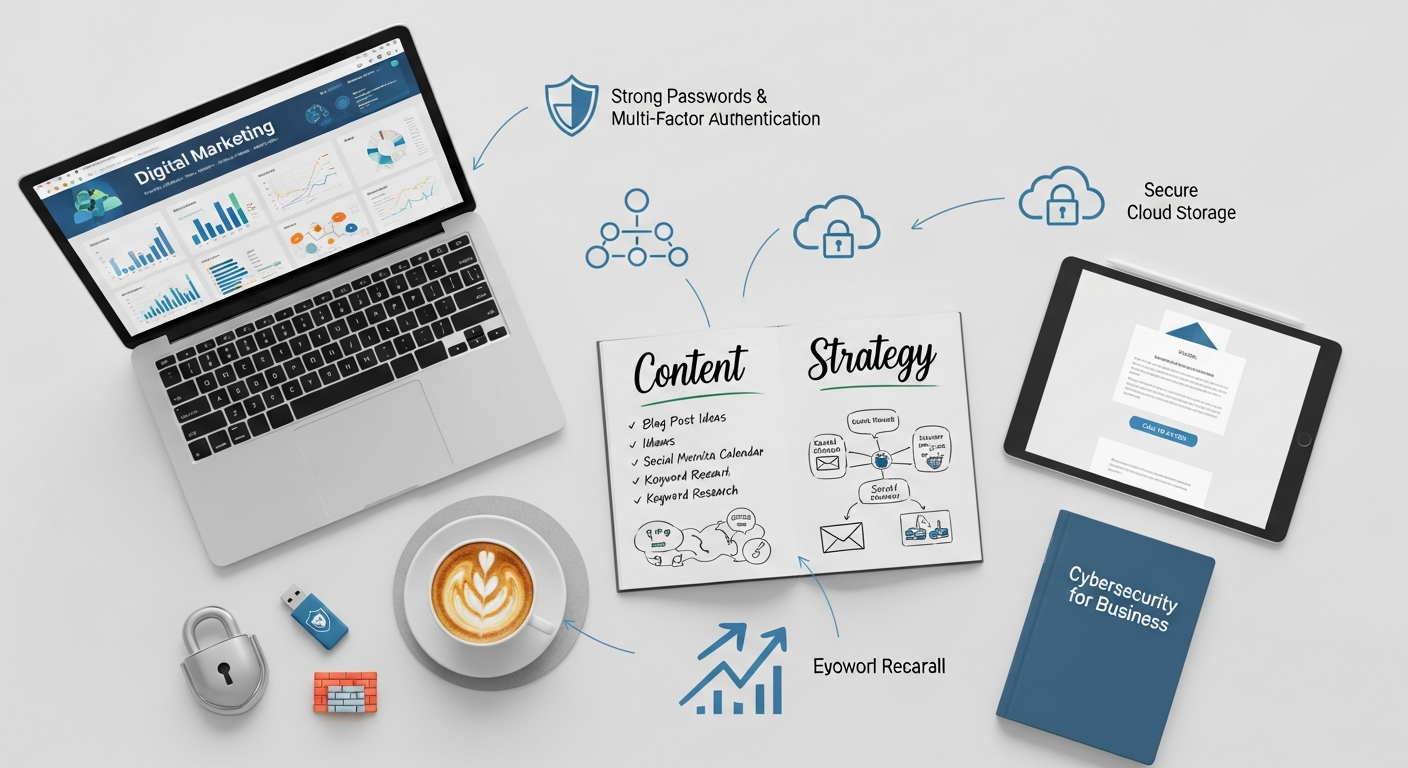
Leveraging Digital Marketing for Explosive Growth in 2026
Digital marketing remains the cornerstone of any effective growth strategy for entrepreneurs. However, simply having an online presence is no longer enough; a sophisticated, multi-faceted Digital Marketing Strategy Small Business 2026 is essential to cut through the noise and connect with target audiences. The landscape is continually evolving, demanding adaptability and foresight.
Search Engine Optimization (SEO): The Foundation of Visibility
For small businesses, appearing prominently in search engine results is a non-negotiable growth hack. In 2026, SEO will continue to prioritize user intent, high-quality content, and technical excellence. Entrepreneurs must focus on:
- Keyword Research: Identifying long-tail keywords and understanding the specific queries your audience uses. Tools like Google Keyword Planner, SEMrush, and Ahrefs will be indispensable.
- On-Page SEO: Optimizing titles, meta descriptions, header tags, and image alt text with relevant keywords. Ensuring your content provides genuine value and answers user questions comprehensively.
- Technical SEO: Maintaining a fast, mobile-responsive website with a clear site structure, secure HTTPS, and proper schema markup. Google’s Core Web Vitals will continue to be critical ranking factors.
- Local SEO: For brick-and-mortar businesses, optimizing Google My Business profiles, acquiring local citations, and encouraging reviews are crucial for local discovery.
Ignoring SEO in 2026 is akin to operating in obscurity. A robust SEO strategy ensures organic, sustained traffic, which is often the most cost-effective form of lead generation.
Content Marketing: Building Authority and Engagement
Content marketing, when executed strategically, builds trust and positions your brand as an industry authority. In 2026, content must be:
- Value-Driven: Focus on solving problems, educating, or entertaining your audience. Blog posts, whitepapers, case studies, infographics, and videos are all powerful formats.
- Omnichannel: Distribute your content across various platforms where your audience spends their time – your blog, social media, email newsletters, and even podcasting.
- Interactive: Quizzes, polls, and interactive tools can boost engagement and gather valuable user data.
- Optimized for Voice Search: With the rise of smart speakers and virtual assistants, optimizing content for conversational queries will be increasingly important.
A well-planned content calendar, aligned with your target audience’s journey, can significantly impact lead generation and brand loyalty.
Social Media Marketing: Community and Conversion
Social media is no longer just for brand awareness; it’s a powerful tool for community building, customer service, and direct conversions. Entrepreneurs should:
- Identify Key Platforms: Focus efforts on platforms where your target audience is most active (e.g., LinkedIn for B2B, Instagram/TikTok for visual brands, Facebook for broader reach).
- Engage Authentically: Beyond posting, actively respond to comments, messages, and participate in relevant discussions.
- Leverage Paid Social: Highly targeted ad campaigns on platforms like Facebook, Instagram, and LinkedIn can reach niche audiences with precision, offering an excellent ROI for small businesses.
- Embrace Video Content: Short-form video (Reels, TikToks, Shorts) continues to dominate engagement. Live streams can also build real-time connections.
A strategic approach to social media can transform followers into loyal customers and brand advocates, contributing significantly to a Digital Marketing Strategy Small Business 2026.
The Power of Automation: Streamlining for Scale with Marketing Automation Tools 2026
For entrepreneurs, time is a finite and incredibly valuable resource. Marketing automation is not just about efficiency; it’s a critical growth hack that enables small teams to perform like large enterprises, delivering personalized experiences at scale. The landscape of Marketing Automation Tools 2026 is sophisticated, offering solutions that cater to every stage of the customer journey.
Email Marketing Automation: Nurturing Leads to Conversion
Email remains one of the most effective channels for ROI. Automation elevates its power by allowing you to:
- Segment Audiences: Group subscribers based on demographics, behavior, interests, or purchase history. This allows for hyper-personalized messaging.
- Automate Welcome Sequences: Onboard new subscribers with a series of emails introducing your brand, values, and offerings.
- Drip Campaigns: Send targeted emails over time based on user actions (e.g., downloading an ebook, abandoning a cart, viewing a specific product).
- Re-engagement Campaigns: Automatically reach out to inactive subscribers to win them back.
Tools like HubSpot, Mailchimp, ActiveCampaign, and ConvertKit offer robust automation features that can transform your email marketing from a manual chore into a powerful, always-on sales engine.
CRM Integration: Centralizing Customer Data for Better Insights
A Customer Relationship Management (CRM) system is the backbone of effective marketing automation. Integrating your marketing efforts with a CRM allows you to:
- Track Customer Interactions: Log every touchpoint – emails, calls, website visits, purchases – to build a comprehensive customer profile.
- Automate Sales Processes: Set up automated tasks for sales teams, lead scoring, and follow-up reminders.
- Personalize Experiences: Use CRM data to tailor marketing messages, product recommendations, and customer service interactions.
Leading CRM platforms such as Salesforce, HubSpot CRM, and Zoho CRM are increasingly offering integrated marketing automation suites, making it easier for entrepreneurs to manage their entire customer lifecycle within a single ecosystem.
Social Media Automation: Consistency and Reach
While authentic engagement is crucial on social media, certain tasks can be automated to ensure consistency and broaden reach:
- Scheduling Posts: Tools like Buffer, Hootsuite, and Sprout Social allow you to plan and schedule content across multiple platforms in advance.
- Content Curation: Automate the discovery and sharing of relevant industry content to maintain an active presence.
- Listening and Monitoring: Set up alerts for brand mentions, keywords, and competitor activity to respond promptly and gather insights.
The key is to use automation to free up time for genuine interaction, not to replace it. The intelligent application of Marketing Automation Tools 2026 allows entrepreneurs to scale their marketing efforts without proportionally scaling their team, a true growth hack.
Content is King, AI is the Crown: Revolutionizing Content Marketing with AI Writing Tools Content Marketing
Supercharging Content Ideation and Research
One of the biggest hurdles in content marketing is consistently generating fresh ideas. AI writing tools can analyze vast amounts of data, including trending topics, competitor content, and search queries, to:
- Suggest Blog Post Topics: Based on keywords, industry trends, and audience interests.
- Generate Headlines and Outlines: Craft compelling titles and structured outlines that improve readability and SEO.
- Summarize Research: Quickly condense lengthy articles or reports, extracting key insights for your content.
This significantly reduces the time spent on the initial stages of content creation, allowing entrepreneurs to focus on the strategic direction.
Accelerating Content Drafts and Optimizing for SEO
The actual writing process can be time-consuming. AI writing tools can assist by:
- Generating First Drafts: For various content types, including blog posts, product descriptions, social media captions, and email copy. While these drafts require human refinement, they provide a strong starting point.
- Rewriting and Paraphrasing: Helping to rephrase existing content for different platforms or to improve clarity and originality.
- SEO Optimization: Analyzing content for keyword density, readability, and suggesting improvements to align with SEO best practices for 2026.
- Grammar and Style Checks: Ensuring linguistic accuracy and stylistic consistency across all content.
Platforms like Jasper, Copy.ai, and Rytr are at the forefront of this revolution, offering diverse functionalities to streamline content production. They are becoming indispensable for entrepreneurs looking to maintain a prolific content schedule without compromising quality.
Personalization and Localization at Scale
The ability to personalize content for different audience segments is a powerful growth hack. AI writing tools can:
- Tailor Marketing Messages: Generate variations of ad copy or email subject lines optimized for specific demographics or psychographics.
- Localize Content: Translate and adapt content for different regional markets, ensuring cultural relevance and linguistic accuracy.
It’s crucial to remember that while AI Writing Tools Content Marketing offers immense advantages, human oversight is non-negotiable. AI-generated content should always be reviewed, edited, and refined by a human to ensure accuracy, originality, and the unique voice of your brand. When used intelligently, AI writing tools can dramatically amplify an entrepreneur’s content marketing efforts, making high-volume, high-quality content achievable even with limited resources.
Optimizing Conversion Funnels: Turning Visitors into Loyal Customers
Attracting visitors to your website or platform is only half the battle; the real growth hack lies in effectively converting those visitors into paying customers and, ultimately, loyal advocates. Optimizing your conversion funnels means meticulously analyzing each step of the customer journey and systematically improving the experience to maximize conversions. This isn’t a one-time fix but an ongoing process of testing and refinement.
Understanding Your Conversion Funnel
A typical conversion funnel includes stages like:
- Awareness: The prospect learns about your brand/product.
- Interest: They show curiosity and seek more information.
- Consideration: They evaluate your offering against alternatives.
- Intent: They express a clear desire to purchase.
- Conversion: They complete the desired action (purchase, sign-up, etc.).
- Retention/Advocacy: They become a repeat customer and recommend your brand.
Entrepreneurs must map out their specific funnels and identify potential drop-off points. Tools like Google Analytics, CRM data, and heat mapping software (e.g., Hotjar) are invaluable for visualizing user behavior.
Landing Page Optimization (LPO)
Landing pages are critical conversion points. To optimize them:
- Clear Value Proposition: Immediately communicate what you offer and why it matters.
- Compelling Headline: Grab attention and clearly state the benefit.
- Concise Copy: Be direct and persuasive, focusing on benefits over features.
- Strong Call-to-Action (CTA): Make it prominent, action-oriented, and specific (e.g., “Get Your Free Ebook Now,” “Start Your 14-Day Free Trial”).
- High-Quality Visuals: Use relevant images or videos that enhance the message.
- Social Proof: Include testimonials, reviews, or trust badges to build credibility.
- Minimize Distractions: Remove unnecessary navigation or links that can divert visitors.
A/B testing different elements of your landing pages (headlines, CTAs, images) is crucial for continuous improvement.
Streamlining User Experience (UX) and User Interface (UI)
A smooth, intuitive user experience directly impacts conversion rates:
- Website Speed: Slow loading times are a major deterrent. Optimize images, leverage caching, and choose a reliable host.
- Mobile Responsiveness: Ensure your website functions perfectly on all devices, as mobile traffic continues to dominate.
- Intuitive Navigation: Make it easy for users to find what they’re looking for.
- Simplified Forms: Reduce the number of fields in contact or checkout forms. Only ask for essential information.
- Clear Path to Purchase: Guide users seamlessly from product discovery to checkout.
Investing in good UX/UI design is not an expense but a critical investment in your conversion potential.
A/B Testing and Iterative Improvement
The most effective growth hack for conversion optimization is a relentless commitment to testing. A/B testing allows you to compare two versions of a webpage, email, or ad to see which performs better. Elements to test include:
- Headlines and body copy
- Call-to-action buttons (text, color, placement)
- Images and videos
- Page layouts and design elements
- Pricing structures
By making small, data-backed improvements over time, entrepreneurs can significantly increase their conversion rates, turning more visitors into valuable customers without necessarily increasing traffic volume. This iterative approach is a powerful, sustainable growth hack.
Building a Virality Engine: Harnessing Word-of-Mouth and Referrals
While digital marketing and automation are powerful, nothing quite matches the organic, explosive growth generated by word-of-mouth and referral programs. Creating a “virality engine” is about designing your product, service, and marketing efforts in a way that encourages users to naturally share and advocate for your brand. This is an ultimate growth hack, leveraging your existing customer base for exponential expansion.
Designing for Shareability
The first step in building a virality engine is to ensure your product or service is inherently shareable and provides an experience worth talking about:
- Exceptional Value: Offer something genuinely useful, unique, or delightful that stands out.
- Solve a Real Problem: Products that effectively address a pain point are more likely to be recommended.
- “Wow” Factor: Go above and beyond expectations to create memorable moments for your customers.
- Integrated Sharing Mechanisms: Make it easy for users to share their experience directly from your platform (e.g., social media share buttons, “refer a friend” options within an app).
Consider how Dropbox used a simple referral system (free storage for referring friends) to achieve astronomical growth. The product itself, combined with an incentivized sharing mechanism, created a potent viral loop.
Implementing Robust Referral Programs
Formal referral programs are a direct way to incentivize word-of-mouth. Key elements of a successful program include:
- Clear Incentives: Offer rewards that are valuable to both the referrer and the referred (e.g., discounts, free credits, exclusive access).
- Easy Participation: Make it simple for customers to refer others and for new users to claim their reward.
- Prominent Promotion: Actively promote your referral program through email, website banners, social media, and during the checkout process.
- Tracking and Analytics: Monitor the performance of your program to identify top referrers and optimize incentives.
Companies like Airbnb and Uber owe a significant portion of their early growth to well-executed referral programs, demonstrating their power for rapid user acquisition.
Harnessing User-Generated Content (UGC)
UGC is an incredibly powerful form of social proof and a driver of virality. When customers create and share content related to your brand, it builds trust and expands your reach organically:
- Encourage Reviews and Testimonials: Actively ask customers for feedback and reviews on your website, Google My Business, and social media.
- Run Contests and Campaigns: Ask users to share photos or videos using your product with a specific hashtag for a chance to win.
- Showcase UGC: Feature customer photos, videos, and stories on your website and social channels. This not only provides social proof but also makes customers feel valued, encouraging more UGC.
UGC is inherently authentic and often resonates more strongly with potential customers than branded content, making it a highly effective, cost-efficient growth hack. Building a virality engine isn’t about luck; it’s about strategically designing your offerings and interactions to naturally foster sharing and advocacy, transforming your customer base into your most powerful marketing channel.
Data-Driven Decisions: Analytics as Your Growth Compass
In the quest for rapid business growth, intuition can only take you so far. The most effective entrepreneurs understand that data is their compass, guiding every strategic decision and identifying the most impactful growth hacks. Relying on robust analytics to track Key Performance Indicators (KPIs) and understand user behavior is non-negotiable for sustainable expansion into 2026 and beyond.
Identifying and Tracking Key Performance Indicators (KPIs)
Before you can measure success, you need to define it. Entrepreneurs must identify the most critical metrics that directly correlate with their growth objectives:
- Website Traffic: Unique visitors, page views, bounce rate, time on page.
- Conversion Rates: Lead conversion rate, sales conversion rate, email sign-up rate.
- Customer Acquisition Cost (CAC): The cost to acquire a new customer.
- Customer Lifetime Value (CLTV): The total revenue expected from a customer throughout their relationship with your business.
- Engagement Metrics: Social media engagement, email open rates, click-through rates.
- Churn Rate: The percentage of customers who stop using your service over a given period.
These KPIs provide a clear picture of your business’s health and highlight areas requiring attention. Regularly reviewing these metrics allows for agile adjustments to your strategies.
Leveraging Analytics Tools
A plethora of tools are available to help entrepreneurs gather, analyze, and visualize their data:
- Google Analytics 4 (GA4): Essential for website and app analytics, providing insights into user behavior, traffic sources, conversions, and more. Understanding GA4 will be crucial for any Digital Marketing Strategy Small Business 2026.
- CRM Systems: As mentioned, CRMs like HubSpot, Salesforce, and Zoho CRM offer deep insights into customer interactions, sales pipelines, and customer value.
- Social Media Analytics: Most social platforms (Facebook, Instagram, LinkedIn) have built-in analytics dashboards. Third-party tools like Sprout Social or Hootsuite offer consolidated views.
- Email Marketing Platforms: Tools like Mailchimp, ActiveCampaign, and ConvertKit provide detailed reports on email performance (open rates, clicks, unsubscribes).
- Heatmapping and Session Recording Tools: Hotjar, Crazy Egg, and Mouseflow visually show how users interact with your website, revealing usability issues and conversion blockers.
The goal is not just to collect data, but to derive actionable insights from it. For example, if GA4 shows a high bounce rate on a specific landing page, heatmaps might reveal users are getting stuck at a particular section, prompting a design or copy change.
A/B Testing and Experimentation
Data-driven decisions are closely tied to experimentation. A/B testing, as discussed in conversion optimization, is a prime example of using data to validate hypotheses. By consistently testing different elements (e.g., ad copy, landing page layouts, email subject lines), entrepreneurs can:
- Optimize Campaigns: Improve the performance of marketing initiatives.
- Understand Customer Preferences: Learn what resonates most with their audience.
- Minimize Risk: Make changes based on evidence, rather than assumptions.
In 2026, the businesses that embrace a culture of continuous experimentation, fueled by robust data analysis, will be the ones that achieve the most significant and sustainable growth. Analytics transforms guesswork into strategic precision, making it an indispensable growth hack for every entrepreneur.
Customer Centricity: The Ultimate Long-Term Growth Hack
While many growth hacks focus on rapid acquisition and optimization, the most powerful and sustainable strategy for long-term business growth is an unwavering commitment to customer centricity. Focusing on customer retention, satisfaction, and lifetime value (LTV) not only reduces the cost of acquisition but also fosters a loyal community that drives organic growth through referrals and repeat business. This is the ultimate growth hack that ensures longevity and resilience.
Prioritizing Customer Retention
Acquiring new customers is often significantly more expensive than retaining existing ones. A high customer retention rate is a clear indicator of a healthy, growing business. Strategies for boosting retention include:
- Exceptional Onboarding: Ensure new customers have a smooth, supportive experience when they first start using your product or service. Provide clear instructions, tutorials, and accessible support.
- Proactive Customer Service: Don’t wait for problems to arise. Anticipate customer needs and reach out with helpful tips, updates, and personalized offers.
- Personalized Communication: Leverage CRM and Marketing Automation Tools 2026 to send relevant, personalized messages that show you understand their preferences and history.
- Loyalty Programs: Reward repeat customers with exclusive discounts, early access to new features, or special perks.
A small increase in customer retention can lead to a significant increase in profits, making it a critical focus for entrepreneurs.
Gathering and Acting on Customer Feedback
Your customers are a goldmine of insights. Actively seeking and acting on their feedback is a powerful growth hack:
- Surveys and Polls: Use tools like SurveyMonkey or Typeform to gather structured feedback (e.g., Net Promoter Score – NPS, Customer Satisfaction Score – CSAT).
- Listen on Social Media: Monitor social channels for mentions, reviews, and discussions about your brand.
- Direct Outreach: Conduct one-on-one interviews or focus groups with key customers to understand their experiences in depth.
- Implement Feedback Loops: Ensure there’s a clear process for feedback to reach the relevant teams (product development, marketing, support) and for changes to be communicated back to customers.
Showing customers that you listen and value their input builds trust and loyalty, turning them into invested partners in your business’s success.
Building a Community Around Your Brand
Beyond individual relationships, fostering a community can create a powerful network effect that drives growth. A strong community:
- Enhances Engagement: Customers interact with each other and your brand, deepening their connection.
- Provides Support: Community members can often help each other, reducing the burden on your customer service team.
- Generates UGC: A vibrant community naturally produces user-generated content, expanding your brand’s reach.
- Creates Brand Advocates: Engaged community members are more likely to become passionate advocates for your brand.
This can be achieved through dedicated forums, private social media groups, or even in-person events. Companies like Apple and Harley-Davidson are legendary for their customer communities, demonstrating the profound impact of this approach.
In 2026, businesses that put their customers at the heart of their strategy, focusing on delivering exceptional value and building lasting relationships, will not only survive but thrive. Customer centricity is not just a philosophy; it’s a strategic growth hack that yields compounding returns over time, cementing your brand’s position in the market.
Frequently Asked Questions
What is the most effective growth hack for a startup?▾
How can small businesses compete with larger enterprises in 2026?▾
Are AI writing tools truly effective for content marketing, or do they lack originality?▾
What are the key considerations when choosing marketing automation tools in 2026?▾
How important is customer retention in a growth strategy?▾
Can growth hacking be applied to any business model?▾
Recommended Resources
Explore How To Pay Off Student Loans Fast for additional insights.
Explore How To Start A Consulting Business for additional insights.